
Gas or electric water heater for a Colorado home

Send the form and the search for an installer is over.

Let a pro reach out

Gas is the better fit for most homes here, mainly because most homes here already have a gas line run to the water heater. Swapping from gas to electric means running new 240-volt wiring to the spot, which adds cost and work that staying with gas avoids. Gas water heaters also recover faster, so a full tank showering a household after dry, hot days of yard work and extra laundry comes back faster between uses. Electric still makes sense if your home never had gas service, or if the gas line to your water heater isn't there to reuse. Power here runs at typical prices, so an electric unit isn't a cost penalty where gas truly isn't an option. For most Colorado homes with gas already in place, staying with gas is the simpler and cheaper install.

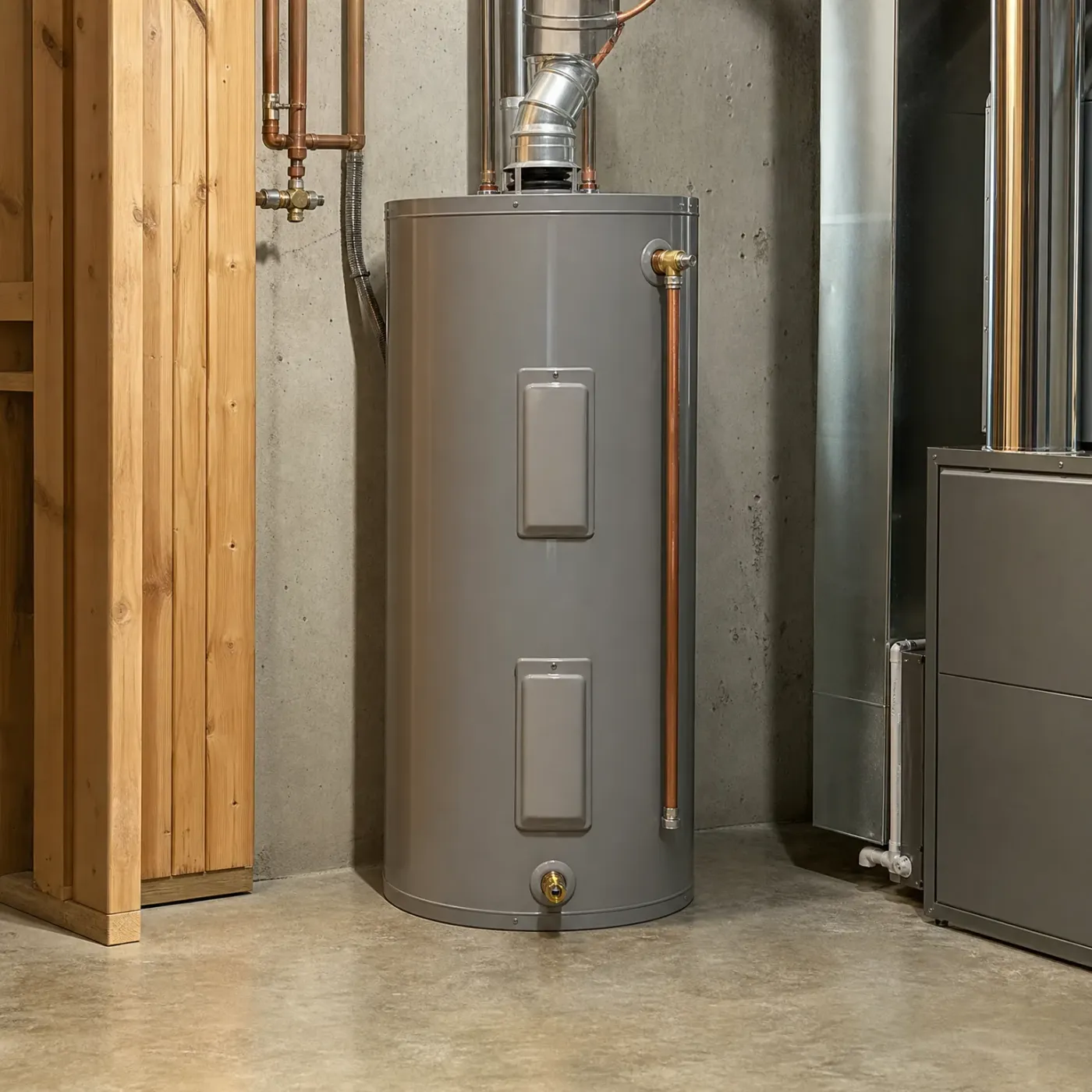
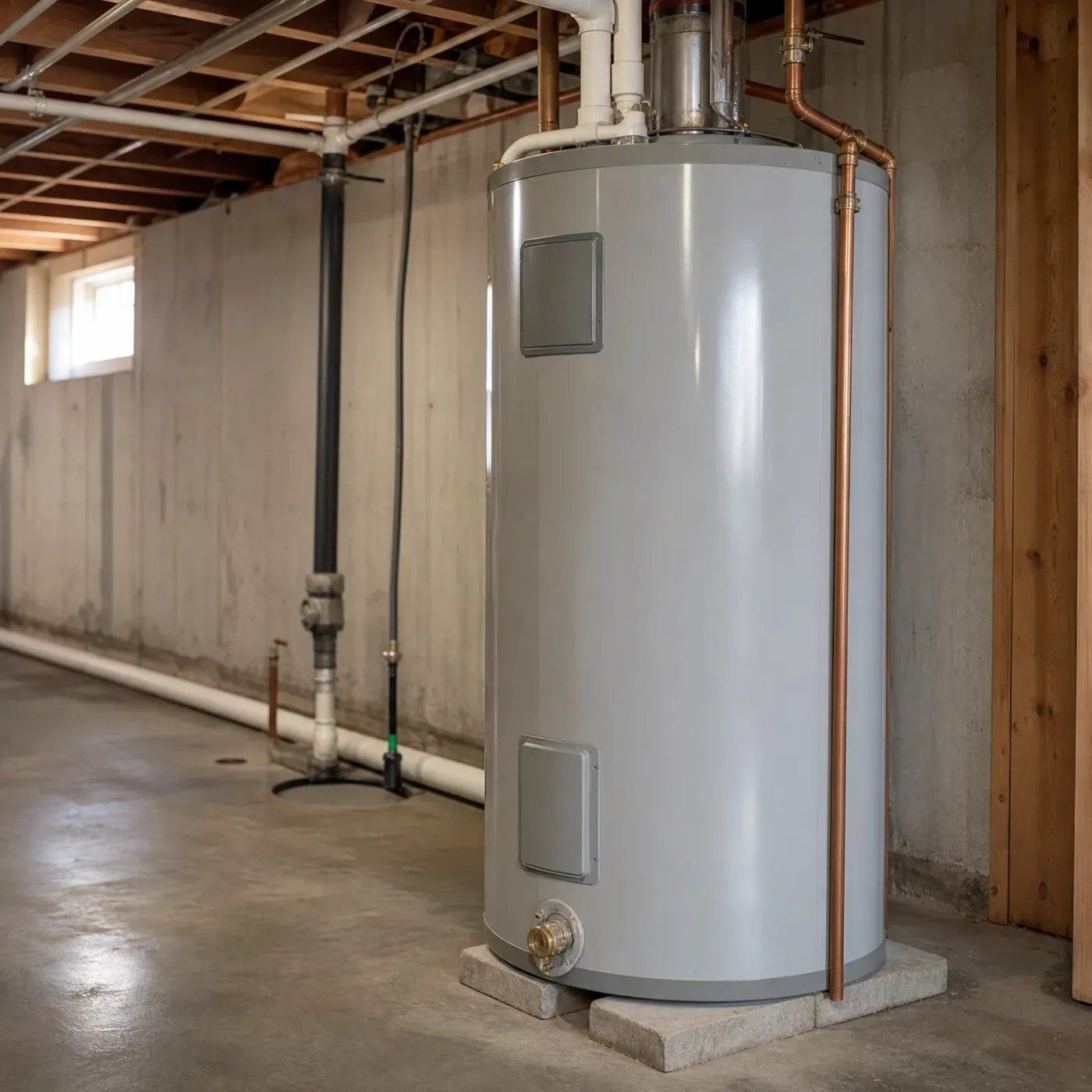
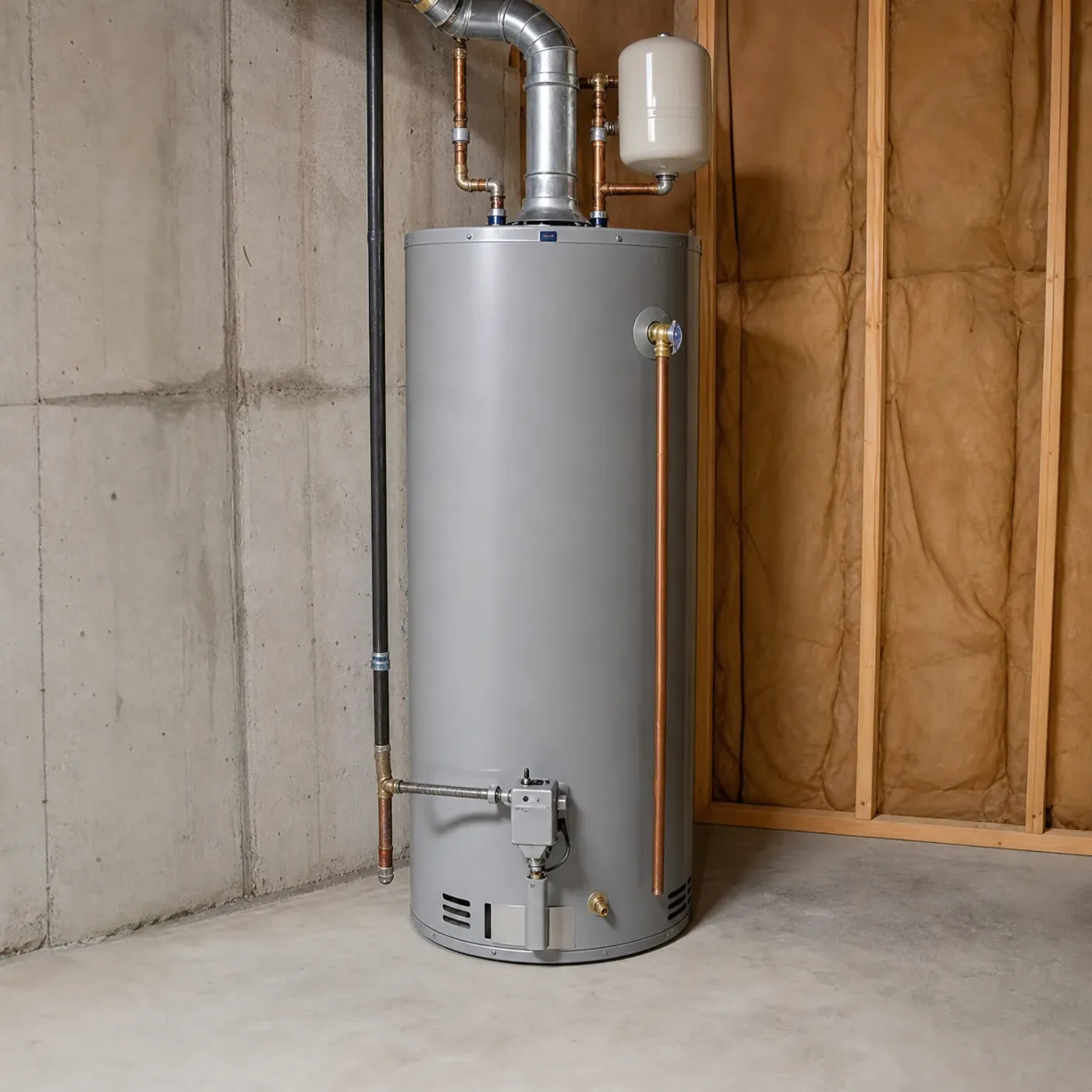
A gray cylindrical gas water heater with copper piping, flue vent, and a small expansion tank stands in a basement corner between a concrete wall and an insulated stud wall.

Staying with gas

A gas water heater vents through a flue and ties into the line already run to that spot, with the expansion tank doing its job up top. Recovery is quick, so a full tank of hot water comes back fast when a house full of guests runs it down. If gas already feeds the house, keeping gas here is the simpler install.
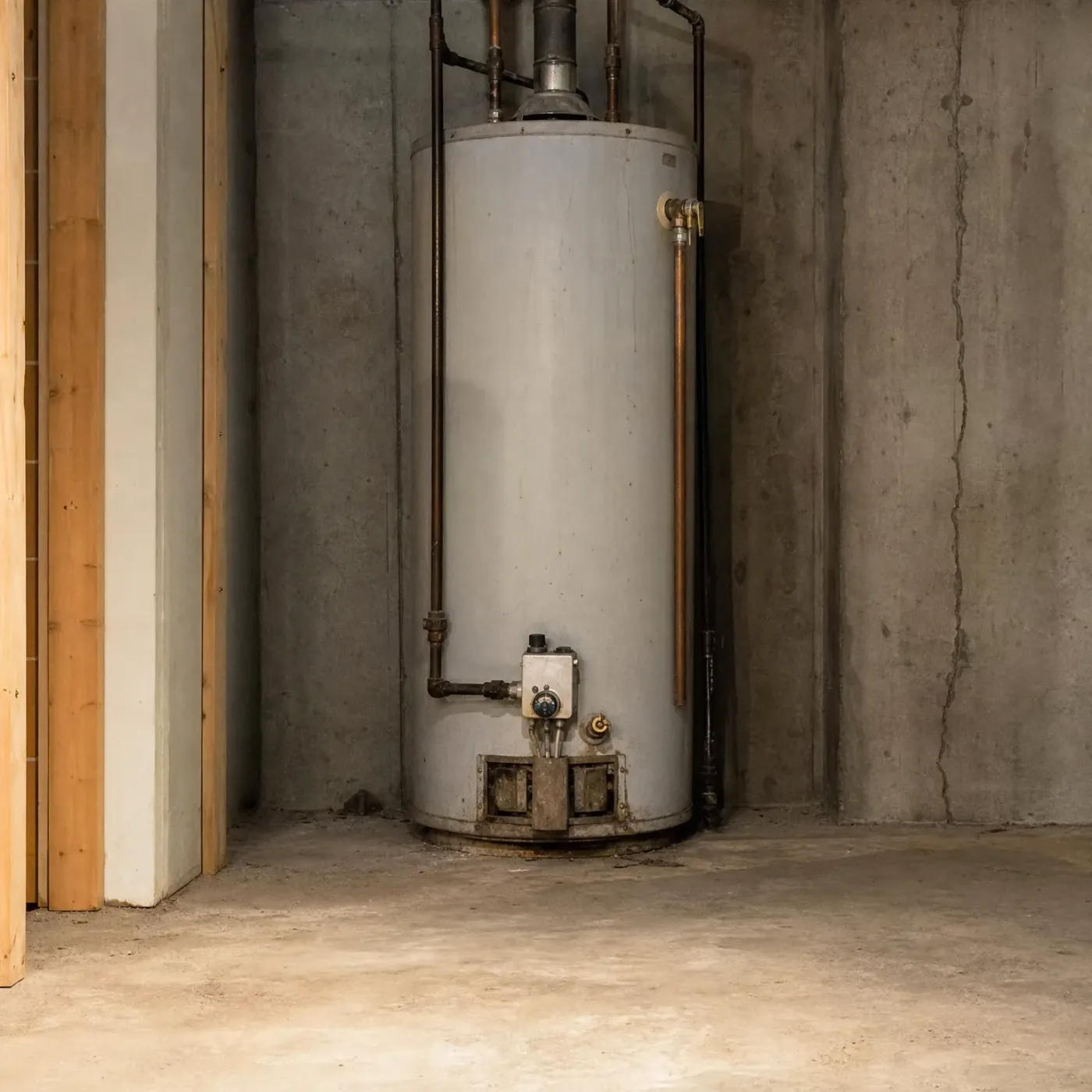
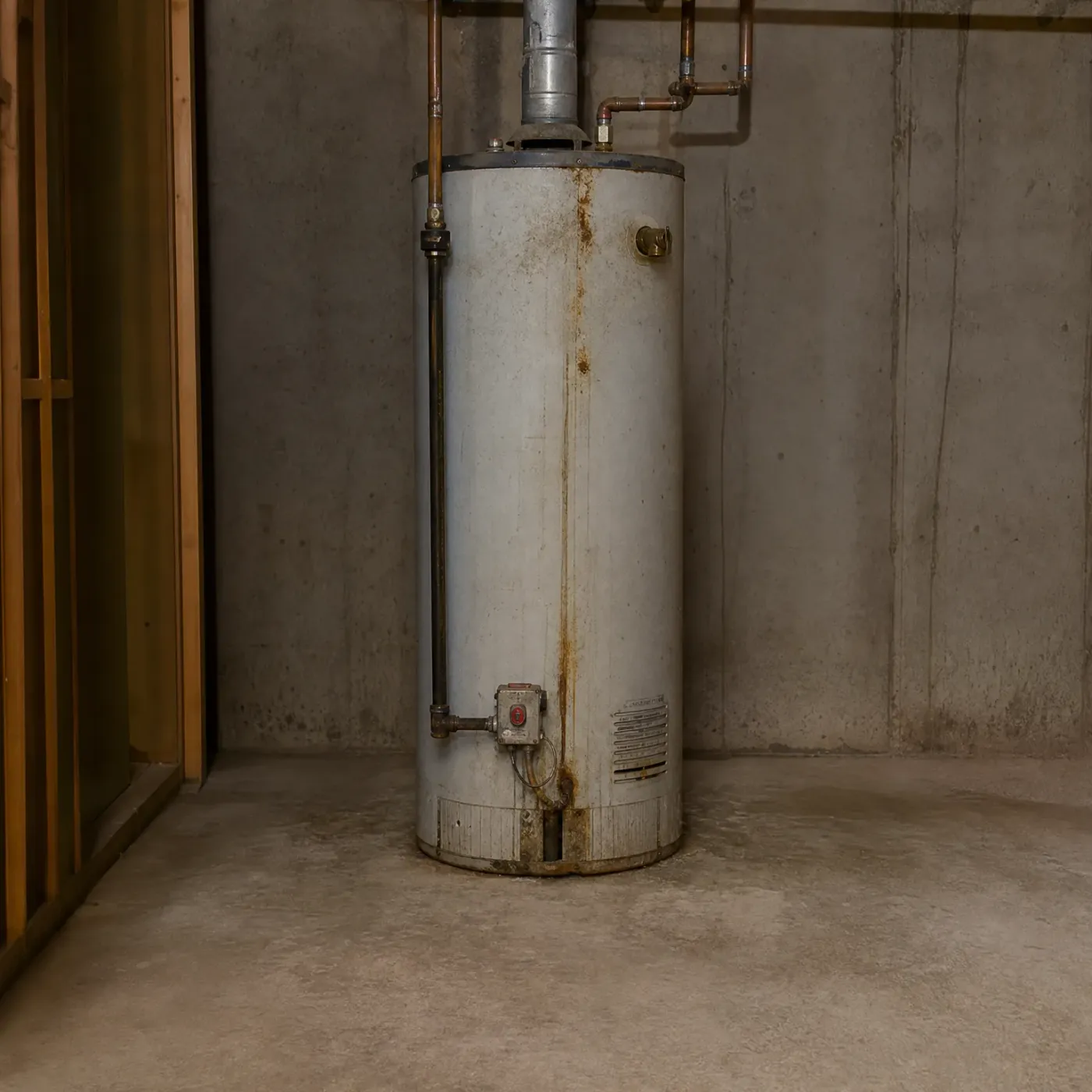
An older gas water heater with copper and black pipes stands in the corner of a bare concrete basement next to a wood-framed partition wall.

Switching to electric

An older gas unit in the corner still shows what the house was built with: a gas valve at the base and copper lines running up the tank. Moving to electric means that valve and line get capped off and new 240-volt wiring gets run in their place. It's a bigger job than a straight swap, and worth knowing going in.

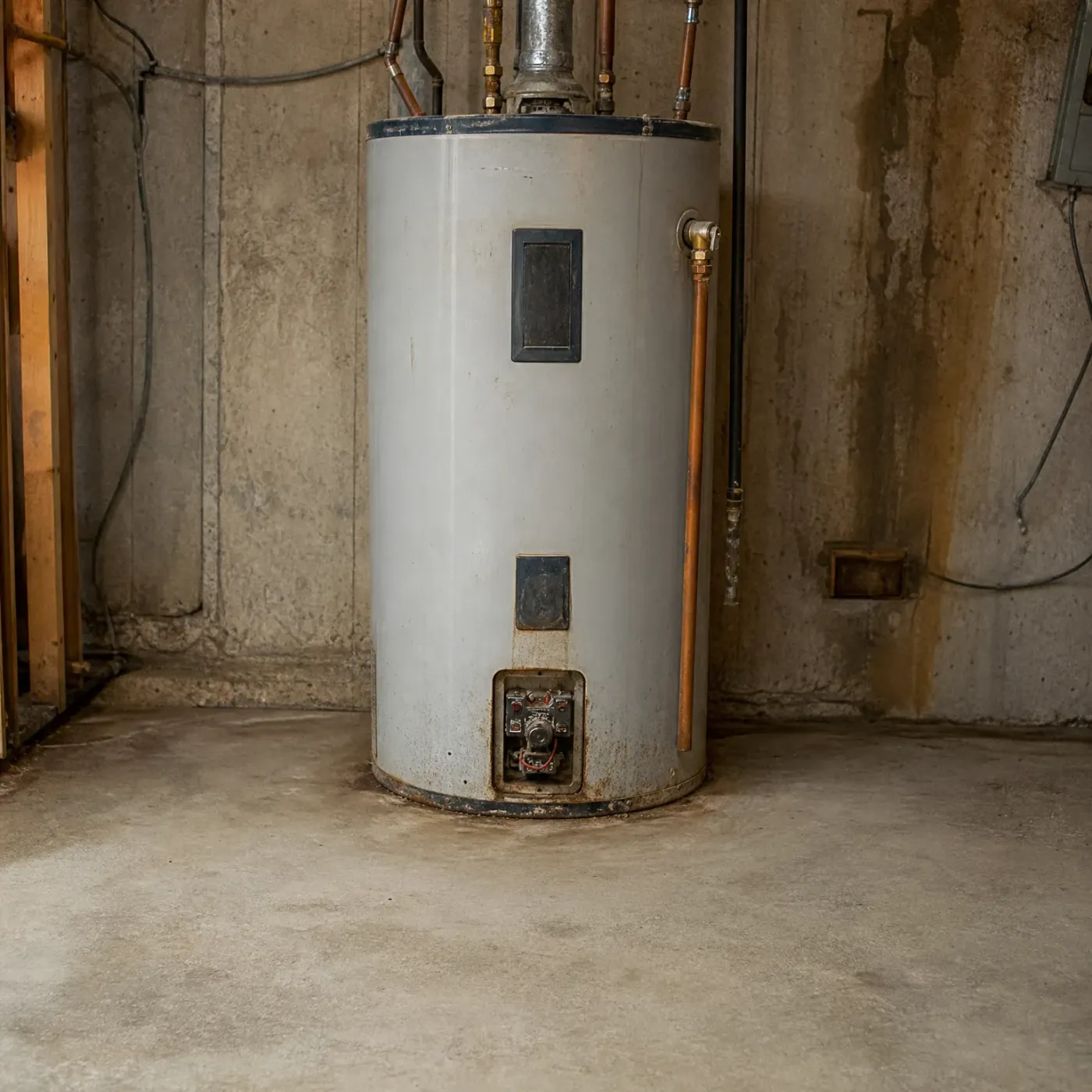
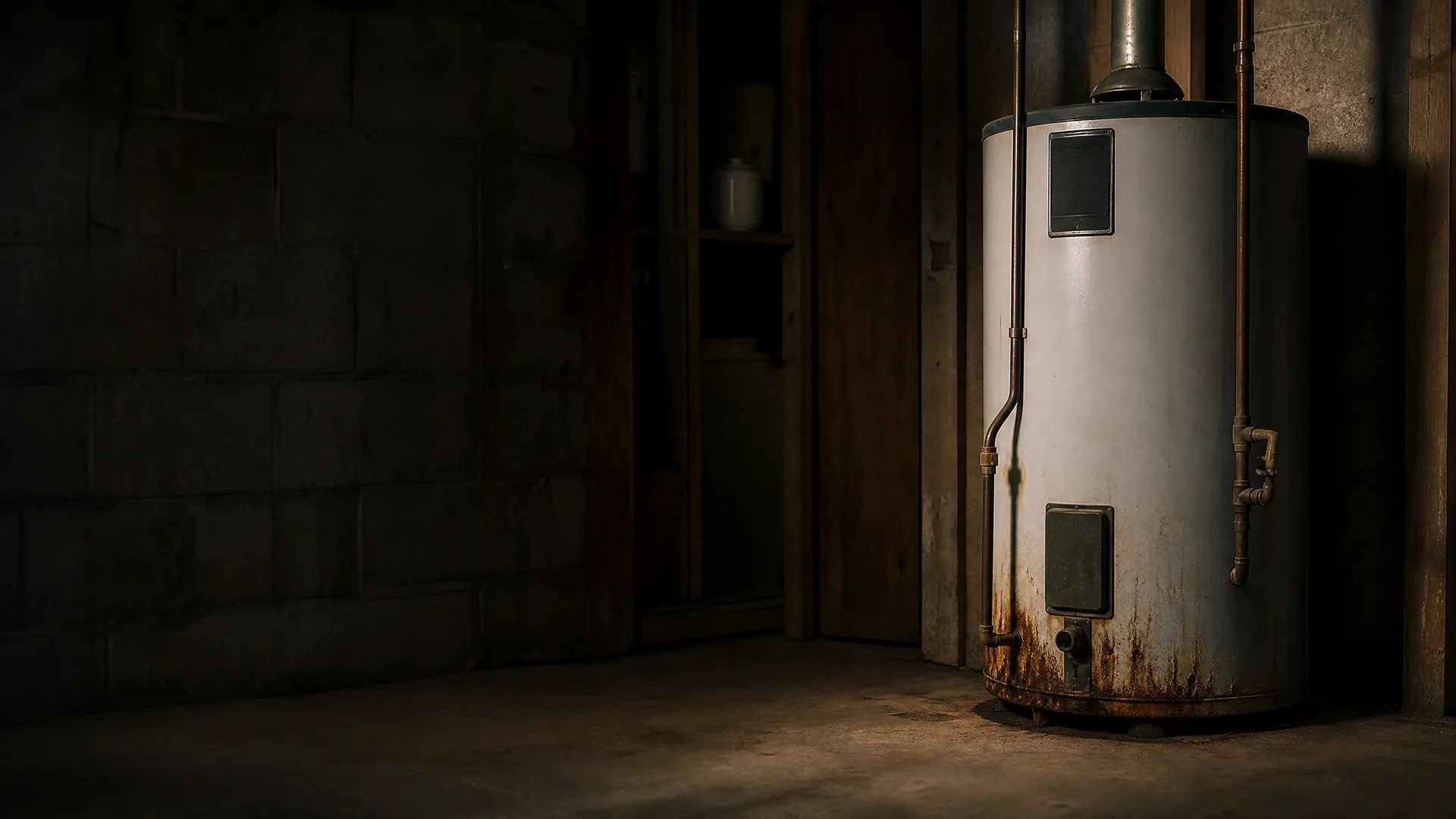
An aging rust-streaked gas water heater with copper and galvanized pipes stands against a bare concrete basement wall beside wooden stud framing.
Before you get your water heater installation
A gray cylindrical water heater with two access panels and copper piping stands against a concrete wall in a basement, beside wood framing and metal ductwork.
After you get your water heater installation

A gas water heater recovers fast because the burner underneath puts out more heat than an electric element can push into the tank.

That matters more in winter, when the water coming into the tank is colder and the unit has to work harder to bring it back up to temperature.

A man in a blue sweatshirt reclines with closed eyes in a brown leather armchair in a living room with a bookshelf, houseplant, sofa, window, and a side table holding newspapers and a dark mug.
A bearded man in a gray pullover reclines with closed eyes on a brown leather sofa in a sunlit room with a window, framed picture, potted plant, and a wooden cabinet holding papers and a dark mug.
A man in a gray sweater leans back with closed eyes in a brown leather armchair beside a wooden side table holding a dark mug and a folded newspaper, with bookshelves and a window seat behind him.
A man in a green sweater reclines in an armchair with his eyes closed and a slight smile, beside a window with plants, a small table holding a mug and folded newspaper, and bookshelves behind him.

How Each Type Actually Heats Water

  • A gas water heater burns fuel at a burner under the tank, so the flame heats the water directly through the tank's base.
  • An electric water heater has two heating elements inside the tank, one near the top and one near the bottom, that heat water directly in the water.
  • Gas models need a vent or flue to carry exhaust out of the house, which is why the flue pipe runs up through the roof or out a sidewall.
  • Electric models need no venting at all, since there is no combustion and nothing to exhaust.
  • A gas unit needs a gas line sized correctly for the burner's input, and a shutoff valve near the tank.
  • An electric unit draws on a dedicated 240-volt circuit, so the breaker panel has to have room and capacity for that circuit.

A gas water heater works by burning fuel at a burner mounted under the tank. The flame heats the metal base, and that heat passes through into the water above it. Because the burner sits below the full volume of the tank, it can push a lot of heat into the water fast, which is why recovery time is usually quicker than electric. That combustion has to go somewhere, so a gas unit needs a vent or flue running up through the roof or out through a sidewall, carrying the exhaust safely outside. The gas line feeding the burner has to be sized for that burner's input, with a shutoff valve installed near the tank so the gas can be cut off for service.

An electric water heater works differently. Instead of one burner, it has two heating elements inside the tank itself, one near the top and one near the bottom, and both heat the water directly from within rather than through the tank wall. There's no flame and no exhaust, so no venting is needed at all. What it needs instead is power: a dedicated 240-volt circuit running from the breaker panel to the tank. That means the panel has to have an open slot and enough capacity to carry that circuit, which matters if other large appliances already draw on it.

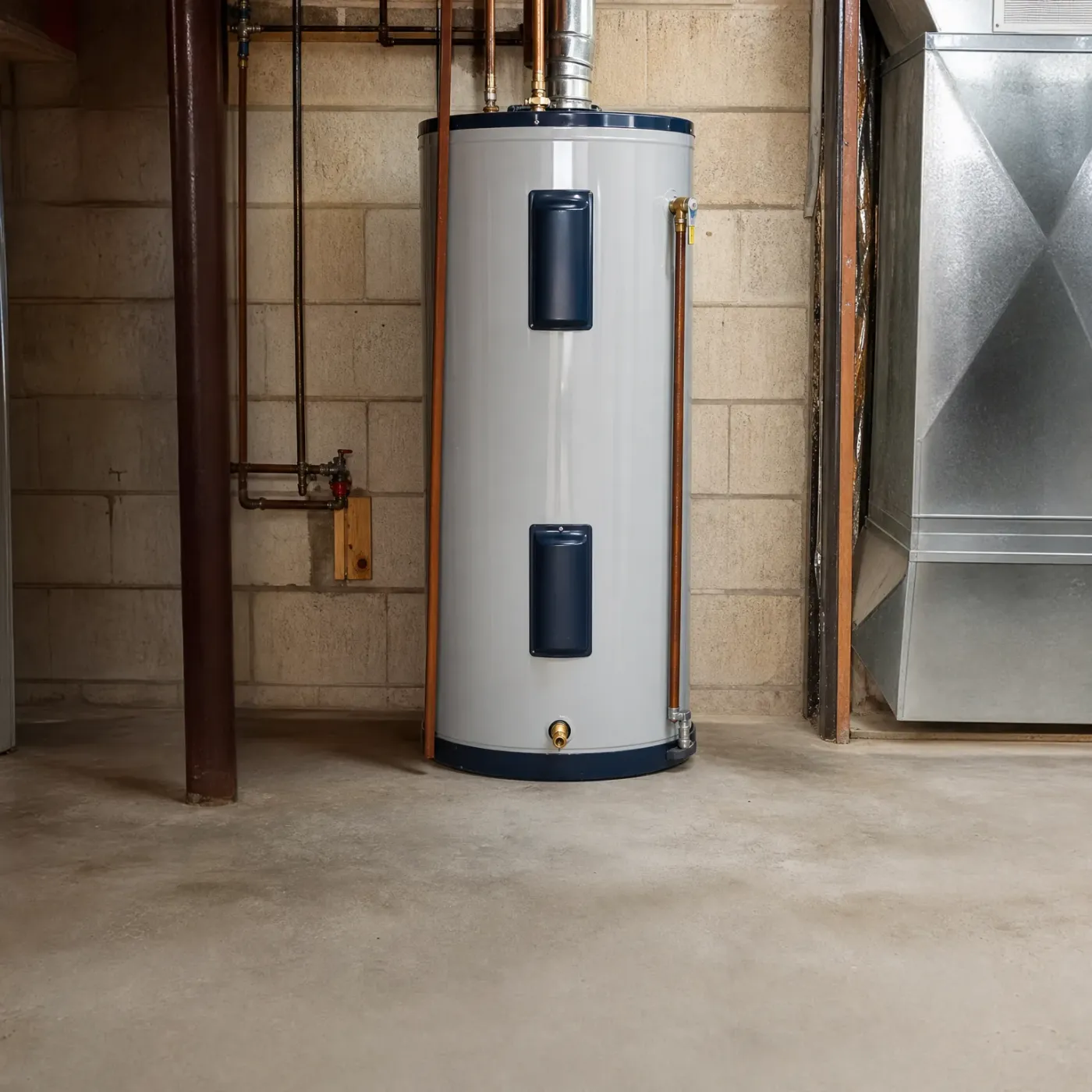
A white cylindrical water heater with two dark access panels stands on a concrete basement floor against a concrete block wall, with copper pipes, a flue duct above, and sheet metal ductwork at right.
A gas water heater installed and venting properly keeps pace with a full house, no cold surprises halfway through a shower.
A white cylindrical water heater with copper piping and a gas control valve stands against a stained concrete basement wall on a bare concrete floor.
Rust on the tank and corroded wiring connections mean the unit is past its years and close to failing outright.
  1. A plumber shuts off the gas and water lines to the old tank.

  2. The old water heater gets drained and disconnected from the flue.

  3. The new tank goes in and ties into the gas line and vent.

  4. The burner gets lit and checked for a steady, even flame.

An older man with gray hair and a beard leans back on a beige sofa with his eyes closed, in a sunlit room with potted plants, a wicker chair and large windows behind him.
A woman in a cream knit sweater sits in an armchair with her eyes closed and a slight smile, beside an open window showing orange autumn foliage, with a mug, books and a lit candle on a small side table.
A large white cylindrical water heater on concrete blocks in a basement with poured concrete walls, exposed joists, copper and PVC piping, and a small window.

Finding a pro stops being your job

Skip the round of in-home estimates for a new water heater.

Send it once and finding someone is no longer on you.

I'm done searching

There's no charge for the request.

66.4% of homes statewide heat with gas

Most houses in Colorado already have that gas line in place, yours likely included. If your water heater is original to the house, chances are it's gas too, which makes a straight swap simpler than switching fuels when the time comes.

ACS 2020-2024 5-year B25040

A rusting cylindrical water heater with attached pipes and flue stands in a dim basement corner beside a concrete block wall and a wooden door.

It's past eight and you're down in the utility room because the floor near the water heater felt damp when you walked by earlier. The overhead bulb is the only light. Crouching down, you see it now, rust streaks running down the side of the tank and pooling faint and orange at the base where it meets the concrete. Outside, the Colorado night has gone cold the way it does once the sun drops, but down here the air feels close and metallic. You put a hand on the tank, more out of habit than need. It's warm, still working, for now. You stay crouched there a minute longer, just looking at the streaks.

A closed silver laptop and a ceramic mug of dark coffee sit on a wooden table in front of two chair backs, with a kitchen counter, tiled backsplash, wooden cutting boards, a vase of greenery and a potted plant by a window behind.

Gas fits your house, and now the search is done

Gas is the right call for most homes in Colorado, and if your water heater is original to the house, yours is probably already set up for it. A straight swap, same fuel, same line, same vent, is the simpler job.

From here you don't have to be the one who finds a plumber, calls around to compare who's available, or explains the rusted tank and the damp floor more than once. Send the form and that search is off your plate. Someone qualified takes it from there.

Interior corner of a room with a window and sheer curtain at left, a gray upholstered sofa with a cushion at right, and a round wooden table holding stacked books and a round vase with an olive branch.
A single-story stucco house at dusk with a lit paver walkway lined by low path lights, desert plants and boulders in front, and distant mountains under an orange and blue sky.

Water Heater Installation

Let someone else find the pro

Step 1 of 3: Equipment
  • A brown leather and wood armchair with a cream knit throw sits in a corner beside a woven basket holding a dark cushion, under a framed mountain photograph, with a wood-trimmed window showing yellow and green foliage.
    • A local installer who puts in water heaters gets your project.
    • Get in touch with a local installer about a new water heater.
  • A dark wood dresser against a pale wall holds a ceramic vase of eucalyptus branches, a stack of books with a wooden bowl, and a woven basket, with a framed landscape painting above and a woven basket holding a knit blanket on the floor beside a window.
    • One request ends the search for a water heater installer.
    • Once you send the form, finding a pro is off your list.
  • A window seat with beige linen and brown textured cushions, a chunky knit blanket, and an open book, beside a window showing blurred yellow autumn foliage.
    • Answer a few questions instead of calling shop after shop.
    • Describe your water heater job once, to one pro.
  • A cream upholstered armchair with a rust-colored pillow and knit fringed throw sits beside a window with a ceramic vase of orange-leafed branches on the sill, overlooking autumn trees and leaf-covered ground.
    • One installer gets your project, so there's no bidding war over it.
    • The pro who reaches out is licensed in Colorado.