Hot water runs out fast in Colorado Springs, CO

Start one form

A shower that goes cold halfway through is a water heater problem, and the fix depends on what's actually wrong. A bad dip tube, a failing element, sediment packed in the bottom of the tank, a thermostat that's lost its calibration. Finding that out usually means finding a plumber first, which in Colorado Springs can turn into its own chore: searching, calling a few numbers, explaining the same symptoms to each one, then weighing quotes that aren't quite comparing the same thing. Submit this request instead and it goes to one licensed plumber local to El Paso County, someone who works on water heaters through the dry heat of summer and the hard cold of winter here and has seen this exact complaint plenty of times. No flood of calls from competing companies, no repeating yourself. Just one contractor who already knows the kind of systems this area runs and what tends to wear out in them.

Hot water running out fast usually means the tank can't keep up with demand anymore, or it was never sized for your household to begin with. If you have a 40 or 50 gallon tank and it's always been tight, that's a capacity problem, and it shows up worse in winter because the incoming water from the ground is colder and the burner or element has to work harder to raise it. If this is new, something has failed. Sediment settled on the bottom of a gas tank burns the heater's efficiency and eats into how much hot water it can hold, since it takes up space that used to be water. A failing lower heating element on an electric tank does the same thing: the top still heats, so you get a few minutes of hot water before it turns lukewarm. A gas burner losing power does it too. The tank isn't broken, but it isn't giving you what it used to.

Why does hot water run out faster in some houses here than others?

  • 2.48 people per household on average

    The average household in El Paso County holds 2.48 people. A tank sized for one or two people falls behind fast once more showers and loads of dishes are pulling from it in the same morning.

  • Half the homes here were built by 1989

    Half the homes in El Paso County were built in 1989 or earlier. A water heater from a remodel or a previous owner may not match what your household actually needs now.

  • 69.3% of homes heat with gas

    Gas heats 69.3% of homes in El Paso County, more than any other fuel. A gas tank recovers faster between uses than electric, so when it still runs out fast, something in the tank or burner isn't working right.

ACS 2020-2024

The tank is too small for the house

If hot water has never really lasted in your house, even back when the water heater was new, the tank is probably undersized for how many people are drawing from it. A 40 gallon tank that worked fine for two people runs dry fast once a third or fourth person starts showering before school or work. This isn't something that broke. It's a mismatch between the tank and the household, and it shows up every single day instead of coming and going. A contractor who looks at the tank size against how many people live there can tell you whether a bigger tank or a tankless setup actually solves it.


Something in the tank is failing

If hot water used to last and now it doesn't, that's different. Something changed. A heating element that's gone bad on an electric tank, a gas burner not getting enough fuel, sediment that's built up in the bottom of the tank over the years and is eating into how much water it can actually hold and heat. This kind of problem tends to get worse gradually, then all at once, until a shower that used to run fifteen minutes is cutting out in five. A contractor who works on tanks every week can usually tell which part failed before taking anything apart.

A woman with long light-brown hair in a gray knit sweater sits in a living room looking off to the side, with a sectional sofa, houseplant, lamp, wooden table and large windows behind her.
A woman in a chunky gray turtleneck sweater sits indoors looking off to the side, with a blurred dining table, chairs, pendant lamp and window behind her.
A woman in a cream knit sweater with her hair in a bun stands near a window, looking off to the side, with a gray sofa, houseplant and open kitchen with pendant lights blurred behind her.
A woman with long brown hair in a cream knit sweater stands near a window, looking to the side, with a white sofa, shelving, and a hallway visible behind her.
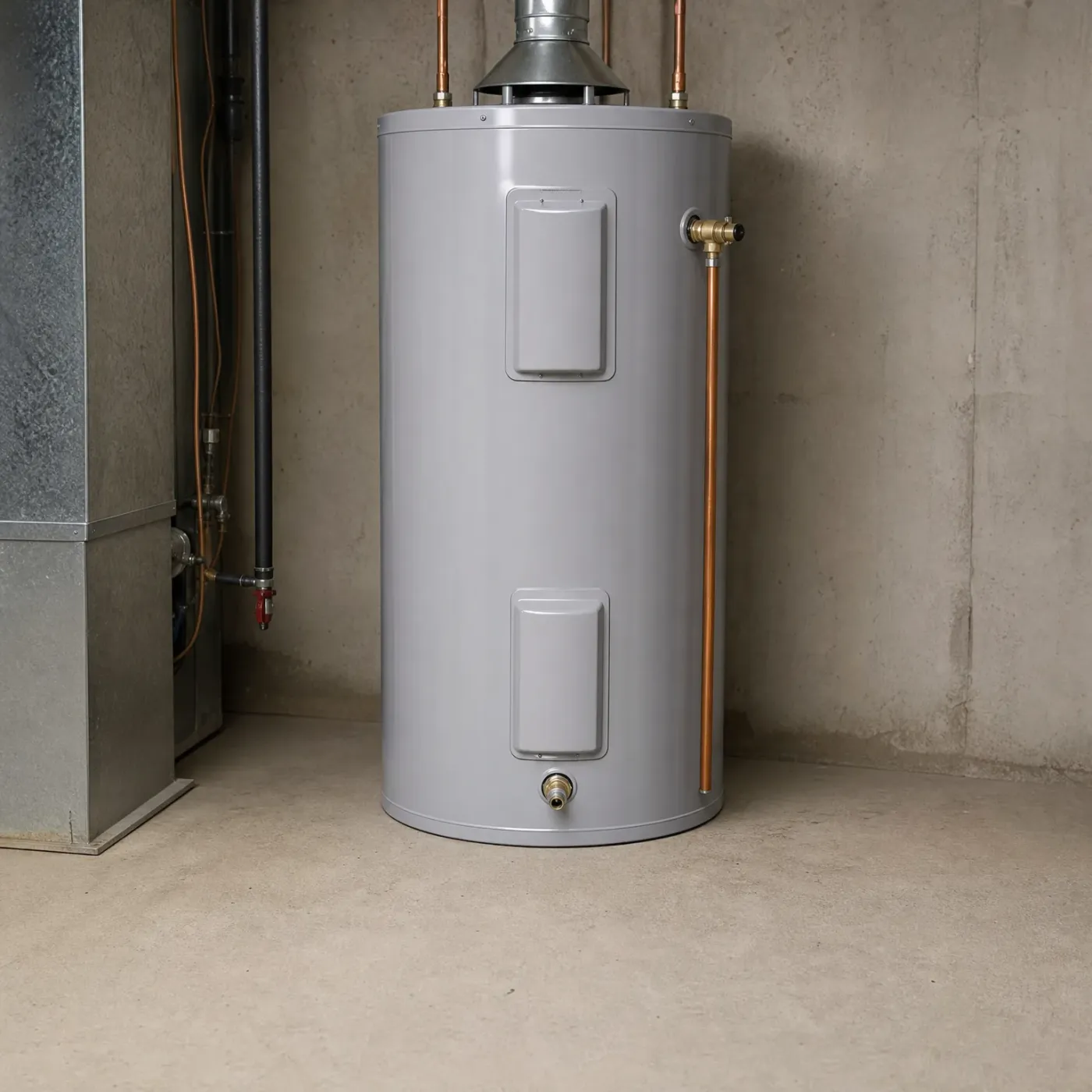
A gray cylindrical water heater with copper piping and a flue stands on a concrete floor in a basement corner beside ductwork and metal equipment.

Working the way it should

A water heater in good shape holds its temperature and recovers between uses without drama. The access panels seal tight, the relief valve and discharge pipe stay dry, and the flue duct carries exhaust out clean. Nothing on the tank itself hints at a problem.

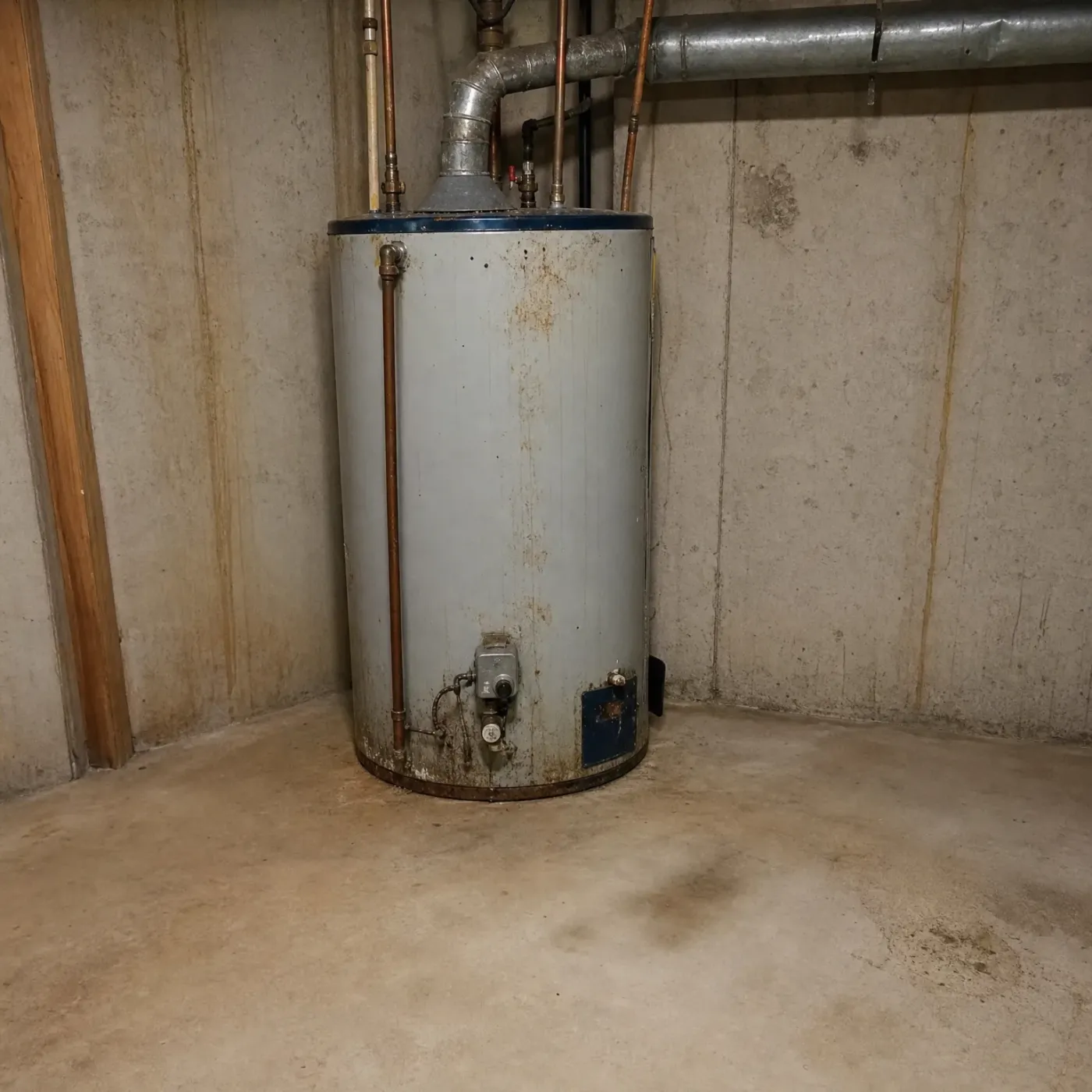
An aging gas water heater with rust streaks stands in the corner of a concrete-walled basement, with copper pipes and a metal flue duct running overhead.

Rust is the warning

Rust on the tank body and staining on the floor around it means the steel is failing from the inside, and that's often why hot water runs out faster than it used to. A tank in this shape is losing capacity before it fails outright, and a contractor who looks at it can tell you how much time it has left.

Tank-Style or Tankless: Why the Hot Water Runs Out

Tank-style

  • A tank heater keeps 40 to 50 gallons hot at all times, so recovery between uses depends on the burner or element, not on something refilling instantly.
  • If the tank is sized right for your household, it rarely runs short, but a bigger household outgrows an old tank without anyone resizing it.
  • Sediment settles in the bottom of a tank over years and takes up space that used to hold hot water, shrinking how much you actually get.
  • A failing lower element or a cracked dip tube can cut usable hot water in half even though the tank itself is the right size.
  • Repair usually means replacing one failed part, which is often less disruptive than retiring the whole unit.

Tankless

  • A tankless unit heats water as it passes through, so there's no tank to run out of, only a flow rate it can't exceed.
  • If two showers and a dishwasher run at once, a tankless unit can hit its limit and the water temperature drops even though nothing is broken.
  • Mineral buildup on the heat exchanger is the main thing that causes a tankless unit to fall short of the output it once had.
  • A tankless system matched to your home's peak demand keeps up indefinitely, since it isn't limited by stored volume.
  • Diagnosing a tankless shortfall means checking the flow sensor, the heat exchanger, and gas or power supply to the unit rather than looking at sediment or a tank element.
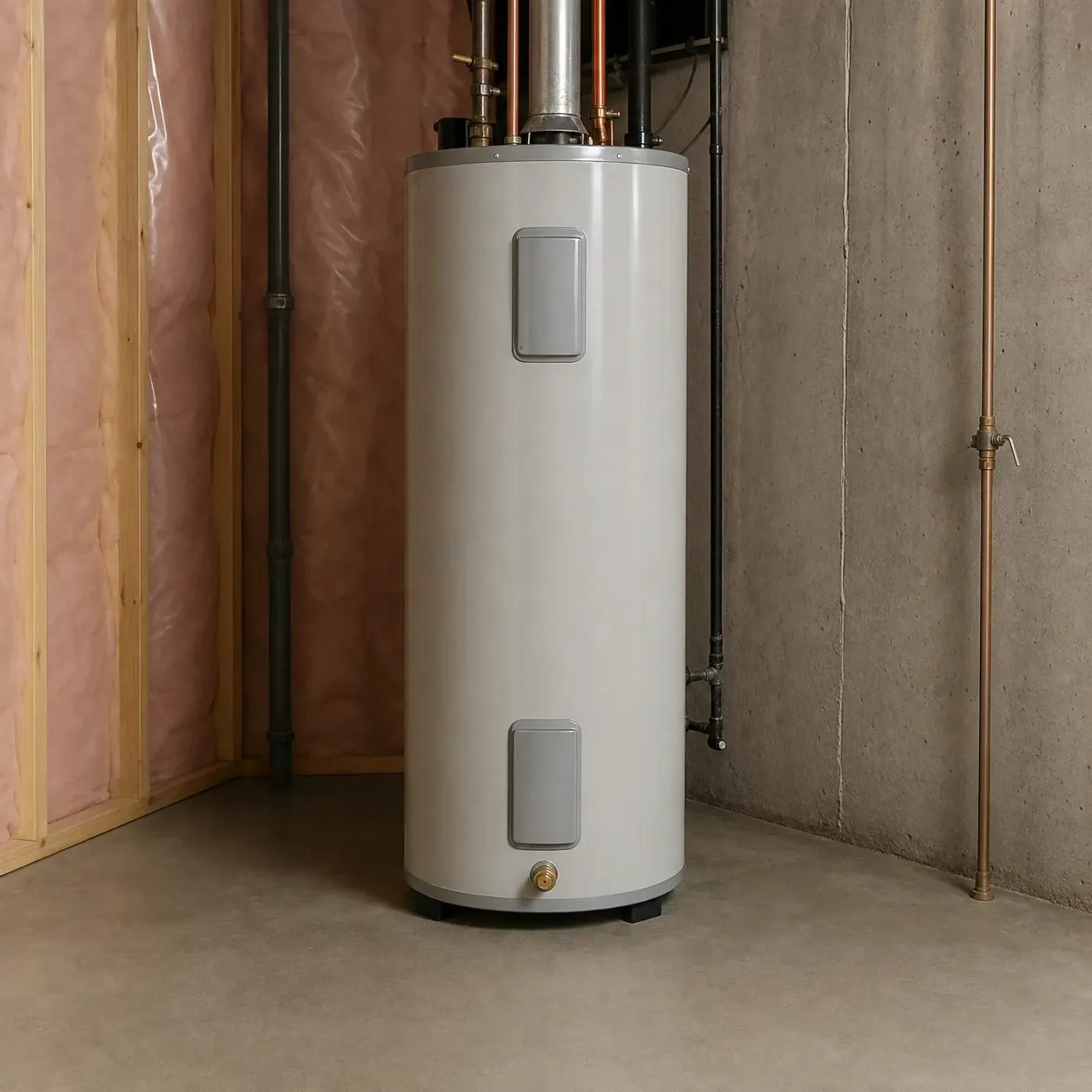
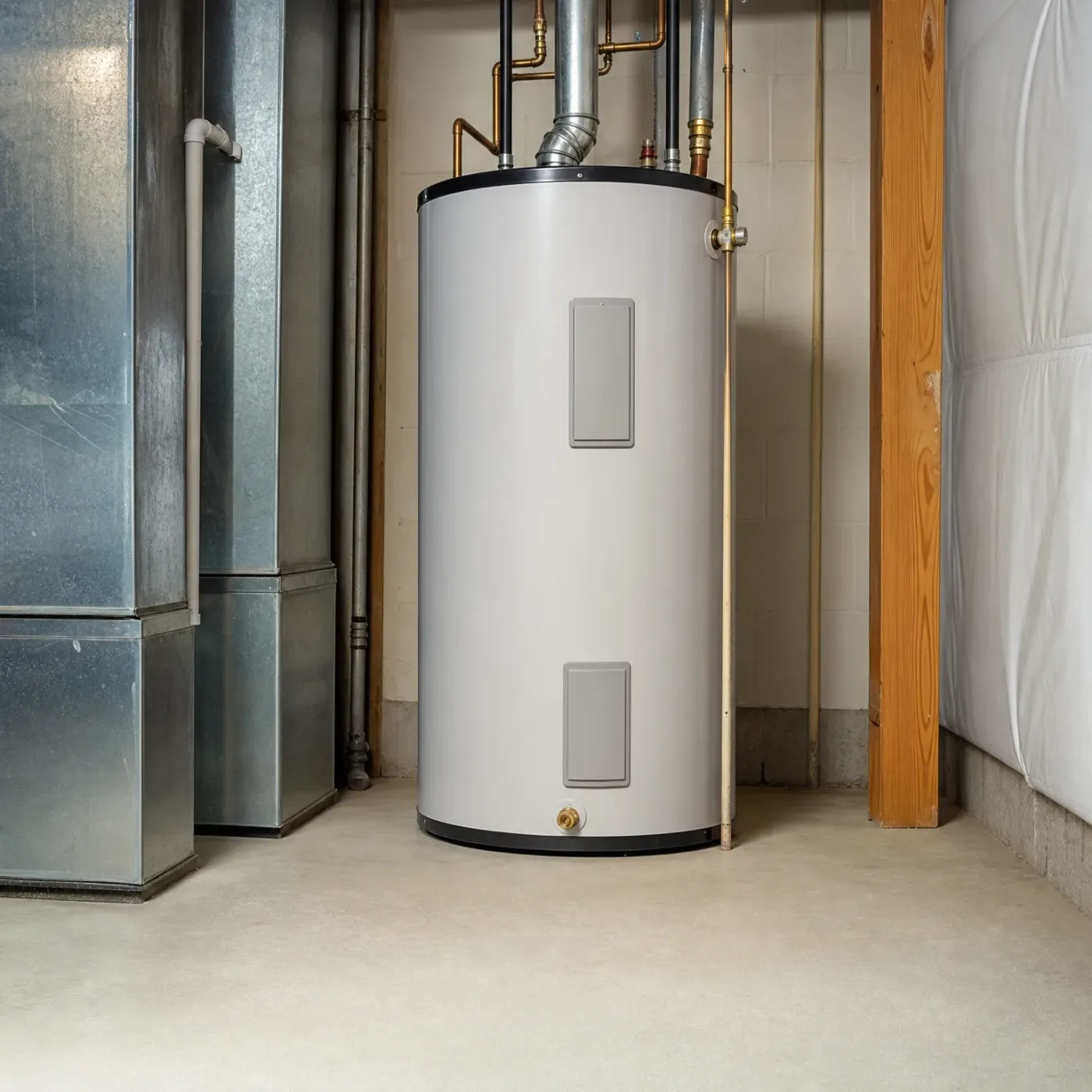
A white cylindrical water heater with two access panels and a brass drain valve stands on a concrete floor in a basement corner, beside a pink-insulated stud wall and a concrete wall with copper and black pipes.
A tank like this holds its temperature and recovers at a steady rate, so one shower after another doesn't catch you cold.
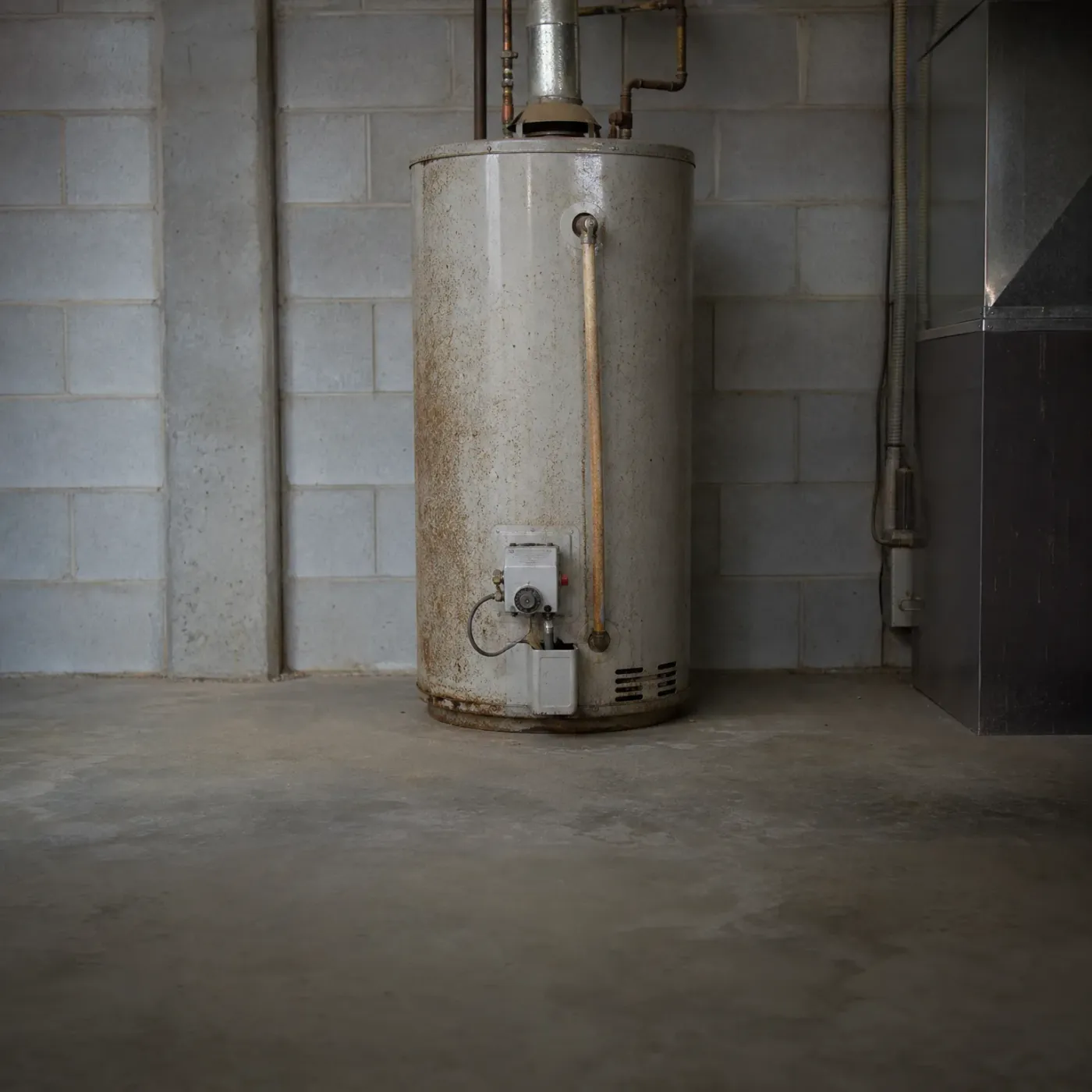
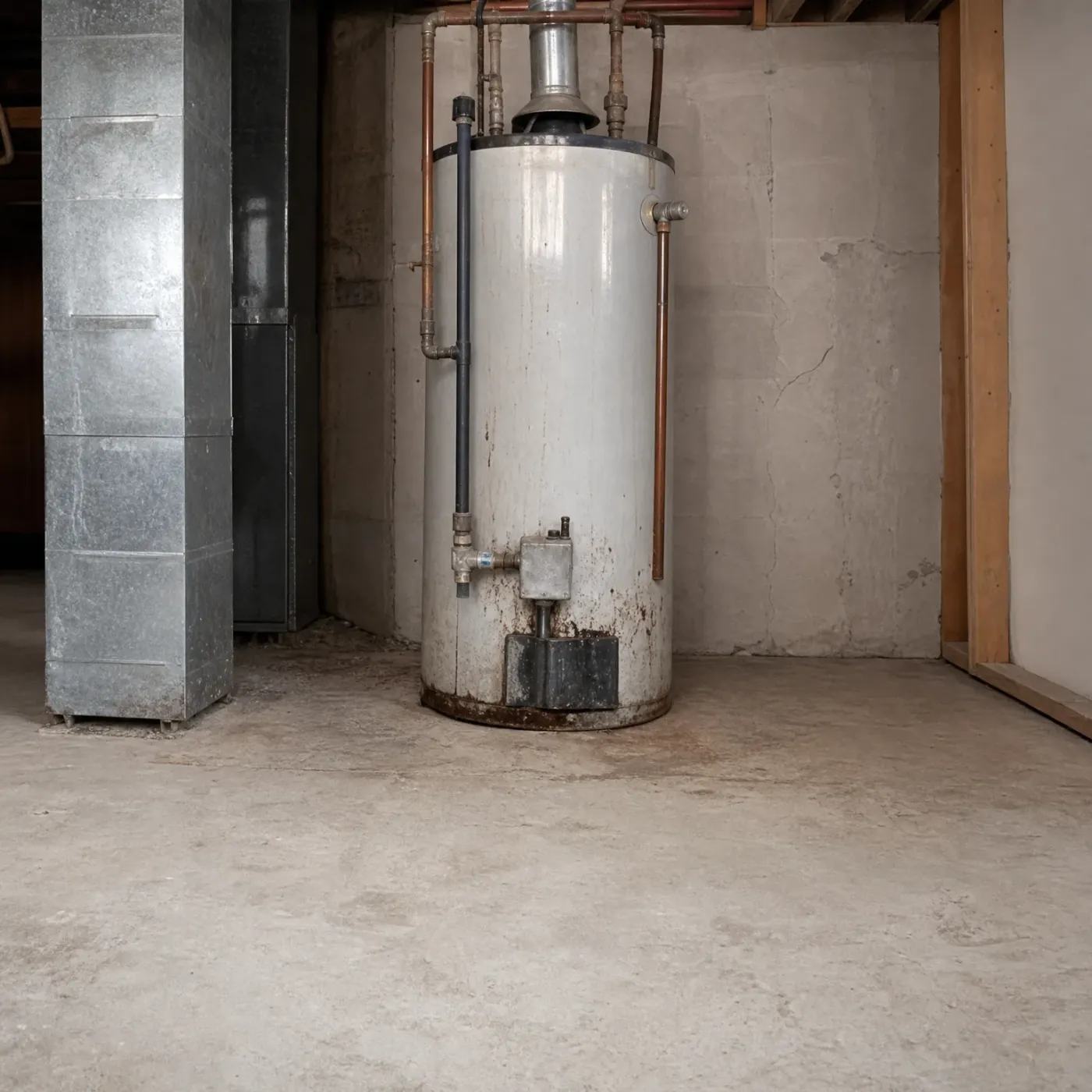
A rusted gas water heater with a flue pipe stands against a concrete block wall on a bare concrete floor, next to a dark metal duct or furnace cabinet at right.
Rust eating through the jacket and climbing the fittings means the tank is failing, not just aging, and running short on hot water is the first sign.
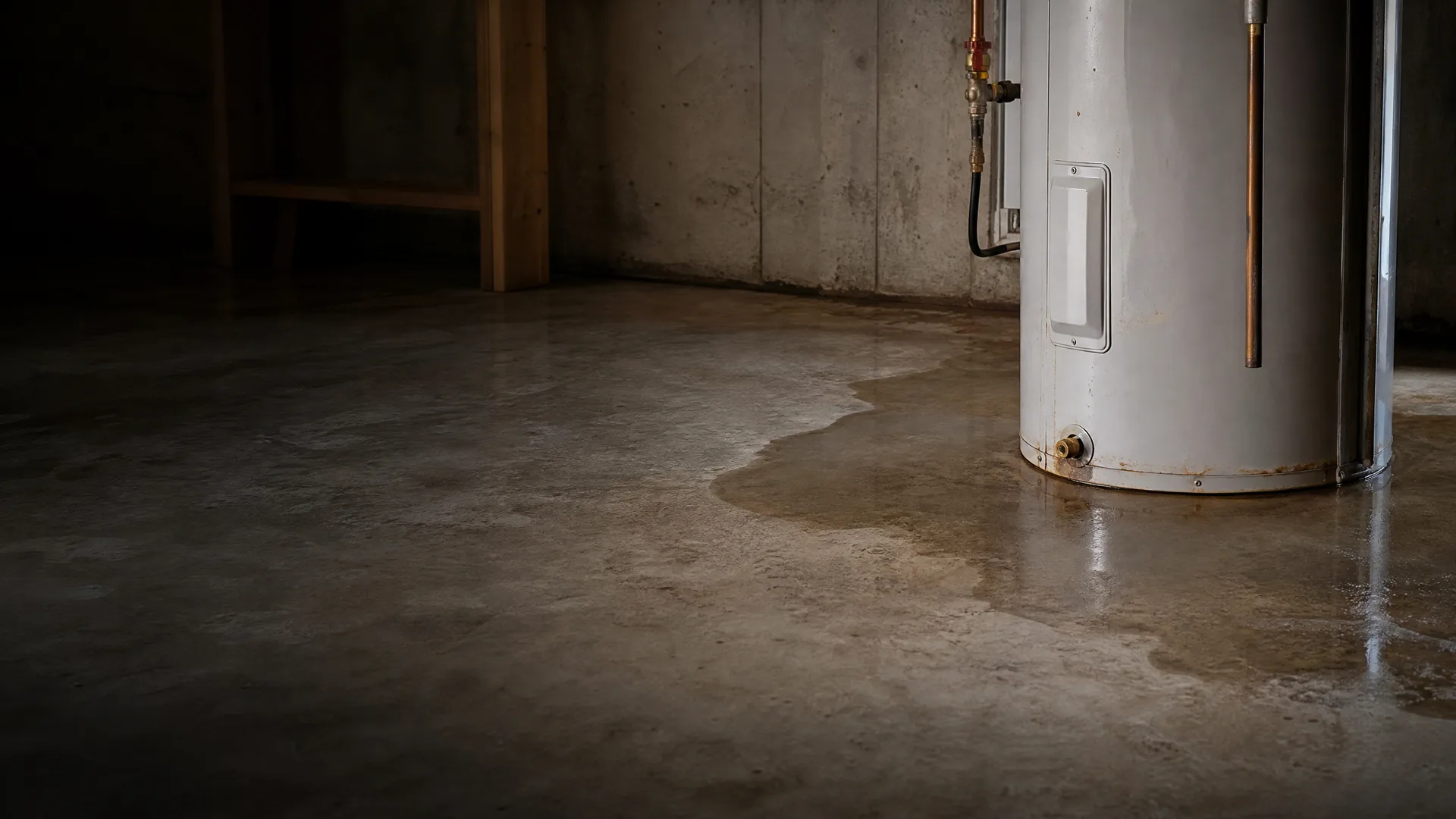
A white cylindrical water heater with copper pipes stands against a concrete basement wall, with water pooled across the surrounding concrete floor.

It's a Saturday morning in February, and you're down in the basement doing laundry between showers. The furnace is running hard against the cold outside. You notice the carpet by the water heater feels damp before you see it, a thin ring of water working its way out from under the tank toward the floor drain. You crouch down and find the seam near the bottom rusted through, a slow weep rather than a gush. The pilot light is still on. Upstairs, someone's about to get in the shower, and you still need to find someone who can come look at this today.

No calling every shop in El Paso County

A water heater that's running out fast could need a new thermostat, a new element, or a tank flush to clear sediment that's crowding out capacity. It could also mean the tank itself is done and needs replacing. None of that is something to figure out from the basement by yourself, and tracking down someone qualified to look at it usually means a string of calls, explaining the same problem to each one, then sitting with a handful of quotes trying to guess which contractor actually knows what they're doing. A gas water heater in a El Paso County winter isn't a convenience. Someone local who works on these tanks all year, through the hard cold and the dry heat both, has seen this exact failure before and knows what to check first. Send the request once and it goes to one contractor, not five competing for your callback. Cold water partway through a shower in January is worth sorting out before it happens again.

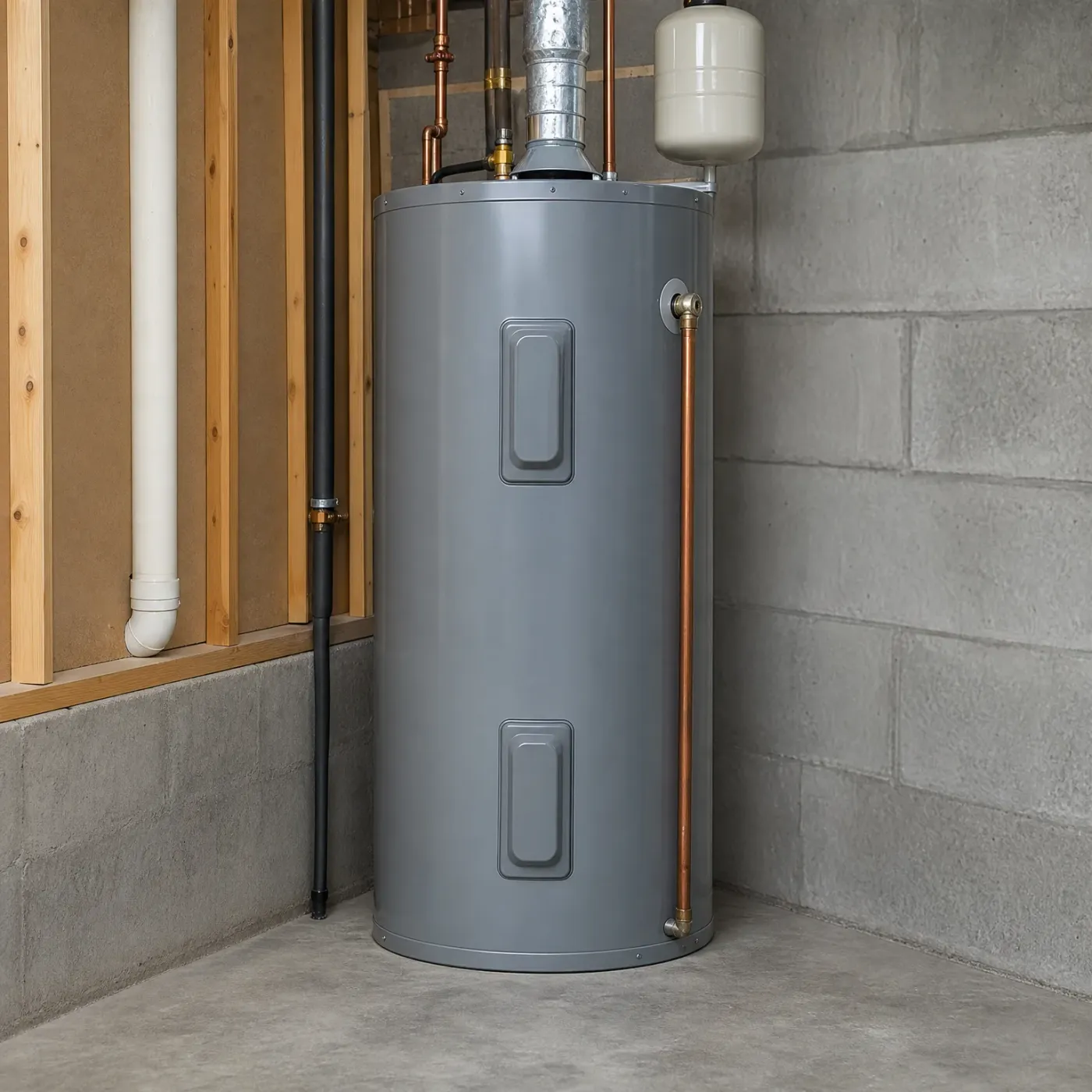
A gray cylindrical water heater with copper piping and an expansion tank stands in a basement corner beside a concrete block wall and exposed wood framing.

Still holding its own

This tank sits dry at every fitting, with clean copper lines and a clear drain pipe running to the floor. The expansion tank above it means it's keeping pressure steady too. A unit set up and maintained like this recovers on schedule and shouldn't be the reason you're running short.

An old rusting cylindrical gas water heater with copper and steel pipes and a flue stands against a concrete basement wall beside metal ductwork on a bare concrete floor.

Running on borrowed time

Rust has worked its way down the jacket and onto the fittings, and mineral deposits are building where the water line connects. A tank in this shape is losing capacity to corrosion and buildup inside, not just getting older, and running short on hot water is one of the first signs.

How does sediment in the tank make hot water run out faster?

If your water heater is a few years old and hot water used to last longer than it does now, sediment is a likely reason. Colorado Springs water leaves mineral deposits behind, and over time they settle at the bottom of the tank where the burner or lower element does its work. You're not imagining that showers got shorter. Something changed inside the tank, and it happened gradually enough that you didn't notice until it got bad.

Sediment takes up space and insulates the water from the heat source

A gas water heater heats from a burner underneath the tank. An electric one heats from an element inside it, usually near the bottom. Sediment settles on top of either one. Once it builds up, it acts like a blanket between the heat and the water above it, so the burner or element works harder to heat less water. On a gas tank, thick sediment can also hiss and rumble as water gets trapped under it and boils. On an electric tank, sediment can bury the lower element enough that it burns out from overheating. Either way, the usable hot water in the tank shrinks even though the tank size hasn't changed. A flush clears it out, but if it's been years, the buildup may already be hard where it sits.

A woman and a child wrapped together in a thick knitted blanket on a sofa, both with eyes closed, with a lit table lamp and houseplant in the dim background.
An older woman with short gray hair in a cream cable-knit turtleneck sweater smiles while looking to the side in a wooden kitchen, with a round loaf of bread on a board in the foreground and a lit candle by a dark window.

Power here costs 15.63 cents per kilowatt-hour

At 15.63 cents per kilowatt-hour, an electric water heater here doesn't cost much to run compared to other places. So if yours is running out fast, the price of power isn't masking the problem. A struggling element or a tank full of sediment is the more likely answer.

EIA-861 2025

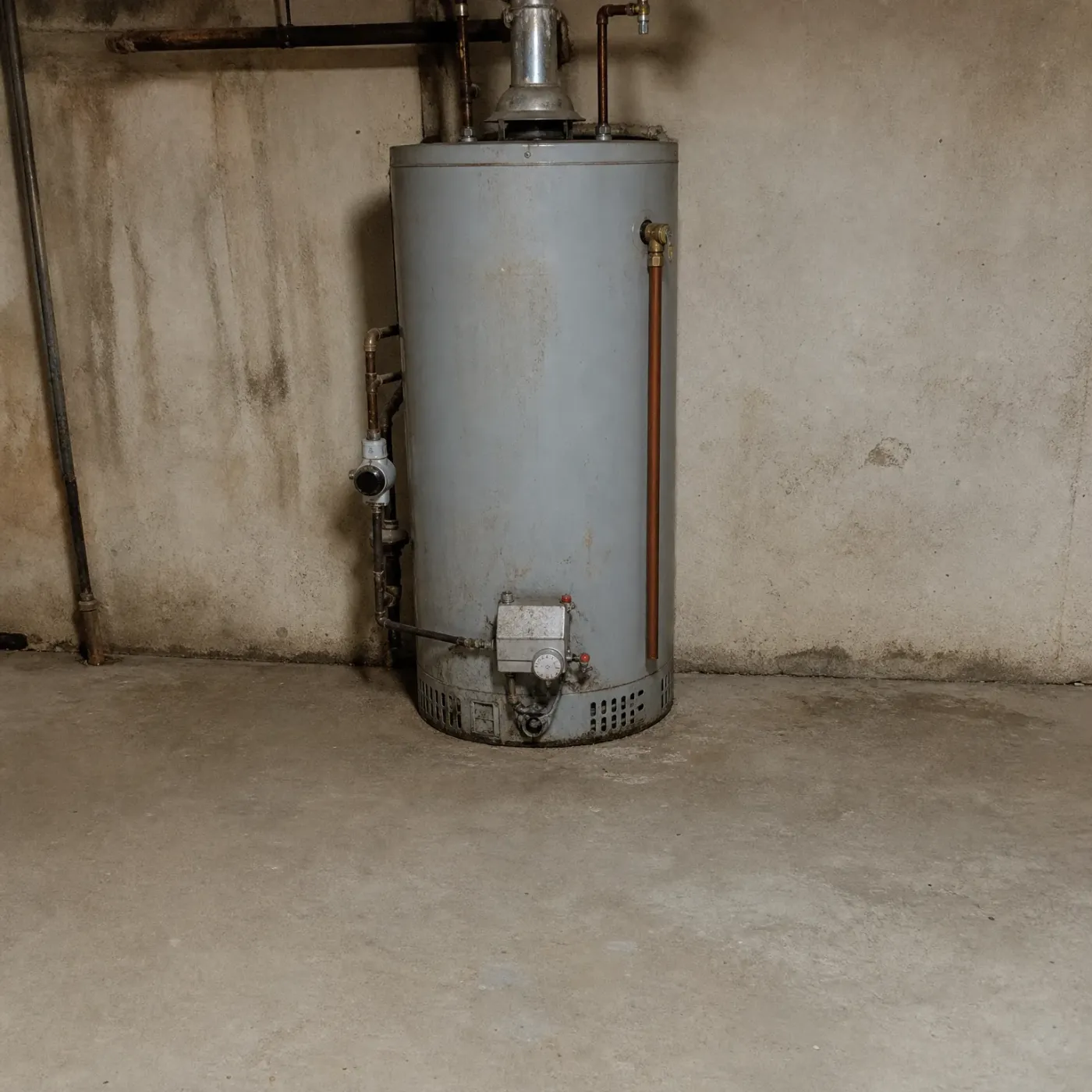
An older gray cylindrical gas water heater with copper and steel piping and a flue, standing on a concrete floor against a stained concrete wall.
Before you get your water heater repair
A white cylindrical water heater with two access panels stands on a concrete floor in a basement corner, beside galvanized ductwork, copper and metal pipes, a wooden post, and a concrete block wall.
After you get your water heater repair
  1. A technician drains the tank to check how much sediment has built up

  2. The thermostat and heating element get tested for accurate readings

  3. A flush clears sediment packed into the bottom of the tank

  4. Failed parts like the element or thermostat get replaced

A wooden table in the foreground holds a closed laptop and a ceramic mug of coffee, with a spindle-back wooden chair behind it, a beige wall with paneled wainscoting, a window at left, and a kitchen counter with a cutting board, bowl of fruit and greenery at right.

Hot water running out fast has a cause, and it's fixable

A tank that used to carry the household and now comes up short is telling you something specific. Sediment packed in the bottom, a failing element, a thermostat reading wrong, or a tank that was never sized right for the people using it. A technician can tell which one it is by checking the tank directly, not by guessing from upstairs.

Once you know what's wrong, you're not stuck researching water heater companies around Colorado Springs, calling a few to see who answers, or explaining the same problem over again to each one. One licensed local contractor who works on these tanks all year, through hard winters and hot summers alike, takes the call and takes it from there.

Interior corner of a living room with a beige upholstered sofa and dark cushion in the foreground, a ceramic vase of leafy branches on a dark side table by a curtained window, a framed picture on the wall, and a wood-surround fireplace at right.
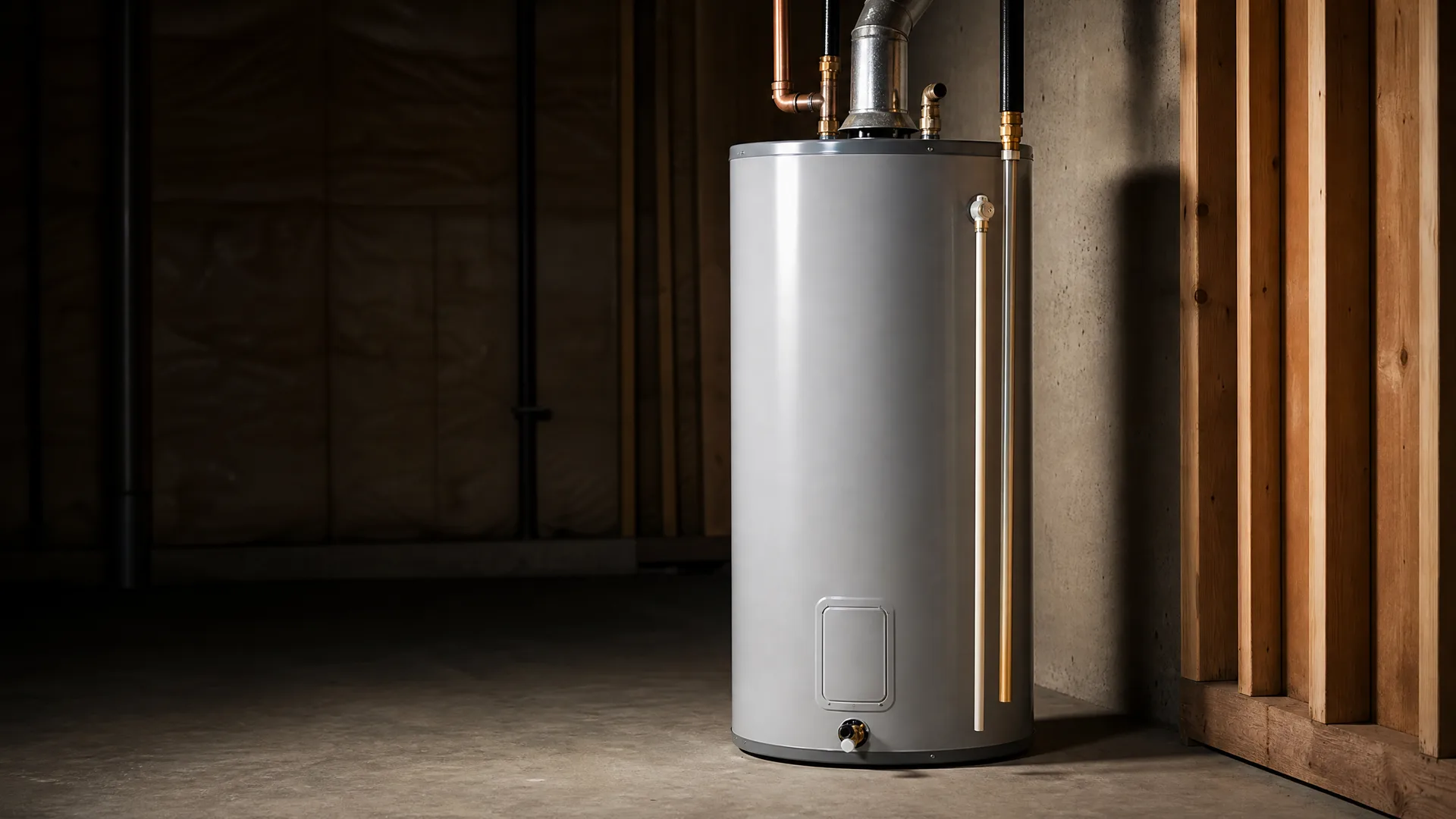
A gray cylindrical tank water heater with copper and metal pipes at its top stands on a concrete floor beside a concrete wall and wooden studs in a dim basement.

Explain it one time

Step 1 of 3: Equipment