Profile view of a bearded man wearing a black baseball cap and a dark gray T-shirt against a plain light background.

How often to flush a water heater in Colorado

Step 1 of 3: Equipment

How often should I flush my water heater in Colorado?

Colorado's water carries a lot of dissolved minerals, and that mineral content settles out as sediment inside a water heater tank over time. If you've never flushed yours, or you can't remember the last time, you're probably wondering if it's overdue and what happens if you let it go too long.

Once a year, more often if your water is especially hard

Flush your water heater once a year. Colorado's hard water leaves mineral sediment behind every time the tank heats up, and that layer settles at the bottom. Left alone, it builds into a crust that sits between the burner and the water, so the heater works harder to do the same job. Gas water heaters, which run most homes here, lose efficiency fast once that sediment hardens, and the burner can start making a popping or rumbling sound as it fires through it. An annual flush clears it out before it packs down. If you're on well water or know your supply runs harder than average, flushing twice a year keeps the tank from getting ahead of you.

A gray cylindrical water heater standing in a basement corner against a concrete wall, with copper and black pipes, a metal flue, and ductwork nearby, next to wood framing on the right.

Flushed on schedule

A water heater that gets flushed once a year runs quiet, heats evenly, and keeps its lower element or burner tube free of buildup. Gas lines, copper fittings and the flue stay the same. You just get years out of the tank instead of watching it fail early from sediment packed against the steel.


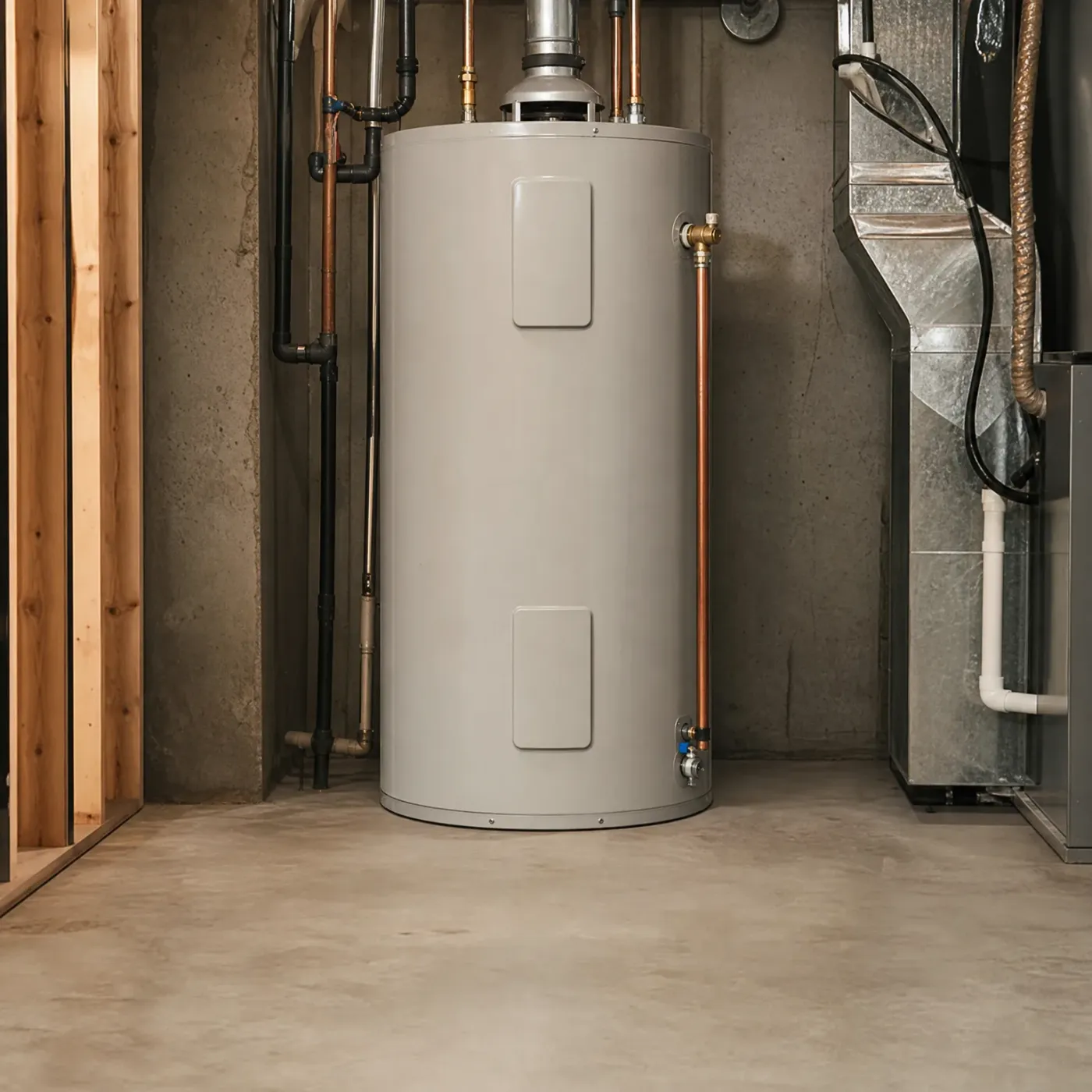
A gray cylindrical gas water heater with copper and black pipes stands in the corner of a basement with concrete block walls and a bare concrete floor.

Sediment left to build

Skip the flush long enough and sediment hardens into a layer along the bottom of the tank. The burner has to work through that layer to heat the water above it, so recovery slows and the gas bill creeps up. Left alone, that layer traps heat against the tank wall until it wears through.

A man seen from behind raises his hand to wave at a woman standing in the open front doorway of a single-story house with gray shingle siding, white columns and a gabled porch entry.

What hard water does to your tank over time

Colorado's water leaves sediment behind, and it settles at the bottom of the tank where the burner or lower element sits. You'll hear it before you see it. A tank that's gone a couple years without a flush starts to pop and rumble while it's heating, that's water working its way through a layer of mineral buildup. The burner has to run longer to heat the same amount of water, and gas water heaters with a thick layer of sediment will show scorch marks on the tank bottom from the extra heat.

Left alone, that buildup shortens the life of the tank. It also costs you hot water when you need it, since a layer of sediment means less water actually gets heated before it runs out. Once you know flushing is overdue, finding someone to handle it is one more thing to put off. A contractor who works on water heaters in your area can take that off your plate, matched to your situation, and reach out to get it scheduled.

A gray upholstered sofa with a textured cushion sits beside a dark round side table holding a vase of green foliage, with a table lamp and sheer-curtained window behind.
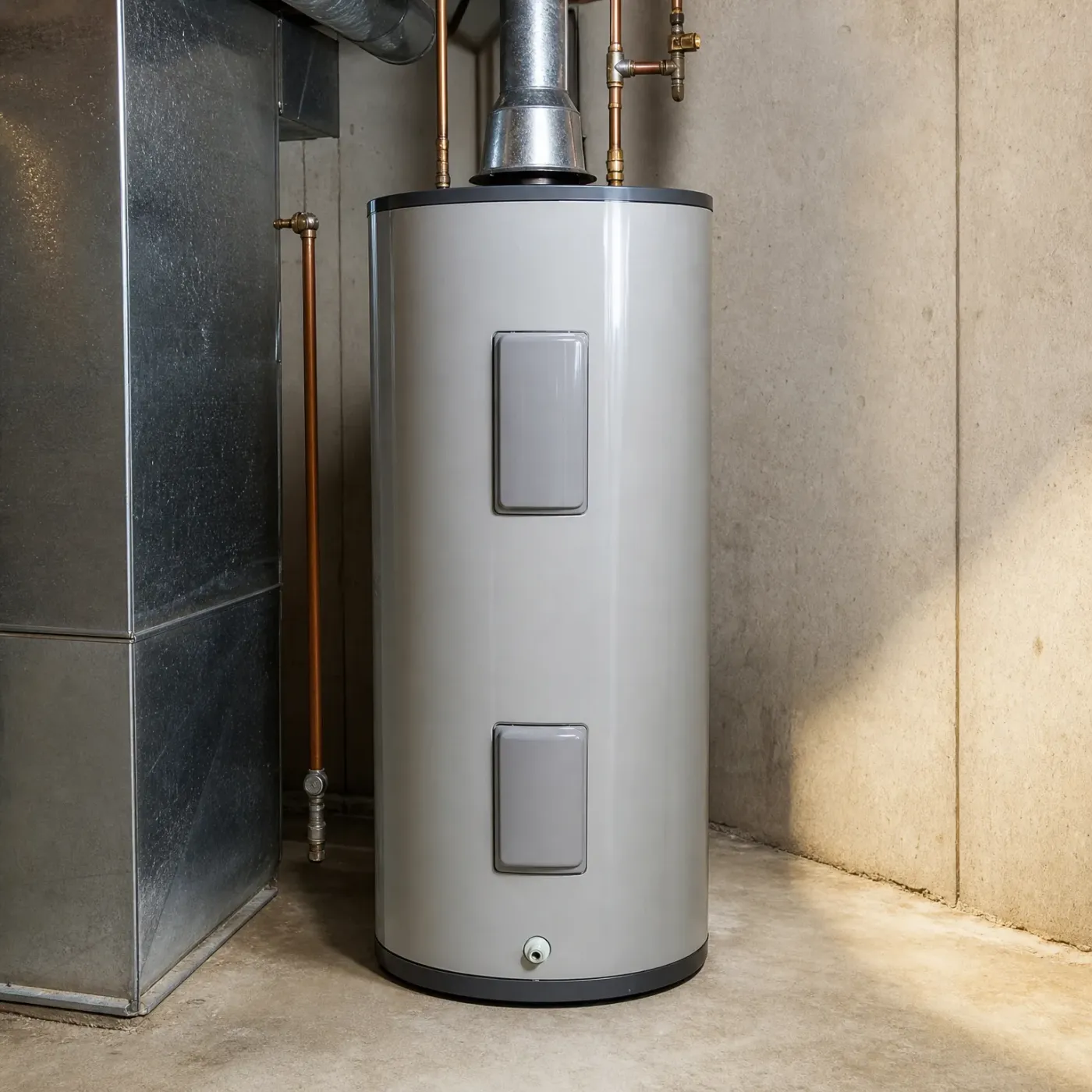
A gray cylindrical water heater standing on a concrete floor in a basement corner, with copper pipes and a metal duct running overhead along bare concrete walls.

Tank that gets flushed

The copper lines and galvanized vent stay clean where they meet the top of the tank. Flush it and the drain valve near the base still works the way it should. Water heats the way it's supposed to, with nothing sitting on the bottom getting in the way.

A white cylindrical water heater with rust stains and two access panels stands in a basement corner between a painted concrete block wall and a bare concrete wall, with metal pipes running up and alongside it on a concrete floor.

Tank that doesn't

Rust has taken hold on the outside, and that usually matches what's built up inside. Sediment packs in around the base, crowding the drain valve until it's hard to open. By the time a tank looks like this, the fittings on top are often next to go.

A gray-haired bearded man in a dark coat and scarf dusted with snow stands smiling in a dimly lit entryway with a white front door, a side table with a lit lamp, an oval mirror, and a patterned rug.
An older bearded man in a dark snow-dusted coat and gray scarf stands just inside a dimly lit home entry, with a framed picture, lit table lamp, and an adjoining room with a fireplace behind him, and snow visible through the open door.
A gray-haired, bearded man in a dark snow-dusted coat stands smiling in a dimly lit entry hall with a staircase, a lit table lamp, a framed picture, and a living room visible through a doorway.
An older man with gray hair and a beard, wearing a dark jacket dusted with snow, stands smiling in a dimly lit hallway with lamps and a living room visible behind him.
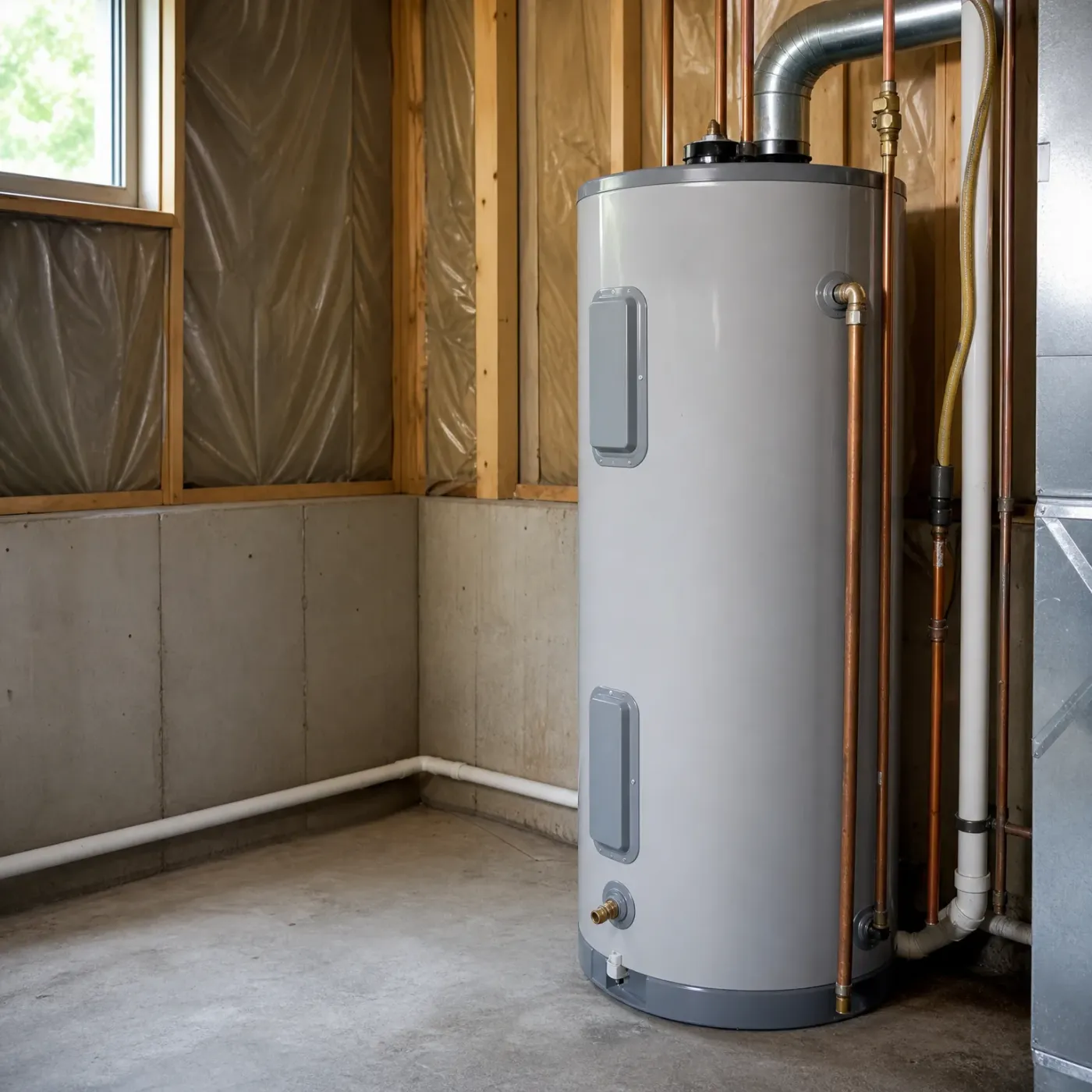
A gray cylindrical water heater stands in a basement corner with exposed wood framing, plastic vapor barrier, concrete walls and floor, copper and PVC piping, and a metal flue vent.

A local pro for your water heater maintenance

Send the form, and lining up the water heater tune-up stops being yours to chase.

A local pro who services water heaters gets in touch about the tune-up.

Find a water heater pro

It costs nothing to send, and you don't have to hire anyone.

A gray cylindrical water heater with copper piping and access panels stands against a concrete basement wall beside ductwork and vertical pipes.
A water heater kept on a yearly flush schedule, tank clean, pressure-relief valve and fittings free of corrosion.
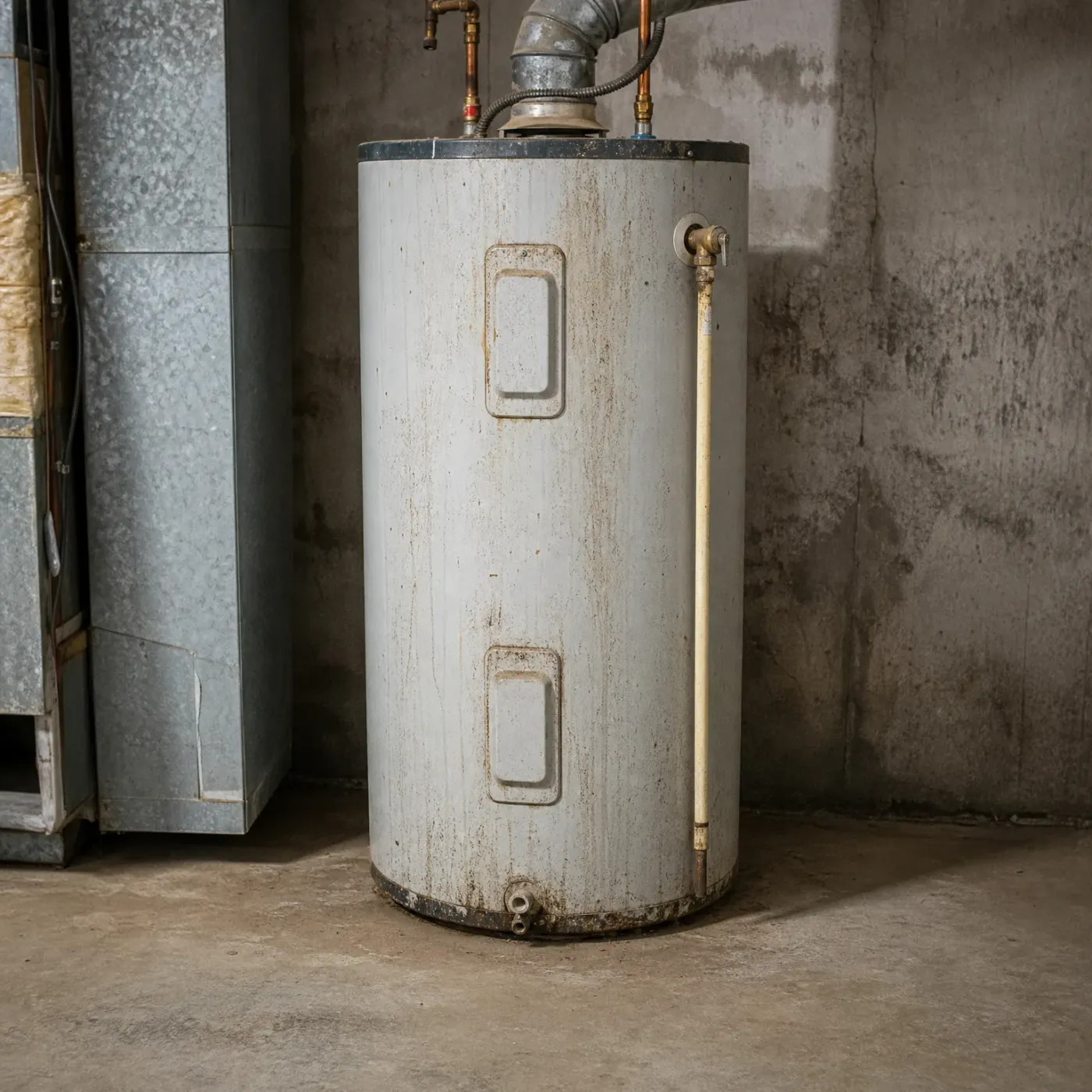
An old rust-streaked cylindrical water heater with two access panels, copper pipes and a flue at the top, and a discharge pipe along its side, standing on a concrete floor beside galvanized ductwork against a bare concrete wall.
A tank left unflushed for years, rusted through, with galvanized connections and a relief valve showing the wear.

Minerals in the water don't heat and rise the way the water around them does, so they fall to the bottom of the tank and stay there. On a gas water heater, that's a problem because the burner sits right under the steel floor. Heat has to pass through whatever's settled there before it ever reaches the water, so a tank carrying a layer of sediment takes longer to recover and runs louder doing it. Flushing the tank, opening the drain valve and letting it run for a few minutes, clears out the loose sediment before it has a chance to pack down. Left alone, that loose layer hardens, and once it hardens it acts like a liner between the burner and the water, holding heat against the steel instead of passing it through. The drain valve itself is part of this. If it goes years without being opened, the same sediment it's meant to flush out can clog it or seize it shut, which is one more reason to open it before that layer has time to set.

Why sediment builds up inside

  • Sediment settles because minerals in the water don't heat and rise the way water does, so they drop to the tank floor.
  • On a gas tank, that layer sits right over the burner, so the steel has to pass heat through sediment before it reaches the water.
  • The tank fires longer to make up for that lost transfer, which is why a neglected unit runs louder and takes longer to recover.
  • Opening the drain valve for a few minutes lets the loose sediment wash out before it packs down into a hard layer.
  • Once sediment hardens, it insulates the bottom of the tank and traps heat against the steel instead of letting it pass into the water.
  • A valve that hasn't been opened in years can stick or clog with the same sediment it's supposed to drain.
A woman wrapped in a thick beige fleece blanket sits on a sofa with an open book on her lap, beside a lit table lamp, with a frost-covered window behind her.
An older woman with gray hair in a bun and glasses, wearing a beige knit sweater, smiles while looking to the side in a warmly lit kitchen, with a loaf of bread on the counter in the foreground and a snowy scene outside the window.

How a Flush Actually Works

  • A cold water line feeds the tank from the bottom, so sediment collects right where incoming water enters and churns it up.
  • Draining the tank fast with full pressure behind it is what breaks loose packed sediment, not just letting water trickle out.
  • Shutting off the gas or power before a flush keeps the burner or element from firing on a tank that's run low or empty.
  • A hose run from the drain valve to a floor drain or outside clears the sediment without it ever touching the floor.
  • Opening the pressure-relief valve while draining lets air into the tank, which is what keeps the water flowing out instead of airlocking.
  • The cold supply gets opened partway during the flush to stir up anything packed into corners the drain valve alone won't reach.

A flush only works if it happens in the right order. Cold water comes into the tank through a dip tube that runs down near the bottom, which is exactly where sediment has been piling up. That incoming water stirs the sediment around every time the tank refills, so the mess doesn't stay put on its own. Before any of that gets drained, the gas valve or breaker needs to be off. A tank that's partway drained with the burner still lit or the element still powered can get damaged fast. Once that's done, a hose goes on the drain valve at the base of the tank and runs somewhere the water can go, a floor drain or outside, so the sediment doesn't end up across the floor. Opening the pressure-relief valve at the same time matters more than people think. Without it, the tank can airlock and the water stops draining halfway through, even with the valve wide open. Cracking the cold water supply partway during the drain helps too. The incoming water pushes into corners of the tank the drain valve can't reach on its own, loosening sediment that's packed in tight. None of this is complicated, but skipping a step is usually why someone ends up with a tank that still rumbles after a flush. The sediment that's left behind just settles right back where it was.

66.4% of homes statewide heat with gas

Most houses in Colorado heat water with gas, same as two out of three homes statewide. On a gas tank the burner sits right under the sediment layer, so that buildup matters more here than it would with an electric element off to the side.

ACS 2020-2024 5-year B25040

Once a year is the number to work from, and if you've never flushed the tank, that's the first job to get done. Colorado's water will keep leaving sediment behind no matter what, so this isn't a one-time fix, it's something to put on the calendar every year the tank is in service. A tank that gets flushed on schedule runs quieter and heats water the way it was built to, with nothing between the burner and the steel. Once you send the request, you're done with the part that takes effort. Someone who handles this work gets in touch, and from there it's their job to get your tank back on a clean schedule, not yours to chase down. You've got the answer now. What's left is just getting it done before another year on the water passes.

A gray cylindrical water heater with two access panels stands on a concrete floor in a basement beside metal ductwork, with copper pipes and a vent duct above.

Get the right pro for your water heater

Get a local pro

One request and the search for a pro is handled.

No charge to send it. You decide if you hire them.