Tell us about the job
Takes about a minute. No obligation.
Gas water heater replacement in Montrose County starts with what is already in the walls. Utility gas heats more occupied homes in Montrose County, Colorado than any other fuel, at 62.1% (2020-2024 ACS 5-year). A contractor working a replacement here has to establish how the existing unit vents, whether the flue is shared with a furnace or boiler, and whether the space supplies enough combustion air for the new unit. Those conditions vary house to house, and they decide what equipment a licensed installer can put in and how the rough-in gets configured.
Older electrical panels are where water heater installation in Montrose County can stall. Half the homes in Montrose County, Colorado were built in 1991 or earlier (2020-2024 ACS 5-year). A house built around that era was wired for appliances that drew far less than a modern electric water heater pulls, and a service panel sized for that older load may not have the capacity a new unit requires. A contractor assessing the job checks the panel before settling on equipment, because the panel is what determines whether the install is straightforward or whether an electrician has to come first.
What a Water Heater Installation Covers
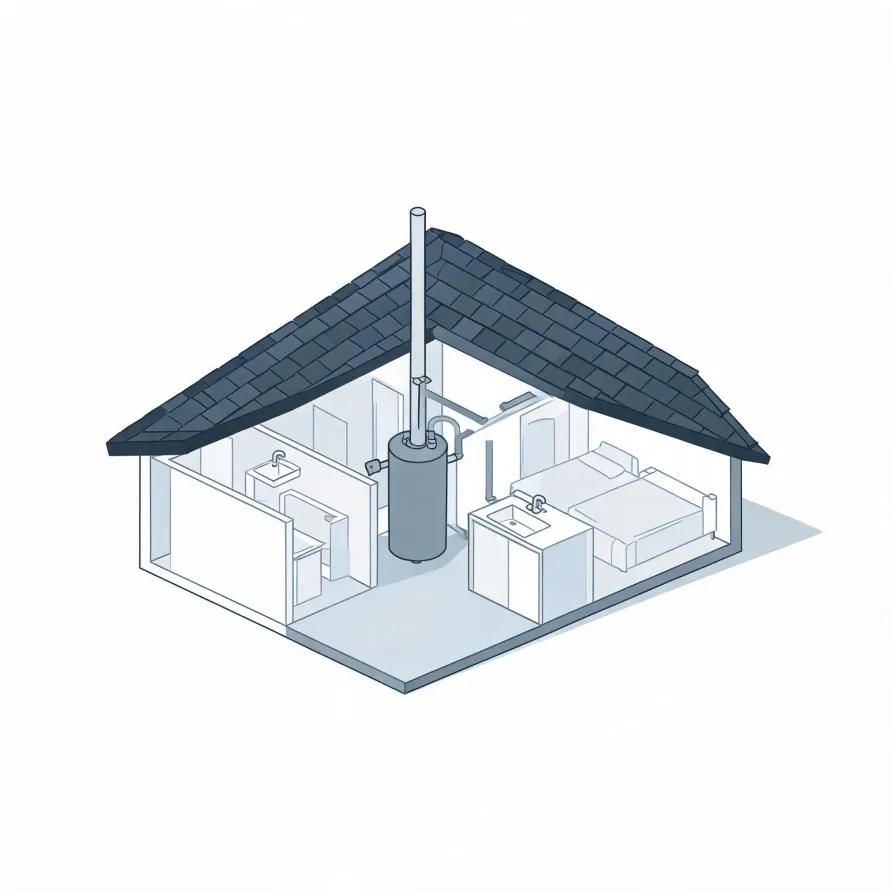
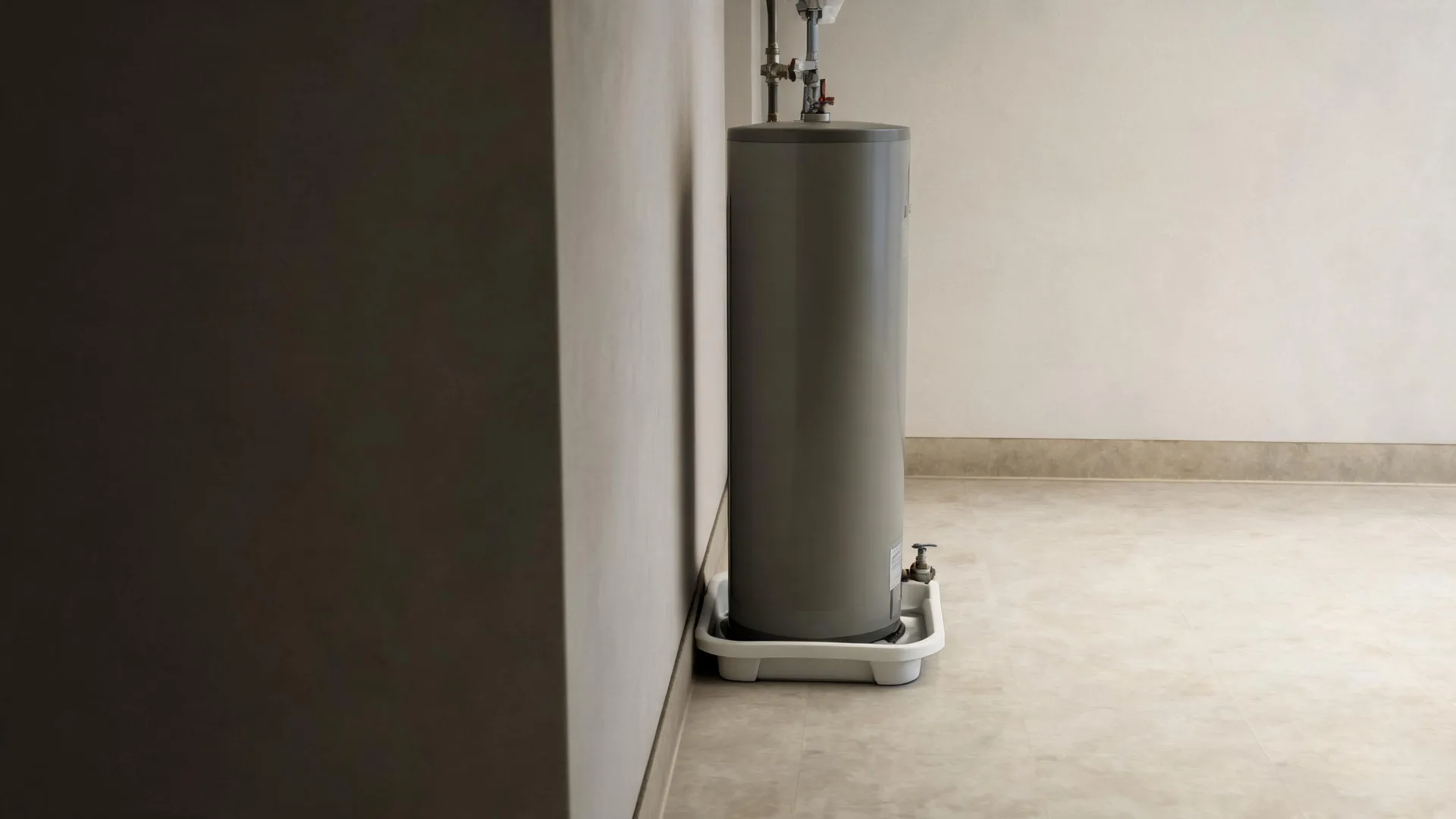
The tank or tankless unit is the centerpiece of the installation, sitting in a utility room, basement, closet, or garage depending on the house. It holds or heats the water that feeds every fixture. The pressure relief valve mounts directly on the unit and is part of every new installation.
The supply and return lines connect the unit to the home's cold water inlet and hot water outlets. A new installation also includes the temperature and pressure controls, the drain valve at the base of the unit, and where gas is the fuel source, the gas line connection and flue or venting that carries exhaust out of the house.
The drawing shows the general layout of a water heater system, and a licensed contractor determines what applies to this particular house.
Get matched in Montrose CountyMontrose County, by the numbers
260 severe weather events were recorded in Montrose County, Colorado between 2015 and 2024.
NOAA National Centers for Environmental Information, Storm Events Database, bulk CSV export, events 2015-01-01 through 2024-12-31.Half the homes in Montrose County, Colorado were built in 1991 or earlier (2020-2024 ACS 5-year).
U.S. Census Bureau, 2020-2024 American Community Survey 5-Year EstimatesMontrose County, Colorado holds 19,758 housing units (2020-2024 ACS 5-year).
U.S. Census Bureau, 2020-2024 American Community Survey 5-Year EstimatesOwners occupy 75.4% of the occupied homes in Montrose County, Colorado (2020-2024 ACS 5-year).
U.S. Census Bureau, 2020-2024 American Community Survey 5-Year EstimatesSevere Weather Events in Montrose County
Montrose County's climate puts real demand on water heating equipment, and that demand shifts with how hard the weather runs from year to year. Sizing and installing a water heater here is a local calculation, not a generic one.
260 severe weather events, 2015–2024. Source: NOAA National Centers for Environmental Information, Storm Events Database.