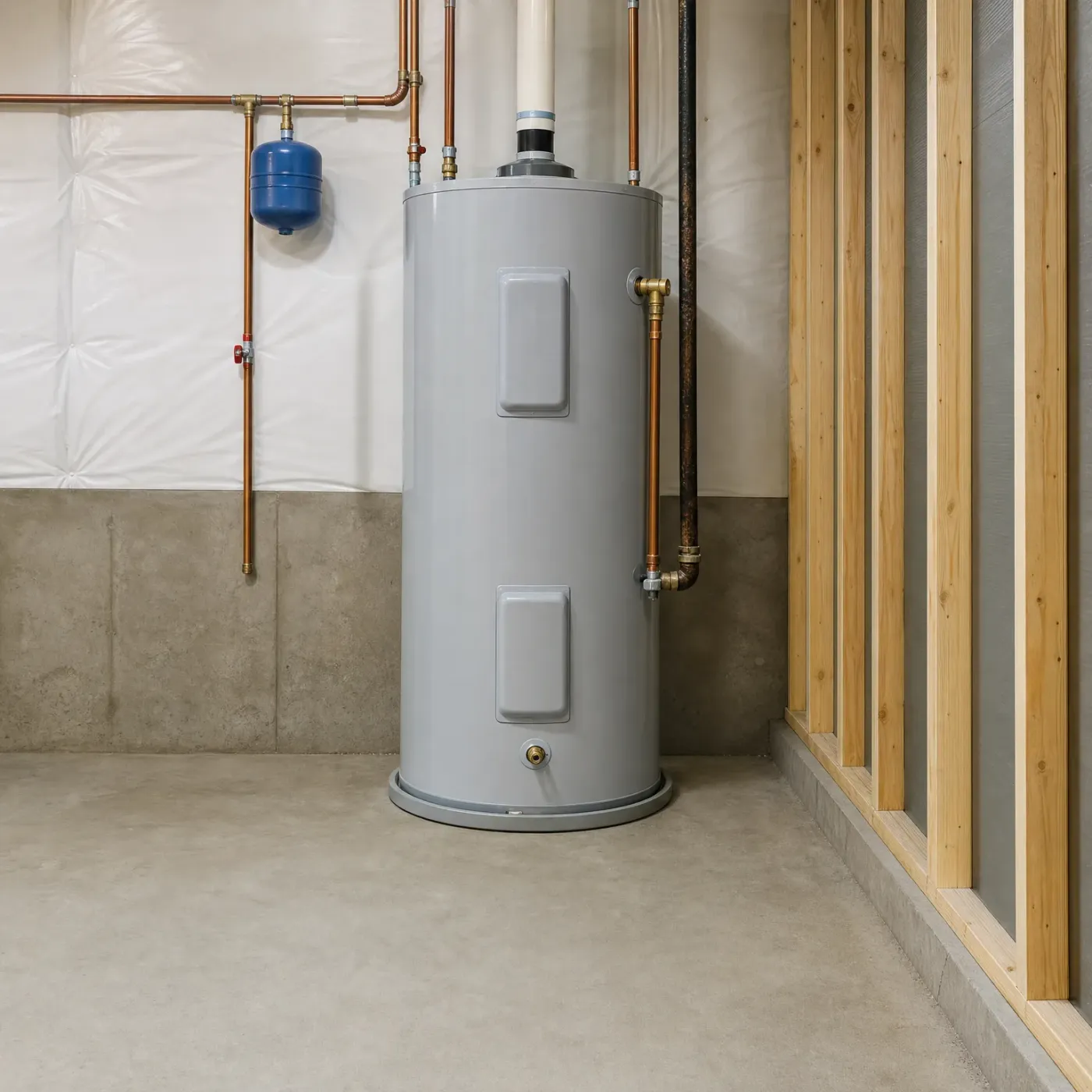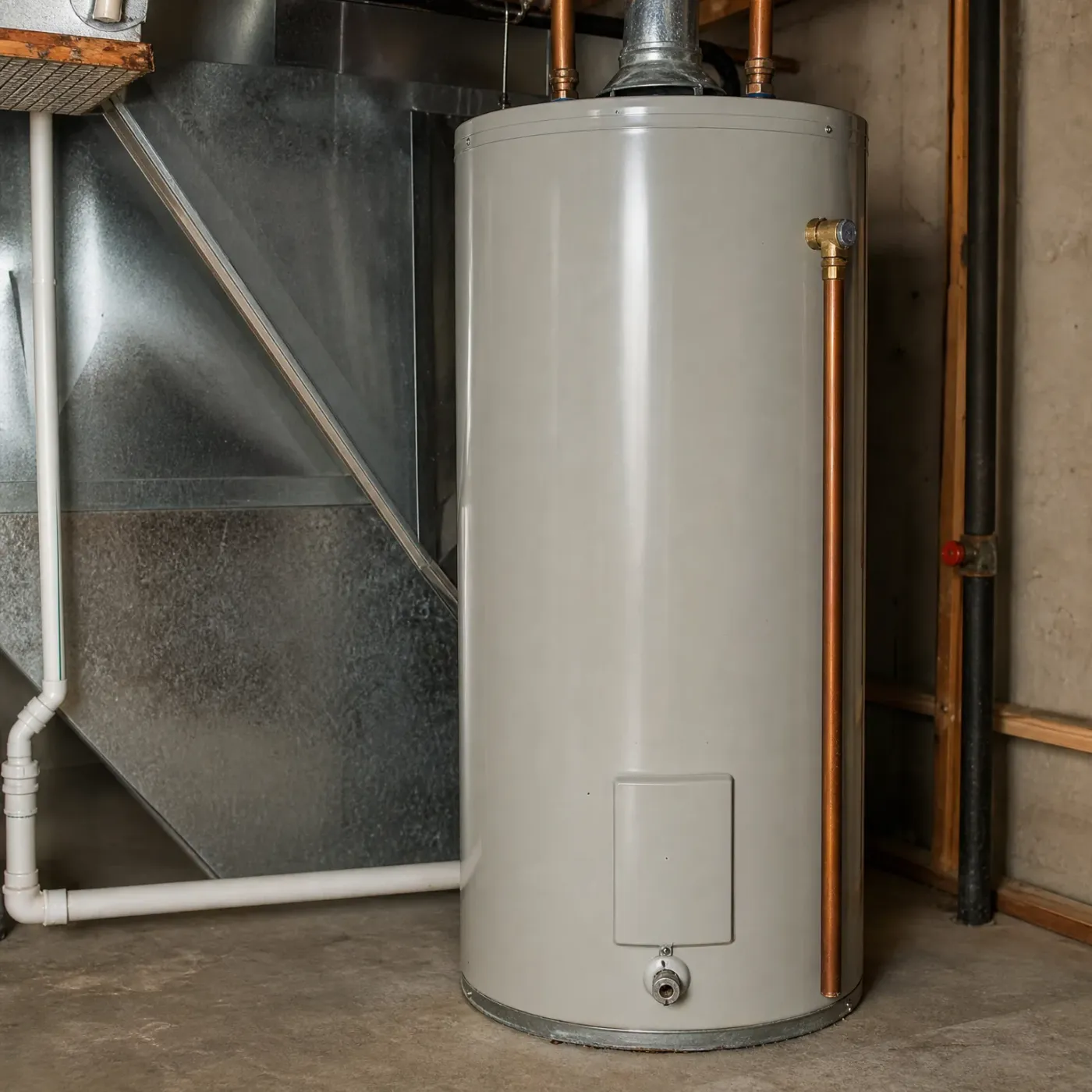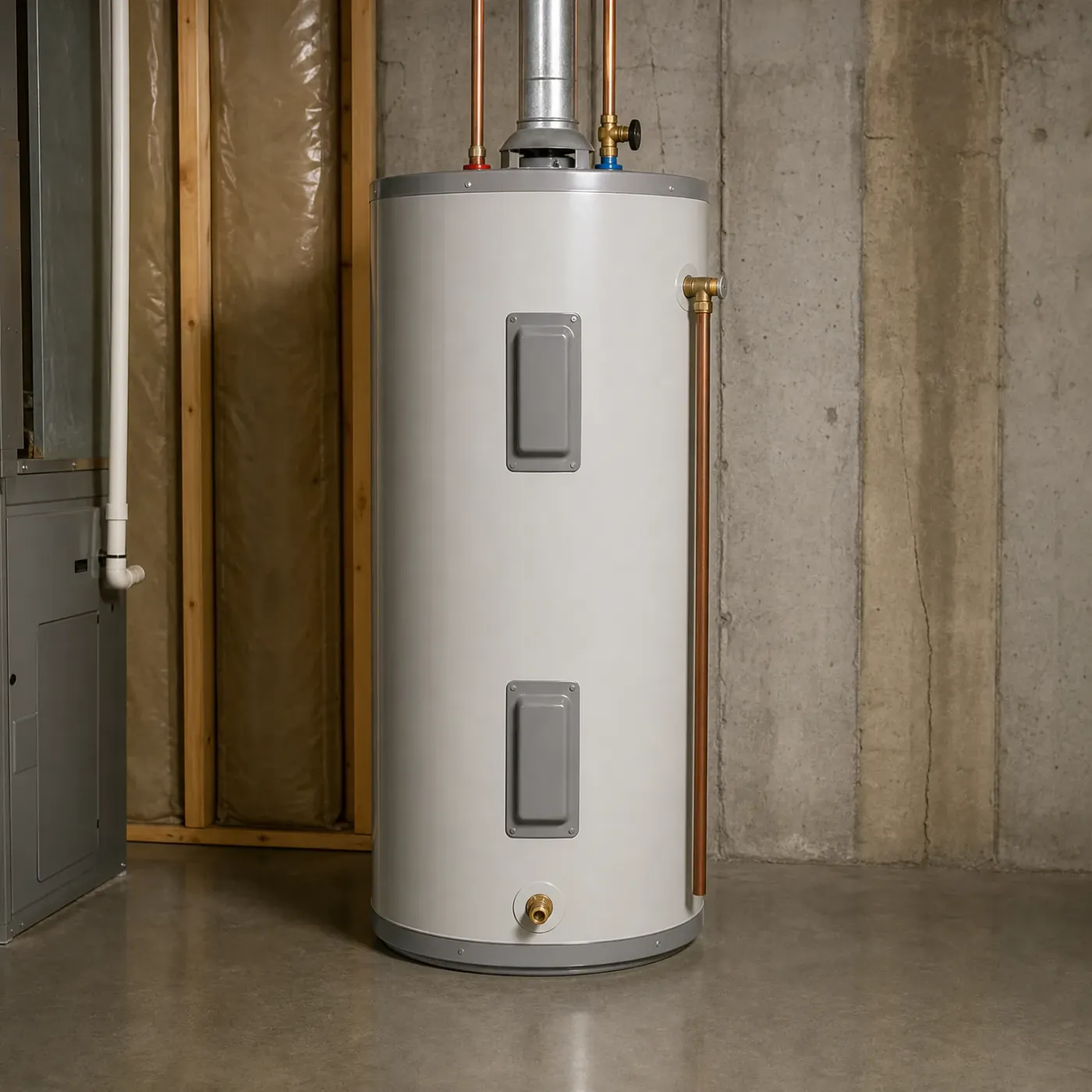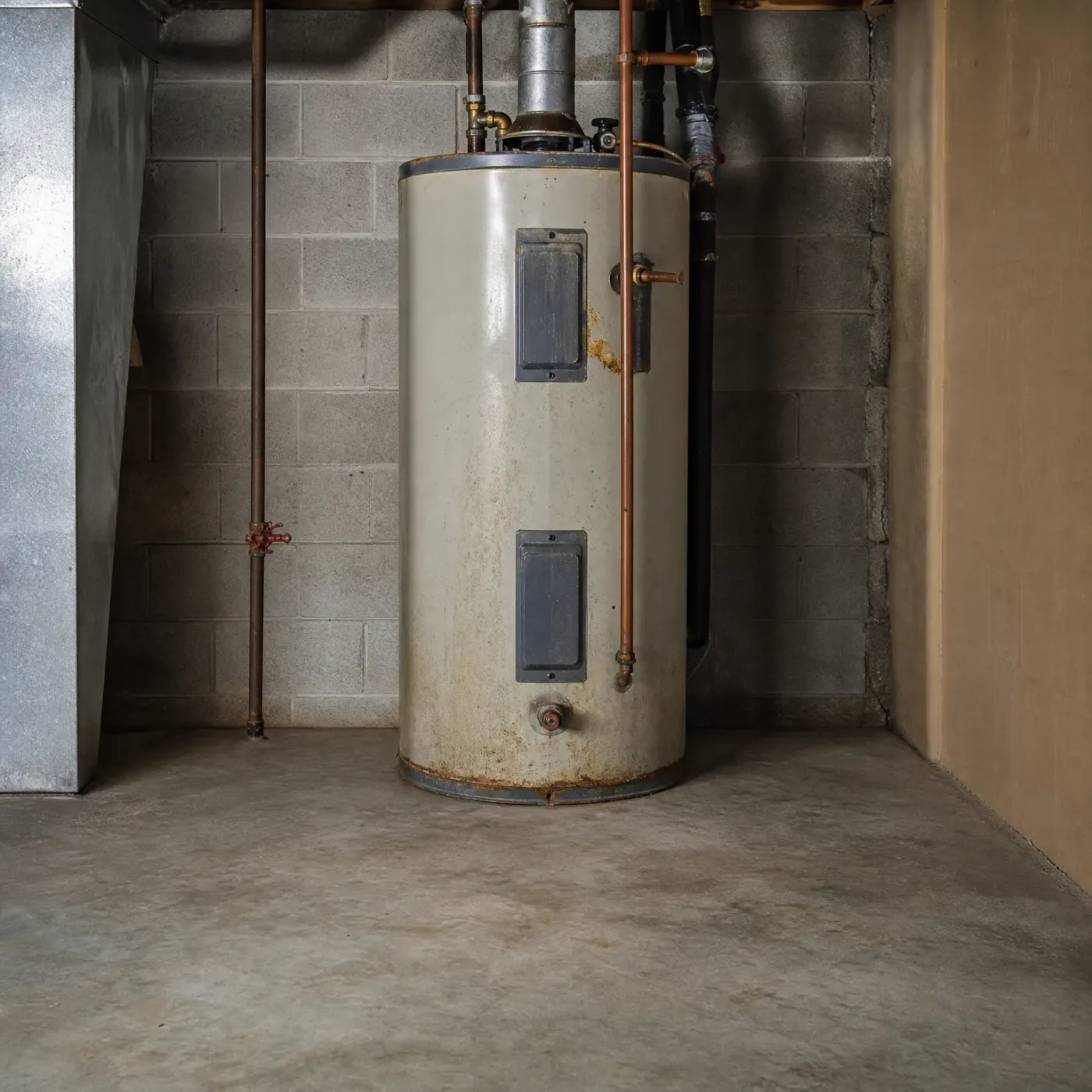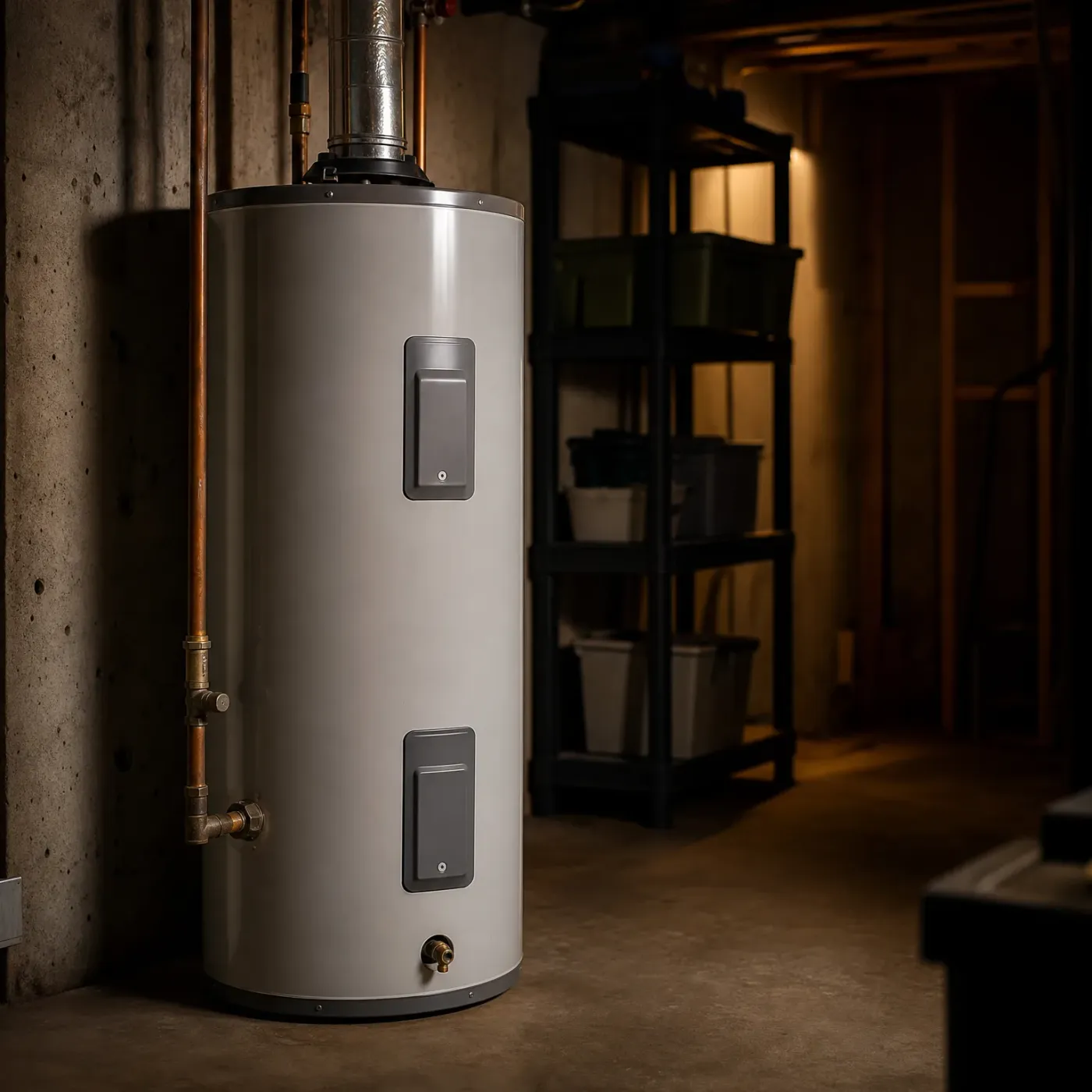
A tall cylindrical water heater with a metal flue pipe and copper plumbing stands against a concrete wall in a dim basement, with a black shelving unit holding plastic storage bins nearby.

Get matched with a water heater pro in Denver County

Water heater leaking in Denver, CO

A water heater leaking usually means a bad valve, a loose fitting, or a tank that's failing from the inside, and what you do next depends on which one it is. This page gets into how to tell them apart and what each one means for your house. Skip the search for a plumber and get matched with one who can look at it.

Find a water heater pro

A puddle under your water heater usually comes from one of a few places. A loose connection at the top, where the cold water line or the pressure relief valve threads in, can weep slowly and leave water running down the side of the tank. The drain valve near the bottom can do the same if it's not seated tight. Neither of those means the tank itself is bad. But if water is coming from underneath the tank, or from a seam on the tank body, that's the steel lining failing from the inside, usually from years of sediment and mineral buildup in Denver's water. That kind of leak doesn't stop or get better. A tank that's rusting through needs to be replaced, not repaired, and waiting only risks a bigger mess on your floor or in a crawl space below it.

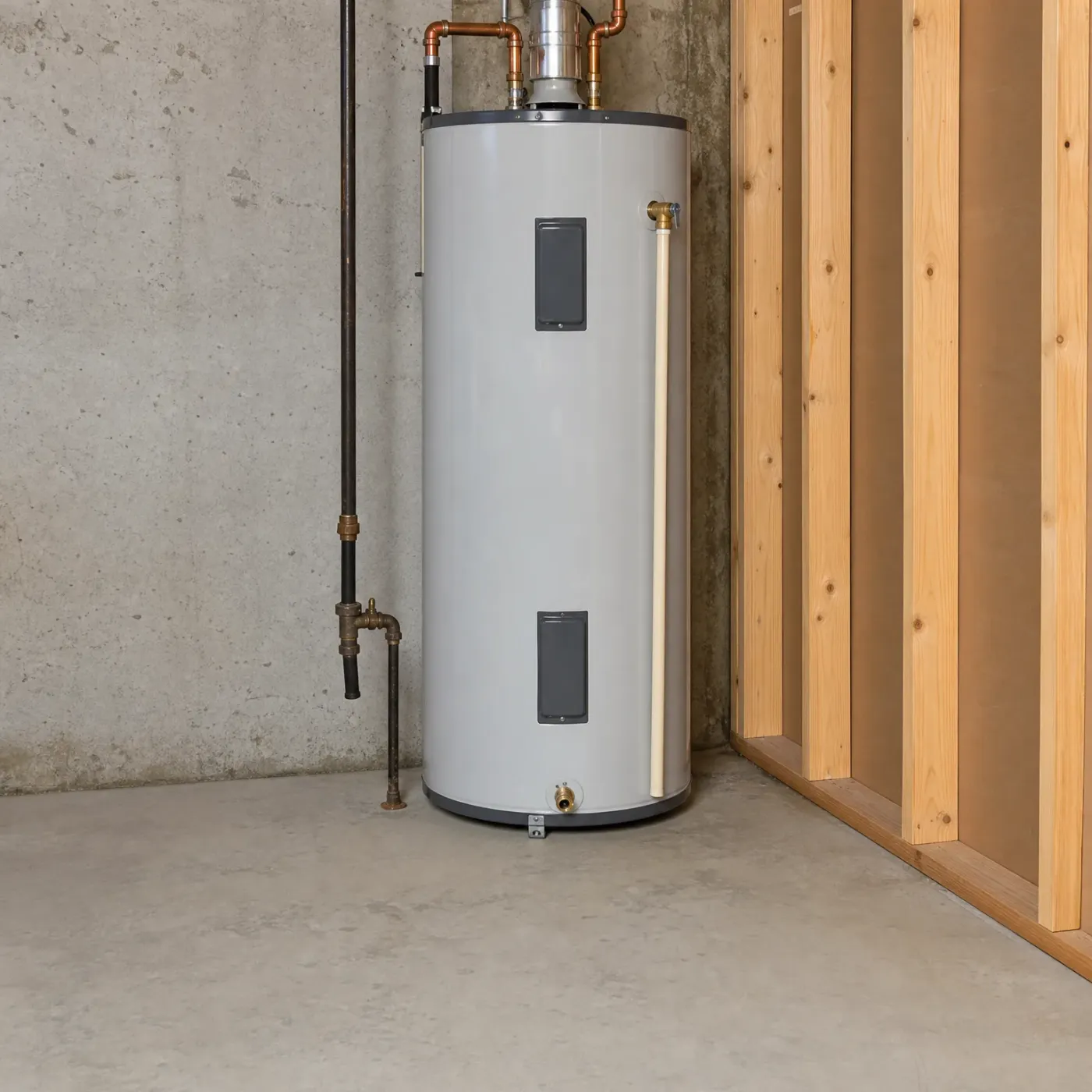
A light gray cylindrical water heater with two access panels stands on a concrete floor against a concrete wall, with copper and black pipes beside it and an unfinished wood stud wall to the right.

Working the way it should

A water heater in good shape stays dry at every joint. The copper lines at the top are tight, the pressure relief valve has its discharge tube aimed at the floor, and the drain valve at the base is closed and dry. No rust streaks, no puddle, no sound of dripping from the basement.
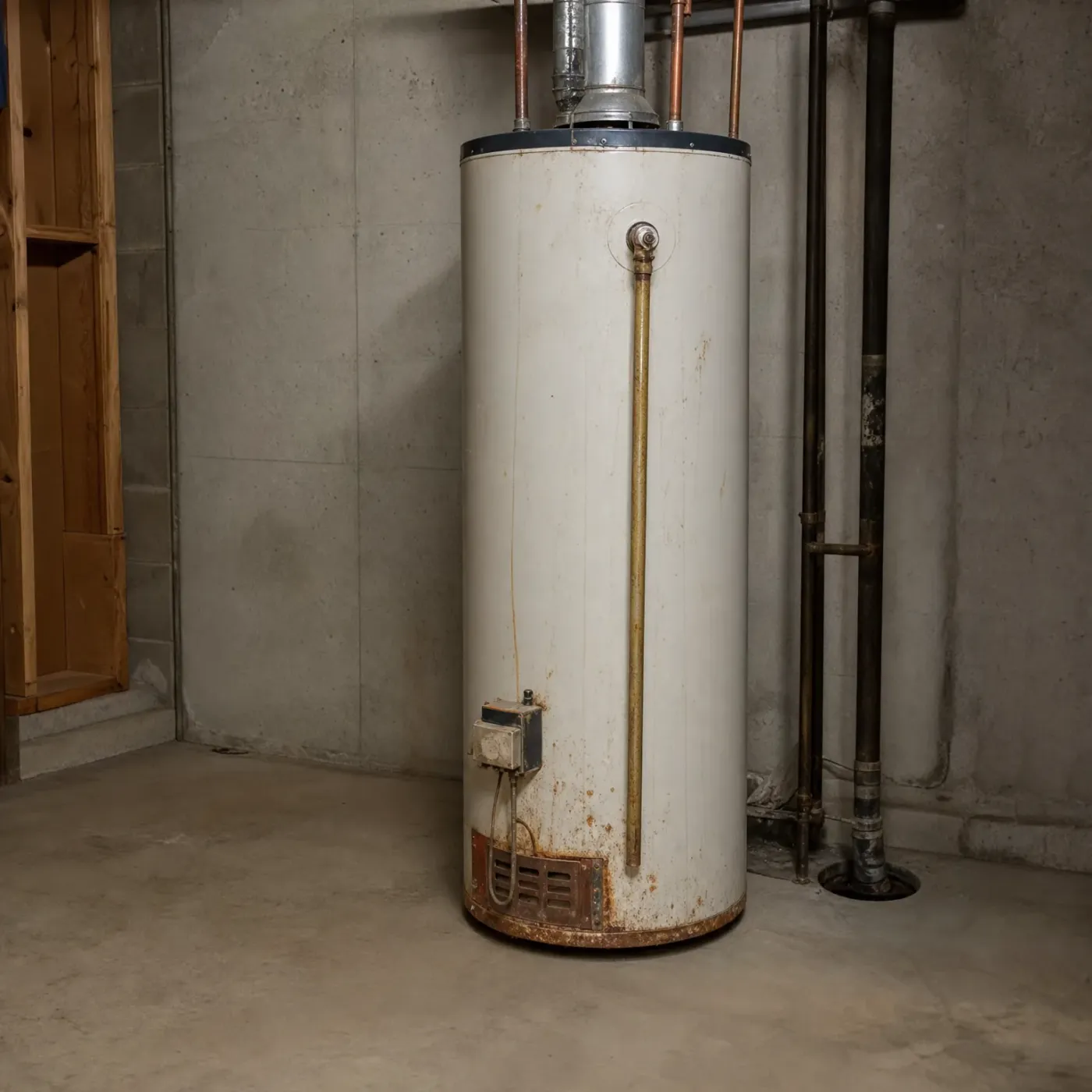
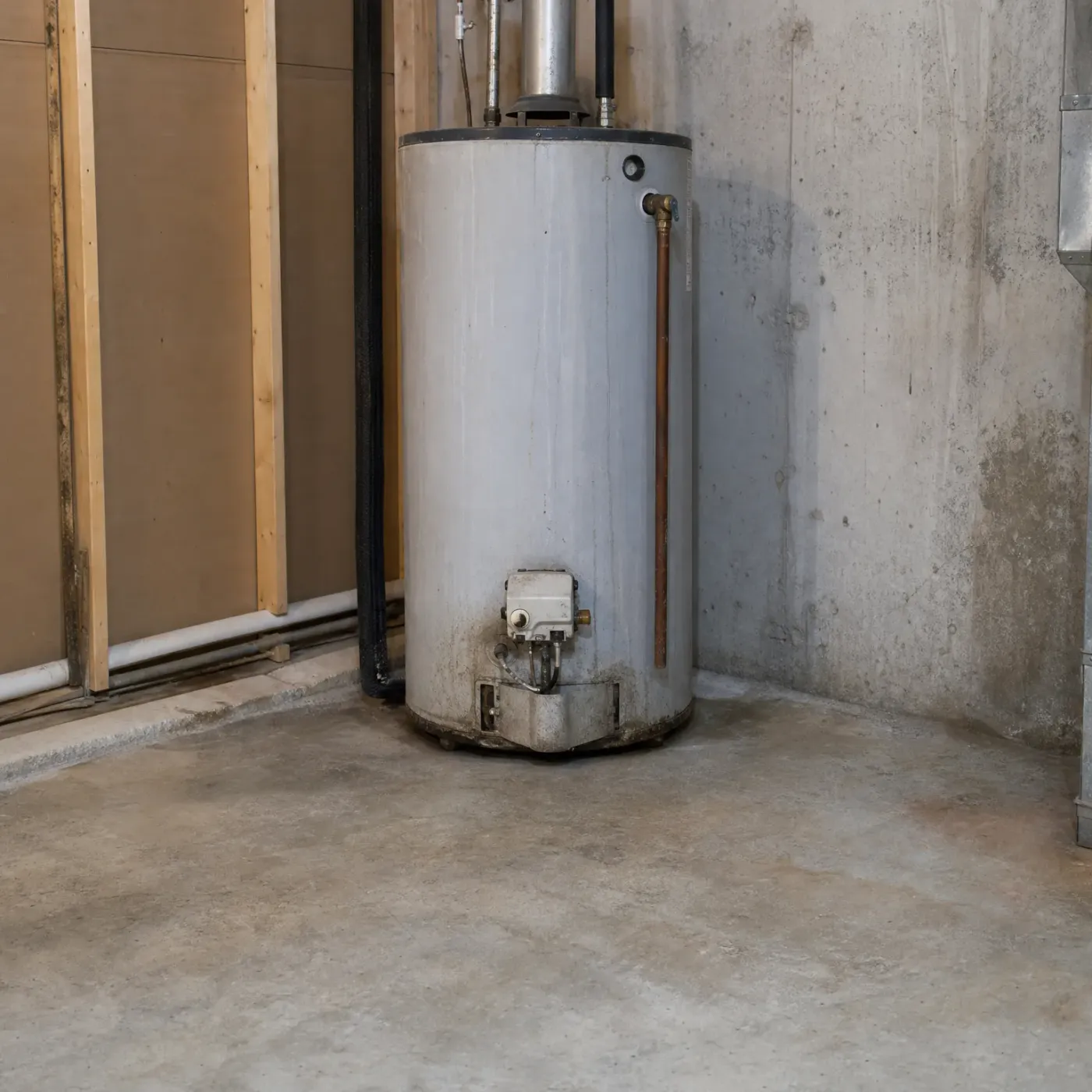
An older white gas water heater with rust staining and an exposed vertical pipe stands against a concrete block basement wall, with a metal flue above and black vertical pipes to the right.

A tank in trouble

Rust spreading across the base and up the lower section means the tank itself is failing, not just a fitting. Once steel rusts through, water finds its way out through the metal, not through a valve you can tighten. A water heater at this point needs replacing, not repairing.

How many people does a leaking water heater here affect?

  • 2.1 people per household on average

    A Denver County household runs 2.10 people on average, so a tank that quits usually means everyone at home is short on hot water at once.

  • Half the homes here were built by 1975

    Half the homes in Denver County were built in 1975 or earlier. A water heater that old has likely been replaced once already, maybe twice.

  • 60.8% of homes heat with gas

    60.8% of homes here heat with gas, more than any other fuel, so a gas water heater is what most leaks here turn out to involve.

ACS 2020-2024

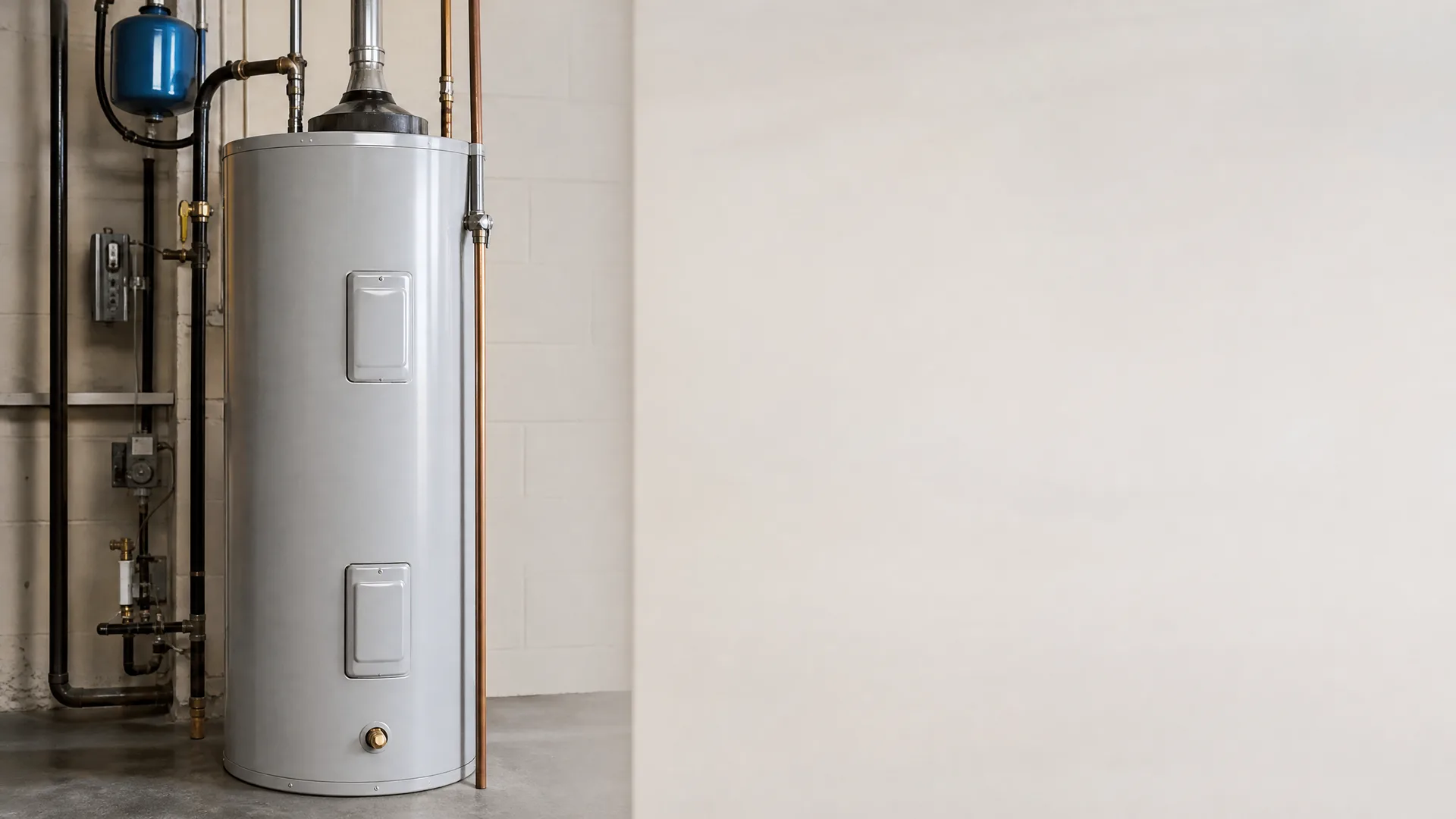
A gray cylindrical water heater with two access panels stands on a concrete floor beside copper and black pipes, a blue expansion tank, and an electrical box against a light wall.

Where the leak actually starts

A tank that's rusted through leaks from the inside out, and no amount of tightening fittings fixes that. Steel tanks are lined with glass, and once that lining cracks, the steel underneath corrodes and weeps water low on the tank or from the bottom seam. A fitting or valve can be replaced on its own. A tank doing this can't, because the leak is the metal itself giving out.

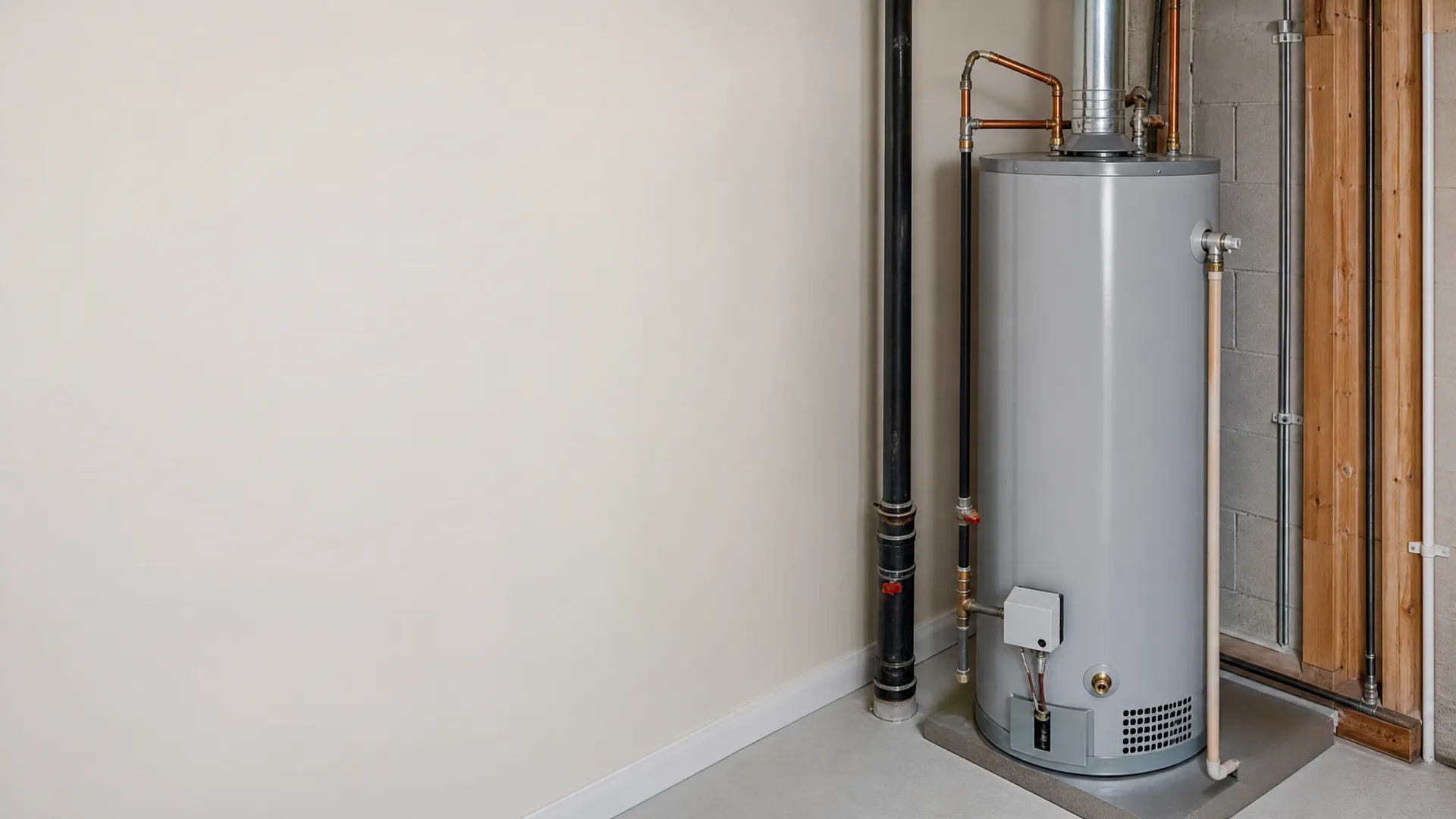
A gray gas water heater with copper and black pipes and a metal flue stands in the corner of a room with a beige wall, concrete block wall, and wood studs.

Why the pressure relief valve matters

The pressure relief valve on top of the tank is there to open if pressure inside climbs too high, letting water out before the tank itself gives way. Some dripping from its discharge tube after it releases is normal. A steady drip with no clear cause usually means the valve itself is bad or the pressure in the system is running higher than it should, and either one is worth having looked at before it gets worse.

Check It Yourself or Call Now

Call a plumber now

  • A leak from the tank itself won't stop on its own, and a steel tank that's rusted through only gets worse from there.
  • Water pooling near the base can reach wiring or a gas line nearby, which turns a water problem into a safety problem.
  • If the leak is coming from the pressure relief valve discharging on its own, that can mean pressure inside the tank is too high.
  • Letting it sit risks water reaching the subfloor or spreading to whatever's stored near the water heater.
  • A plumber can tell you in minutes whether it's a fitting worth tightening or a tank that needs to come out.

Try this first

  • Check the fittings at the top of the tank, where the cold water line and the pressure relief valve thread in, for a loose connection you can snug by hand or with a wrench.
  • Look at the drain valve near the bottom of the tank. If it's not fully closed, that alone can account for water on the floor.
  • Run a dry paper towel along the tank's seams and joints to find exactly where the water is coming from before you decide anything.
  • Shut off the cold water supply to the tank if the leak is steady, so you're not standing water while you sort out where it's coming from.
  • If the water is coming from the tank itself rather than a fitting, nothing you do at home stops that leak for good.
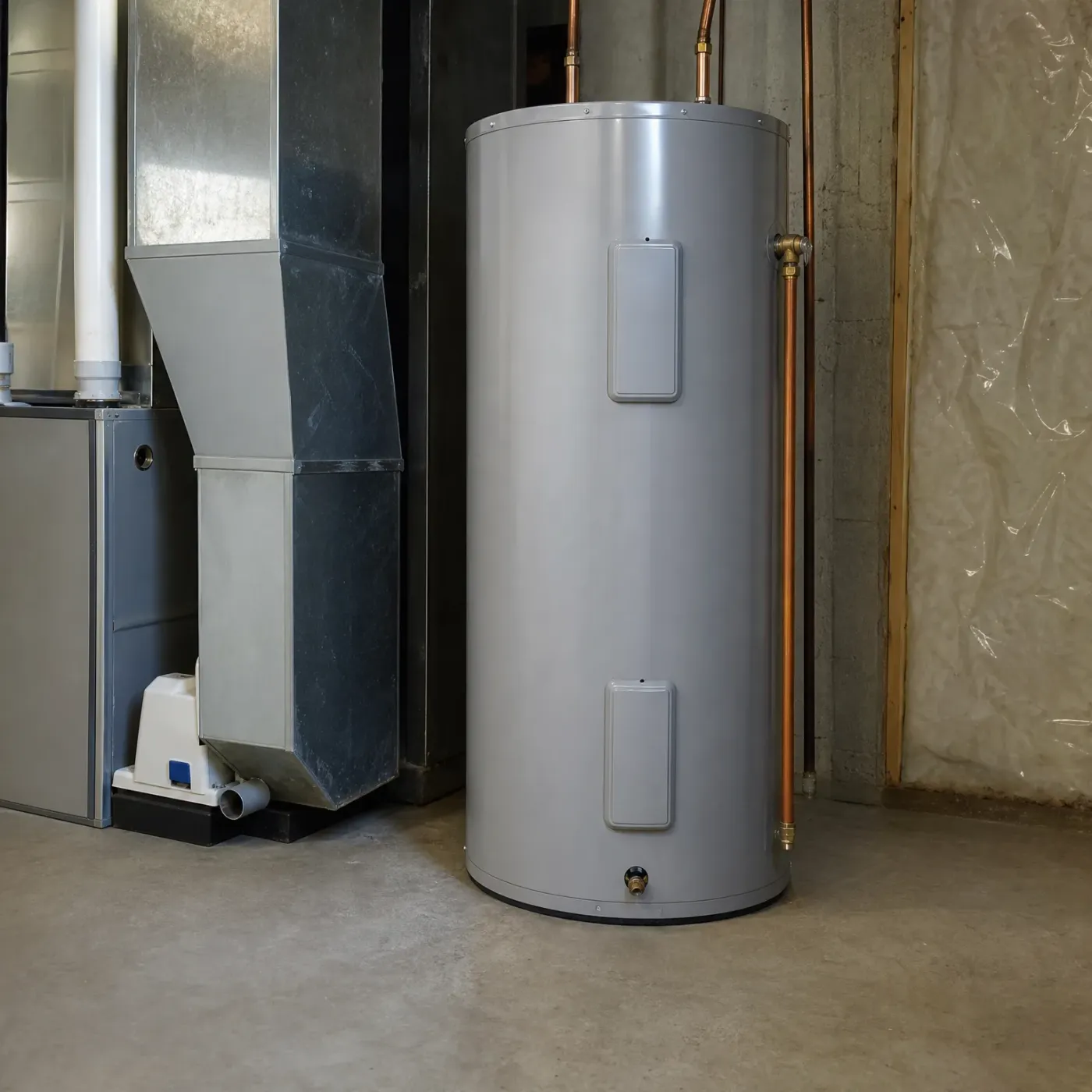
A gray cylindrical electric water heater with two access panels stands on a concrete floor in a basement, with copper pipes above and behind it, sheet-metal ductwork and a furnace to the left, and a plastic-covered insulated wall to the right.

Dry and tight at every connection

This tank sits clean on the concrete floor, copper lines running up to brass fittings with no corrosion around them. Nothing streaks down the side. A water heater in this shape just needs its fittings checked once in a while, nothing more.

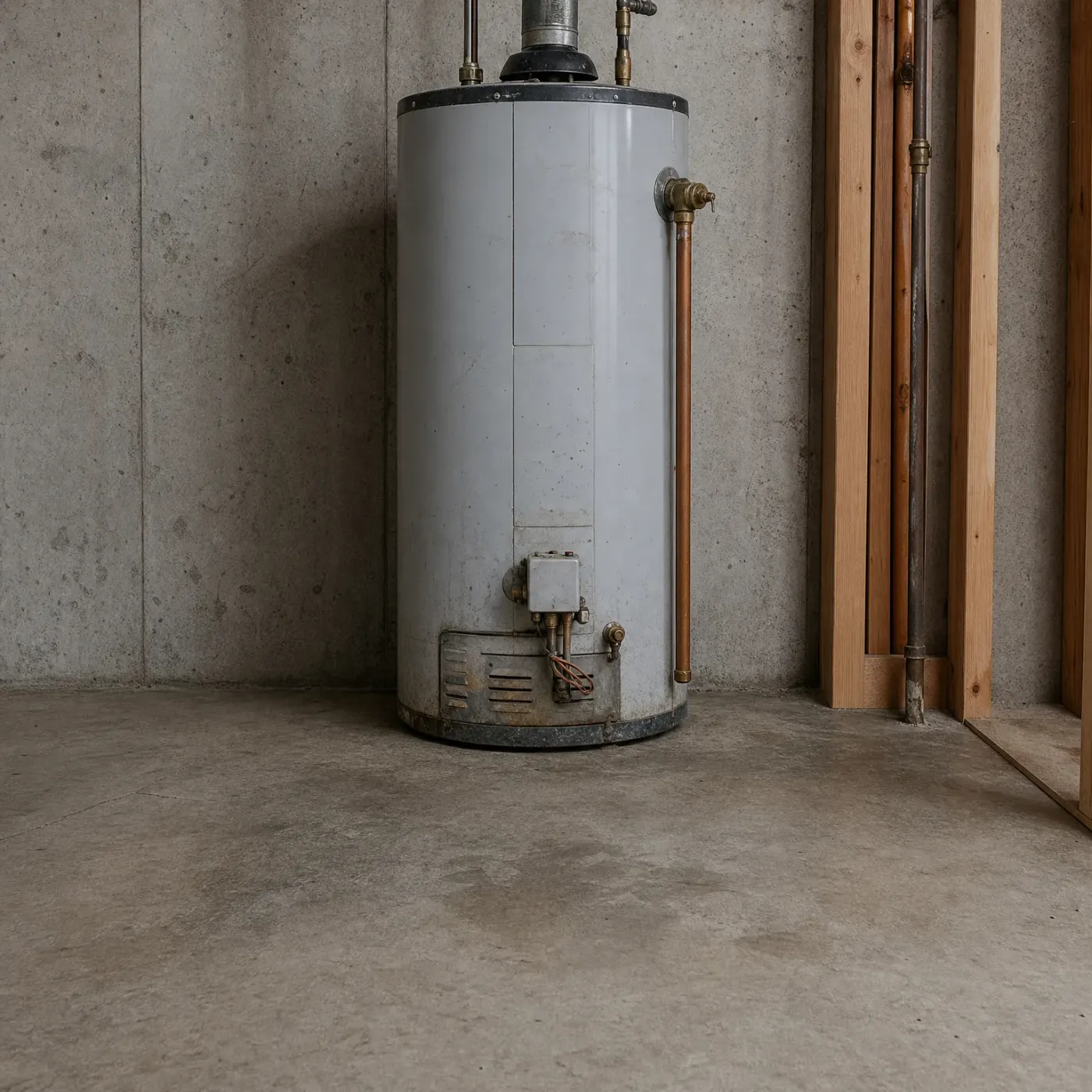
An older gas water heater with a copper pipe and flue stands on a concrete floor in a basement corner between a bare concrete wall and an unfinished wood-framed wall.

Rust at the base, age in the metal

This gas water heater has been in that corner a long time. Rust and grime have built up around the burner assembly at the bottom, and that kind of staining usually means the tank is corroding from the inside, not just a loose fitting.

An older gray gas water heater with copper and brass piping stands on a concrete floor against a concrete wall, beside exposed wooden wall framing and vertical pipes.
Before you get your water heater repair
A gray cylindrical water heater stands on a concrete basement floor against a plastic-sheeted insulated wall, with copper supply pipes, a blue expansion tank, a black vertical pipe, and exposed wood wall framing at right.
After you get your water heater repair
A beige cylindrical water heater with copper pipes and a brass valve stands on a concrete floor in a basement beside galvanized ductwork, white PVC piping, and a black vertical pipe along a concrete wall.

Find a water heater repair pro in Denver County

Explain the water heater problem once instead of to every shop in Denver County.

Get matched with a pro who works on water heaters in Denver County.

Skip the search

You're not committing to anything by asking.

A white cylindrical water heater with two access panels, copper supply pipes and a metal flue, standing on a concrete floor against a concrete wall beside insulated wood framing and a gray electrical panel.
A tank in good shape has clean copper lines and a dry floor underneath it, with nothing streaking down the sides.
An aging cream-colored water heater with rust streaks and two access panels stands on a concrete floor against a concrete block basement wall, with copper and black pipes running up to the ceiling and a metal duct at left.
Rust climbing the tank wall and flaking paint mean the steel underneath is already corroding from the inside.

Is it safe to turn off my water heater if it's leaking?

You just found water pooling around the base of your water heater and your first thought is to shut it down before it gets worse. That's the right instinct, but how you do it matters, and it's different depending on whether you've got a gas unit or an electric one. Doing it the wrong order can leave gas flowing or a heating element running dry.

Yes, and you should turn off both the water and the power or gas

Turning it off is safe and it's the right move. Shut the cold water supply valve on top of the tank first, then deal with the energy source. If it's gas, turn the gas control valve to off or pilot. If it's electric, switch off the breaker that feeds it rather than just hoping it cycles down on its own. Most homes in Denver run gas water heaters, so that valve is usually the one you're looking for. Leaving the gas or power on with no water refilling the tank can damage the unit further, and on a gas tank it's not worth the risk. Once it's shut down, the leak stops getting worse while you sort out what caused it.

  1. Water finds the weak point first, at a fitting or the tank seam.

  2. A loose fitting weeps slowly, so the puddle starts small.

  3. A cracked tank lining lets steel corrode and seep from inside.

  4. Rust works through the steel wall until it opens a pinhole.

Power here costs 15.91 cents per kilowatt-hour

At 15.91 cents per kilowatt-hour, running an electric water heater here costs about what it does anywhere in the country. That's one less thing to weigh if a repair means swapping in an electric unit or adding a heat trap to cut standby loss, since the power behind it isn't pushing your bill up on its own.

EIA-861 2025

A woman with dark hair in a bun wearing a cream knit sweater sits on a gray sofa in a bright living room, looking off to the side.
A woman wrapped in a knit blanket sits on a gray sofa in a living room, looking toward a bright window with houseplants and an armchair in the background.
A woman in a gray cowl-neck sweater sits on a light sofa with cushions, smiling and looking to the side, with a kitchen and window visible behind her.
A woman with dark hair in a bun, wearing a light linen shirt, sits on a sofa and looks to the side, with a window, houseplants and a kitchen with pendant lights blurred behind her.
A man in a dark blue shirt stands in an open front doorway of a stucco and wood-clad house, facing a blond woman seen from behind in the foreground on a stone walkway.

A leak doesn't fix itself

A loose fitting, a bad drain valve, or a tank rusted through from the inside all show up the same way, as water you didn't put there. The fix is different for each one, and that's the part worth getting right before you spend money on it. What's true in every case is that it doesn't stop on its own, and the longer a steel tank sits corroding, the more of it fails.

Getting the right answer means getting a plumber who's actually looked at your tank, not a guess from across the room. That's what this page gets you to: a plumber who works in Denver County matched to what you've described, who calls you instead of you working down a list of numbers and repeating the same story to each one.

A dark ceramic mug on a round wooden table beside a light grey sofa with a woven cushion and knit throw, with a window, potted plant, floor lamp and wooden cabinet blurred in the background.
A smiling older woman with gray shoulder-length hair in a cream cable-knit turtleneck sweater stands behind a wooden board holding a round loaf of bread, in a warmly lit kitchen with a dark window and shelves behind her.
A woman with dark hair in a bun sits wrapped in a chunky knit blanket on a couch with a child resting his head on her shoulder, eyes closed, beside a lit lamp and bookshelf indoors.

Water Heater Repair

A water heater pro near you

Skip calling shops to ask who repairs water heaters in Denver County.

A black-framed smartphone standing upright against a plain light gray background, its screen filled with solid green.
Step 1 of 3: Equipment