A grassy slope with scattered conifers in the foreground overlooking forested ridges and a partly snow-covered mountain peak under a cloudy sky.I'm done searching

Water heater making popping noises in Colorado Springs, CO

Get the water heater repair search off your mind today.

That popping or rumbling from your water heater is sediment. Water in Colorado Springs leaves mineral deposits on the bottom of the tank, and over time that layer hardens. When the burner or heating element fires, water trapped under the sediment turns to steam and pushes its way out, and that's the noise you're hearing.

It won't go away on its own. The sediment keeps building, the popping usually gets louder or more frequent, and the tank has to work harder to heat the water sitting above that layer. Left alone, it's the kind of thing that shortens how long a water heater lasts.

A plumber who works on tanks all over El Paso County has heard this exact noise more times than they can count, in homes with the same water you have. They'll know within a few minutes whether a flush clears it or whether the tank's been taking that kind of strain long enough that something else needs a look.

You don't have to find that person yourself. Send the request and the search is done. One licensed plumber local to Colorado Springs gets matched to your job, not a handful of companies competing for your callback. No sorting through quotes, no explaining the noise five different times to five different voices. Just the one call, from someone who already knows what the sound means before they walk in.

What's below gets into why the sediment builds up here, what a flush involves, and when the noise means it's time to think about replacing the tank instead of clearing it.

Why is my water heater making popping noises?

You hear a popping or rumbling sound coming from the water heater, usually when it's running, and it's loud enough that you've started wondering if something is wrong. It's not a sound a water heater is supposed to make, so it makes sense to want to know what's causing it before it turns into a bigger problem.

Sediment buildup on the tank bottom

Colorado Springs water carries minerals that settle to the bottom of the tank over time. That layer hardens into a crust, and when the burner heats the tank, water gets trapped underneath it. The trapped water turns to steam, pushes through the sediment, and that's the popping you hear. The more sediment built up, the louder and more frequent the noise gets. It's not dangerous on its own, but it means the burner is working harder to heat water through that layer, and the tank bottom is taking more wear than it should. Left alone, the sediment keeps building and the popping usually gets worse, not better.

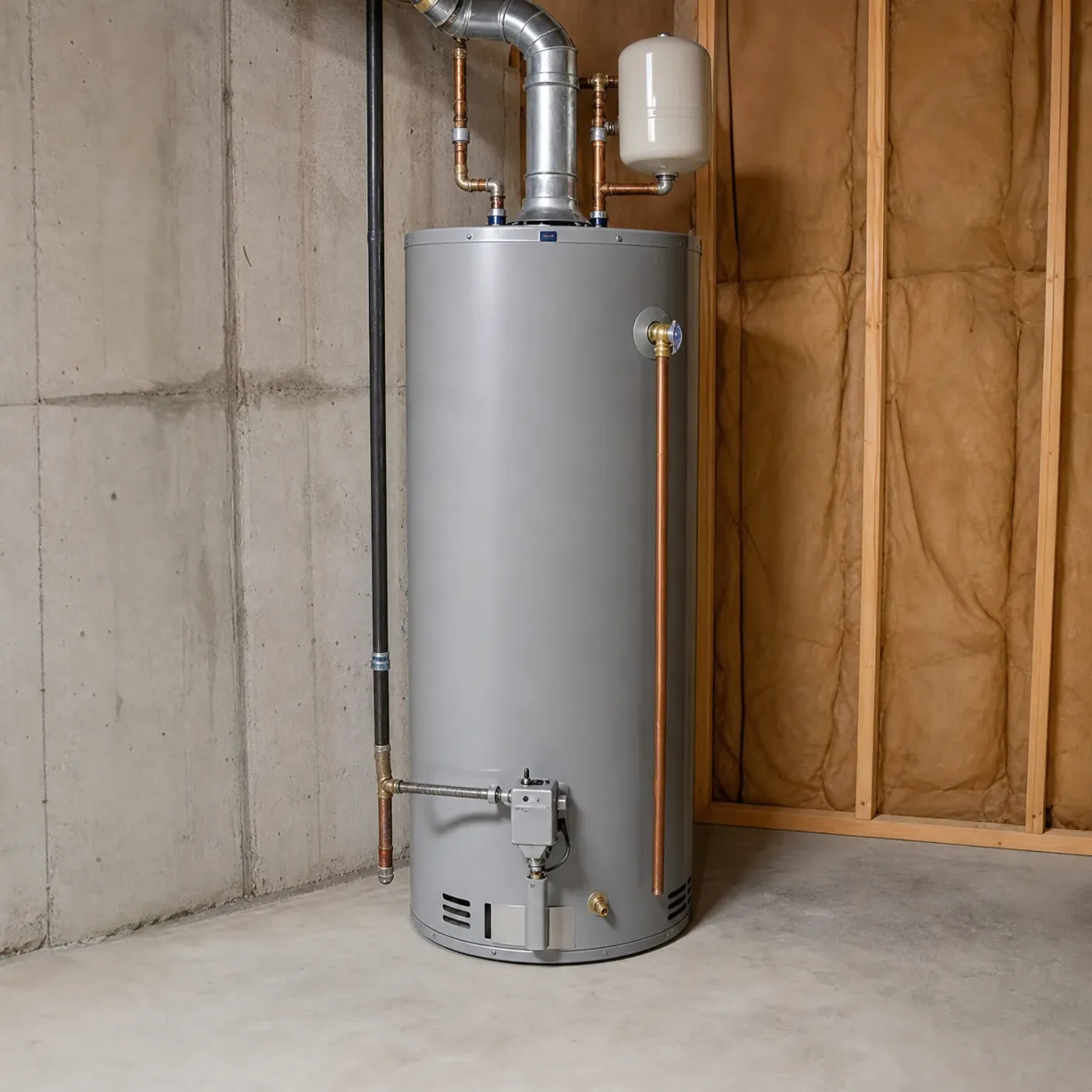
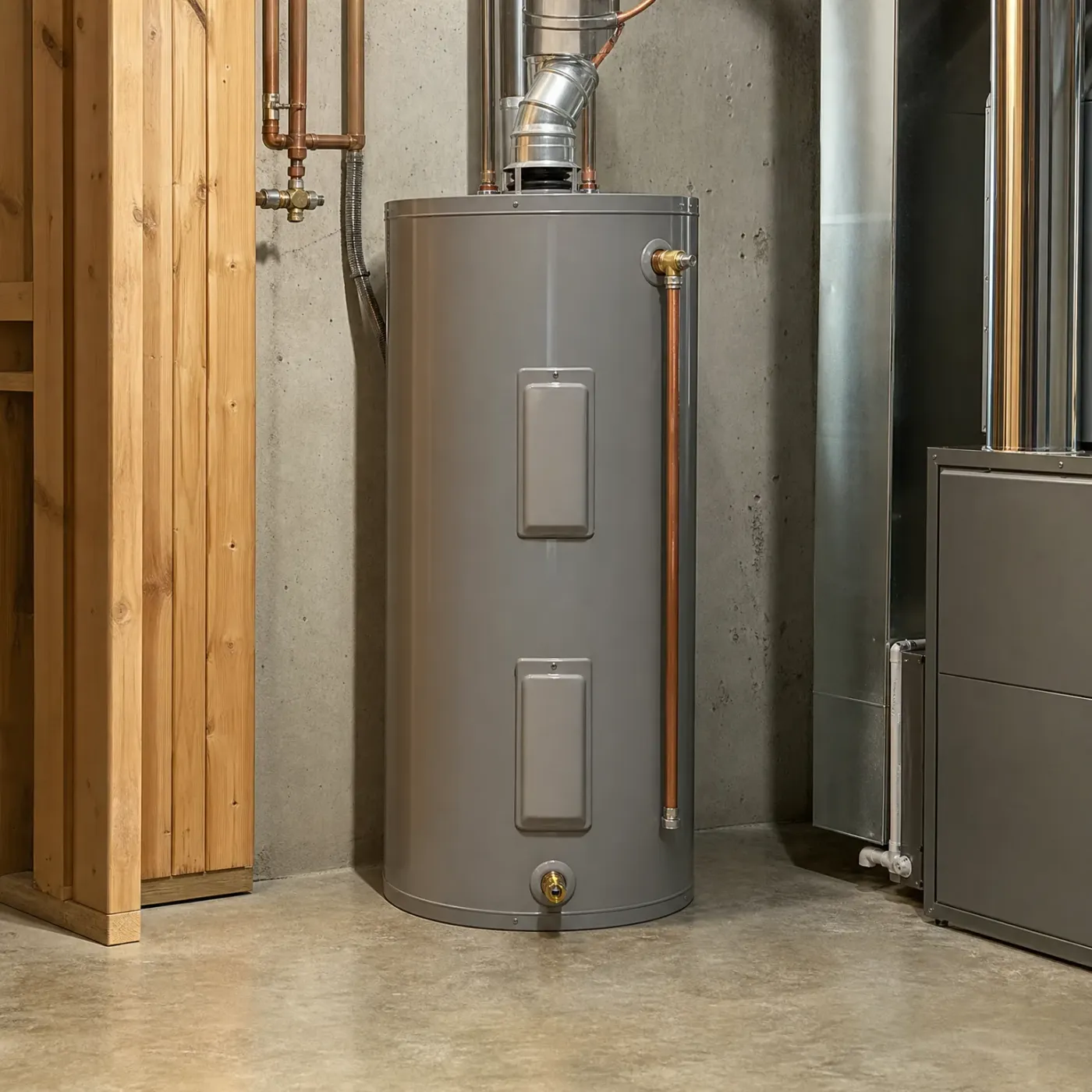
A gray cylindrical gas water heater with copper piping, flue vent, and a small expansion tank stands in a basement corner between a concrete wall and an insulated stud wall.

Sediment, not yet a problem

A tank like this heats quietly, with a steady low sound when the burner kicks on. The copper and black iron pipes carry water in and out without strain, and the expansion tank above handles pressure changes. A little sediment on the bottom at this stage is normal and hasn't started trapping water yet.
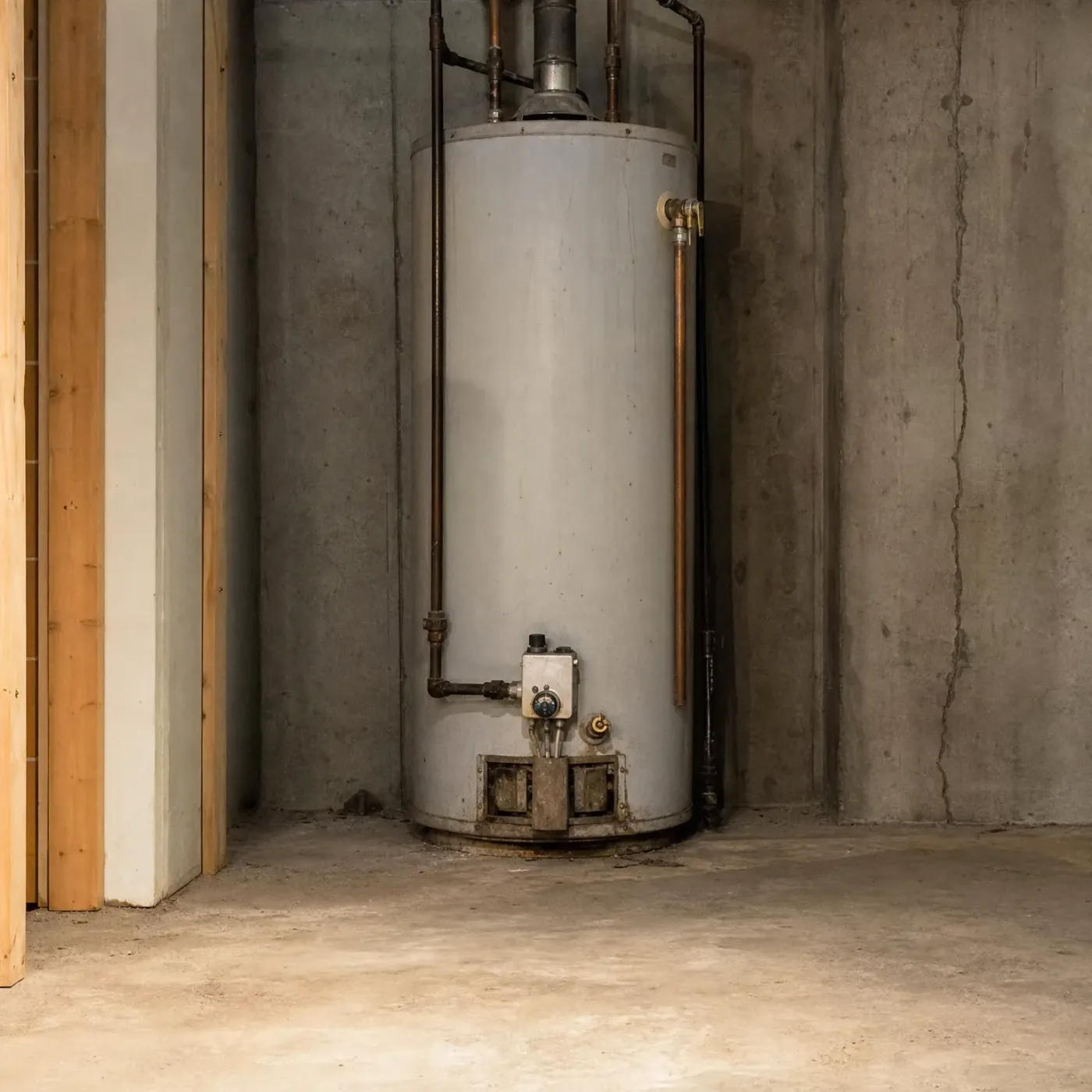
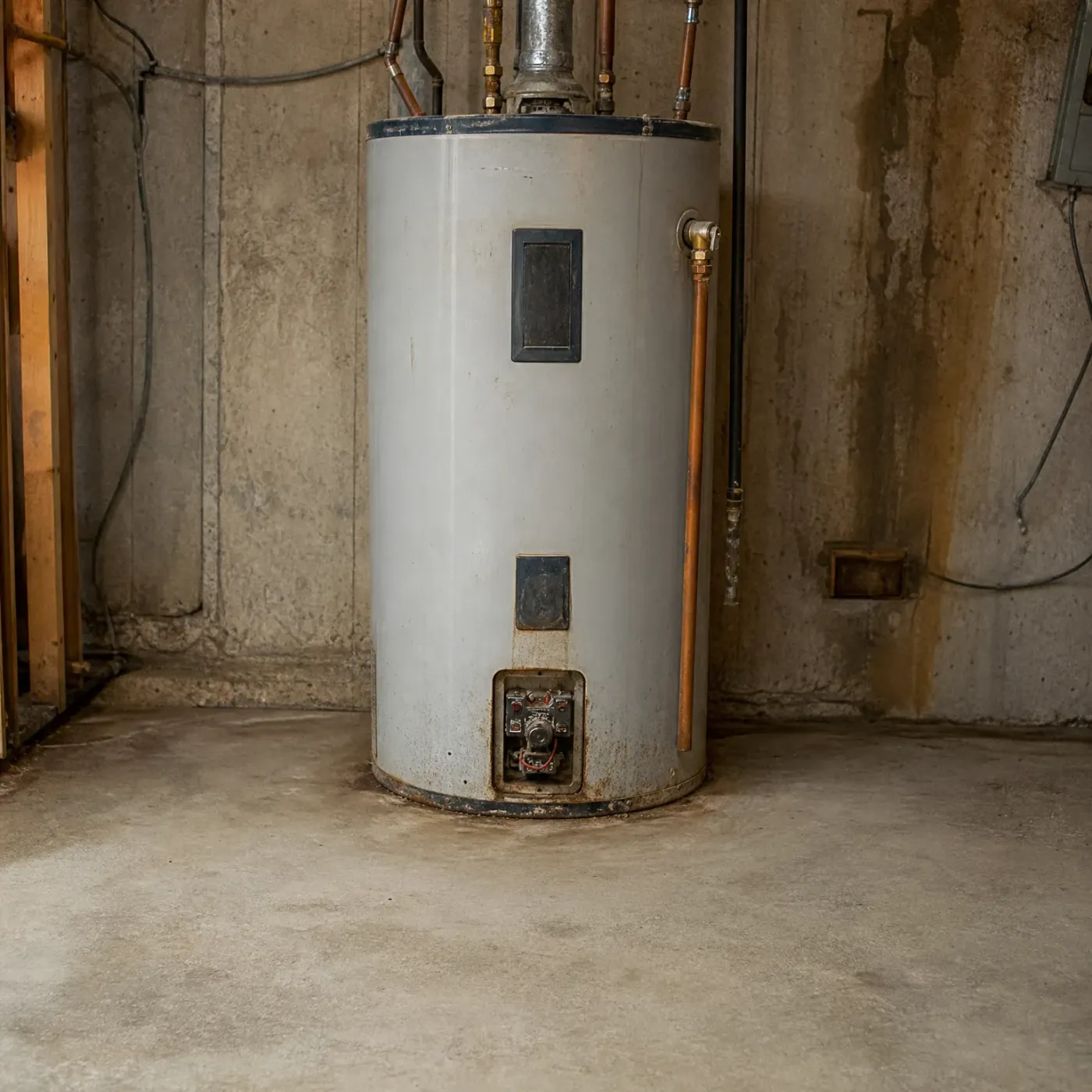
An older gas water heater with copper and black pipes stands in the corner of a bare concrete basement next to a wood-framed partition wall.

Sediment built up for years

This is what a tank sounds like after sediment has hardened across the bottom for a long time. Every time the burner fires, water trapped under that layer turns to steam and pops as it escapes, and the popping gets louder and more frequent as the layer thickens. The gas control valve at the base still runs the burner the same as always, it's just firing against a tank that's working harder than it should.

How much sediment is building up in your tank?

  • 2.48 people per household on average

    The average El Paso County household runs 2.48 people through hot water daily, which means more fill cycles and more minerals settling to the bottom each year.

  • Half the homes here were built by 1989

    Half the homes in El Paso County were built in 1989 or earlier, so a water heater replaced on an older schedule may already be due for its first deep sediment buildup.

  • 69.3% of homes heat with gas

    Gas heats 69.3% of homes here, and a gas burner fires directly against the tank bottom, so trapped water under the sediment layer turns to steam and pops harder than an electric element would.

ACS 2020-2024

How the popping actually happens

  • Sediment settles on the bottom of the tank first, below the burner, so the popping starts quiet and gets louder as the layer thickens.
  • Water trapped under that layer flashes to steam when the burner fires, and the popping is the steam breaking through the sediment to reach the water above it.
  • Gas water heaters pop more than electric ones because the burner sits right under the tank floor where the sediment collects.
  • The sediment also acts as a barrier between the burner and the water, so the burner runs longer to heat the same amount of water.
  • That longer run time heats the steel tank wall above the sediment line more than it should, and that's what leads to cracks and leaks over time.
  • Flushing the tank clears the loose sediment, but once it hardens into a crust, flushing alone often won't break it loose.

Sediment builds from the bottom up, so it sits right where a gas burner fires. Colorado Springs water carries minerals that settle out every time the tank fills, and that layer gets thicker every year the tank runs without a flush. Water doesn't just sit on top of that layer. It works its way underneath it, down near the hot metal, and that's the water that turns to steam. Steam takes up far more space than water, and it has to go somewhere. It pushes up through the sediment in small bursts, and each burst is one pop. A thin layer makes small, quiet pops. A thick one makes louder ones, further apart, because the steam has more crust to break through before it escapes. Electric water heaters pop less because the heating elements usually sit up inside the tank, not against the floor where sediment gathers. On a gas tank, the burner is directly underneath, so it's heating the sediment layer itself before the water ever gets warm. That means the burner has to run longer to do the same job, and the steel above the sediment line takes more heat than it was built to handle for that long. Over time that's what stresses the tank wall and opens the door to a crack or a leak. A flush clears sediment while it's still loose. Once it bakes into a hard crust along the bottom, flushing moves less of it, and the popping doesn't go away on its own.

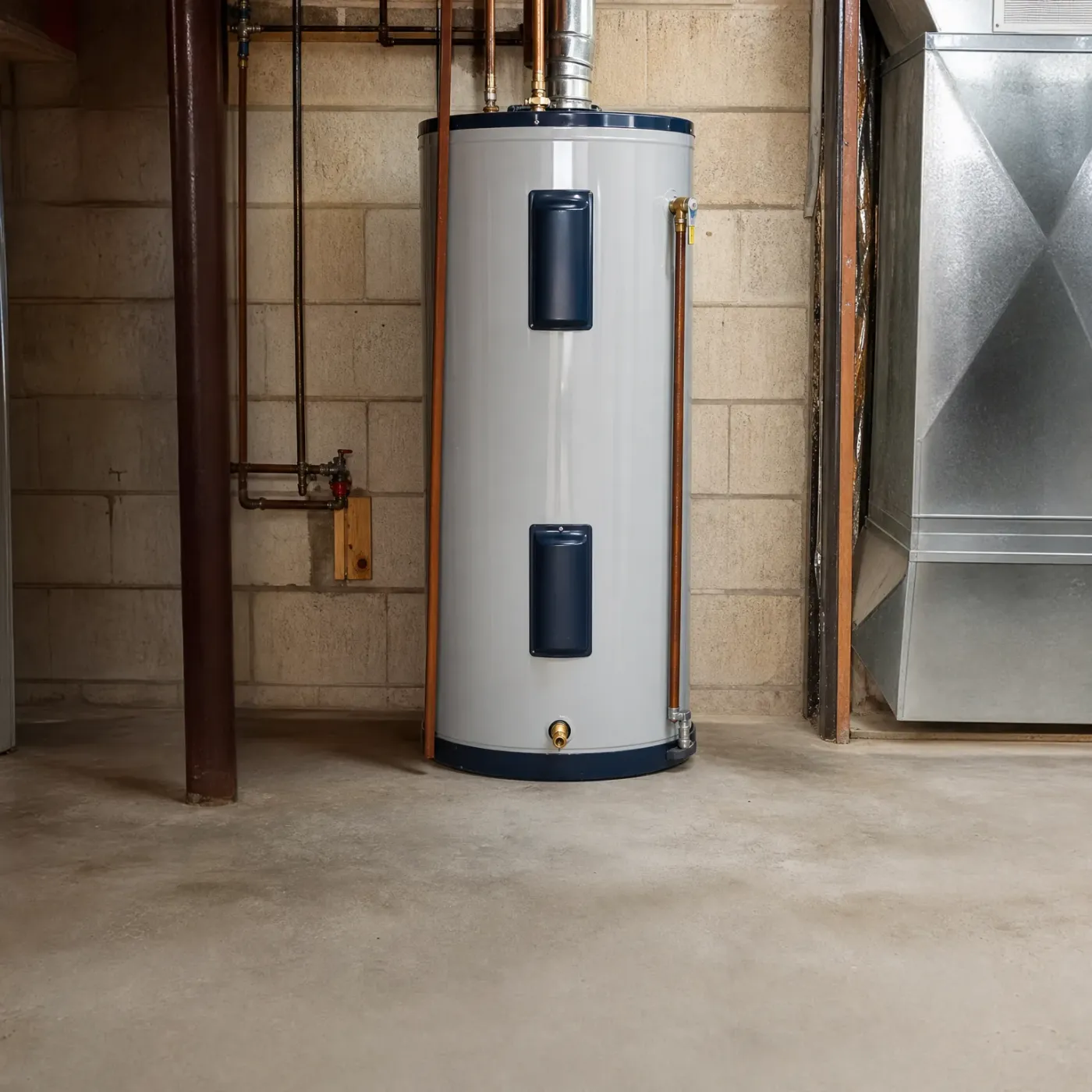
A gray cylindrical water heater with two access panels and copper piping stands against a concrete wall in a basement, beside wood framing and metal ductwork.
This tank is quiet because the burner heats water straight through, with nothing on the bottom to get in the way.
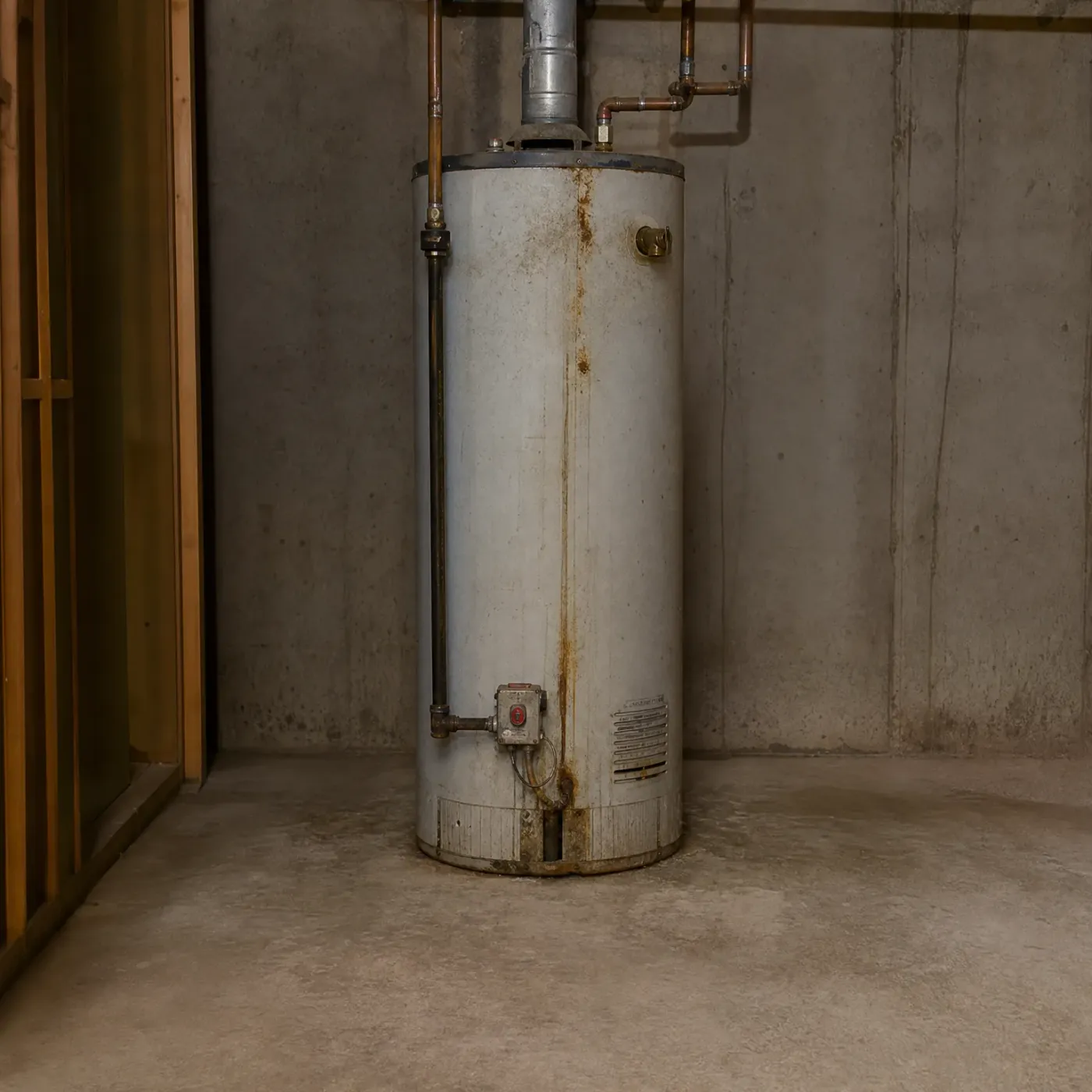
An aging rust-streaked gas water heater with copper and galvanized pipes stands against a bare concrete basement wall beside wooden stud framing.
Rust like this means the tank has been working harder than it should for years, and a popping sound is the least of what's wrong.
A gray-haired man in a dark long-sleeve shirt sits on a gray sofa in a living room, looking toward a sunlit window with sheer curtains.
A gray-haired man in a dark green sweatshirt sits on a sofa in a living room, looking toward a bright window, with a houseplant, lamp, fireplace and framed art behind him.
A gray-haired bearded man in a dark green collared sweater sits on a sofa in a living room with a window, houseplant, floor lamp and bookshelves, looking off to the side.
A gray-haired man in a dark green sweater sits on a sofa in a sunlit living room, looking off to the side, with a framed landscape painting, dining table and shelving behind him.

Hand off the search today

A licensed pro who repairs water heaters in El Paso County gets your request.

You only hire the pro if you want to.

Why hard water speeds this up

Colorado Springs water carries enough dissolved minerals that they settle out as the tank heats and cools. Every fill cycle leaves a little more behind, and once a layer forms, it insulates the bottom of the tank from the burner above it. That makes the burner run longer to get the same heat through, and it gives the trapped water more time and more surface to turn to steam. A tank on softened water builds sediment slower than one on untreated supply, but almost no gas water heater in this area escapes it entirely.

What the popping is costing you

That sediment layer does not just make noise. It acts like insulation between the flame and the water, so the burner has to run longer to reach the same temperature, and a gas bill reflects that over months. The layer also traps heat against the steel tank bottom, which is harder on the metal than a clean tank sees. None of this shows up right away. It shows up as a slow climb in gas use and, eventually, as a tank that fails sooner than it should have.

A white cylindrical water heater with copper piping and a gas control valve stands against a stained concrete basement wall on a bare concrete floor.
Before you get your water heater repair
A white cylindrical water heater with two dark access panels stands on a concrete basement floor against a concrete block wall, with copper pipes, a flue duct above, and sheet metal ductwork at right.
After you get your water heater repair

What are you noticing around the house lately?

You probably noticed the sound before anything else, a popping or knocking from the utility closet or basement every time the water heater runs. Hot water might be taking longer to show up at the tap, or running out sooner than it used to. The burner may be cycling on more than it used to, and if you've looked at the gas bill, it might be creeping up too, since the sediment layer makes the burner work harder to heat the same amount of water. Left alone, that extra strain wears on the tank itself, and a tank that's been overworking for years is more likely to fail outright.

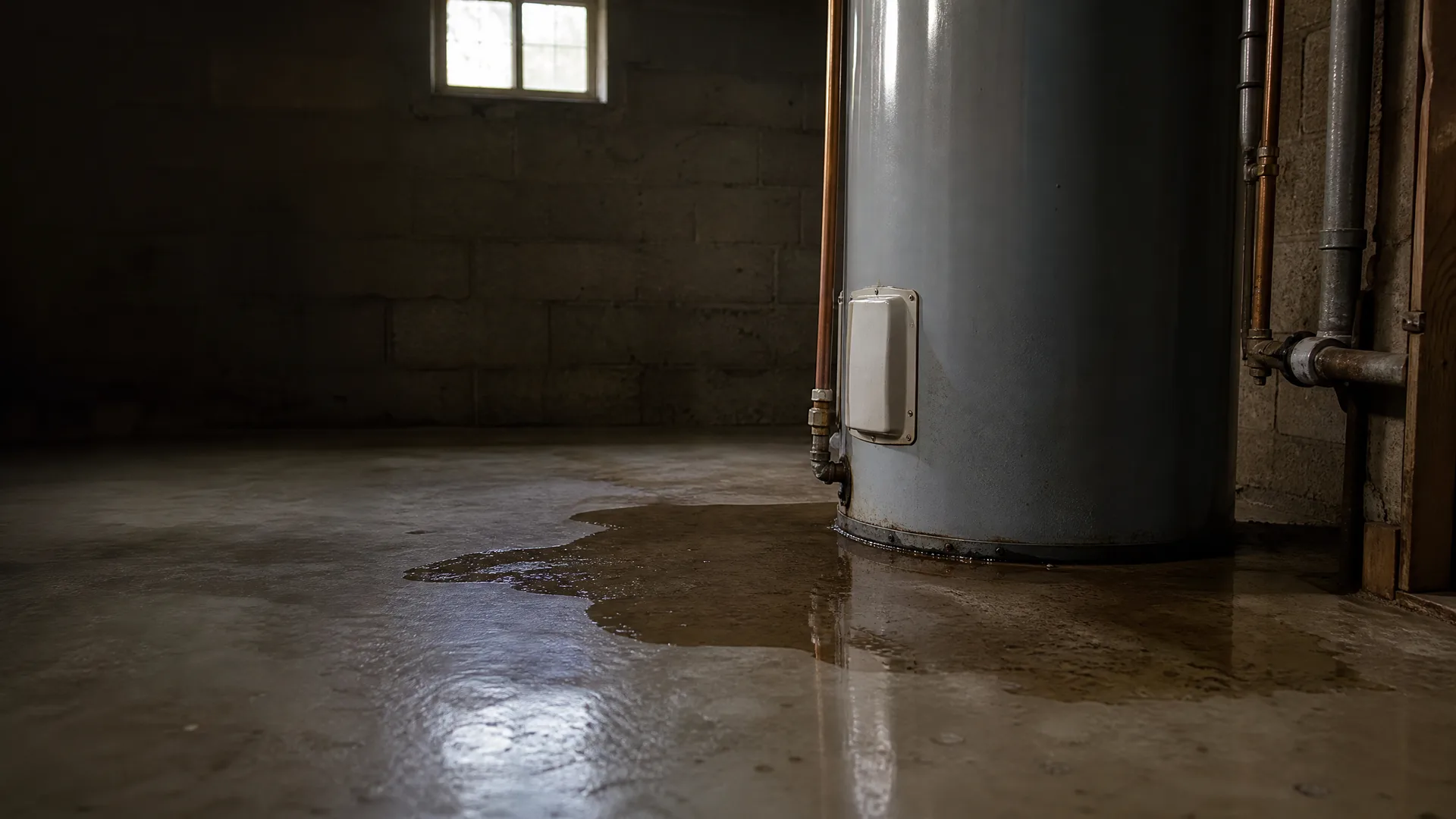
A gray cylindrical water heater stands in a dim basement with concrete block walls, copper and metal pipes along the wall, and a pool of water spreading across the concrete floor.

It's Saturday morning, and you're down in the basement with a load of laundry when you hear it, that popping again, sharper than last week. You set the basket down and walk over to check on the tank. That's when you see it: a thin ring of water creeping out from under the base, already reaching the drain line on the floor. You crouch down and touch the metal near the bottom, feeling for where it's coming from. The popping has stopped now that the burner cycle ended, but the water is still spreading, slow and quiet, toward the edge of the concrete.

Power here costs 15.63 cents per kilowatt-hour

At 15.63 cents per kilowatt-hour, an electric water heater here isn't expensive to run compared to much of the country. But once sediment builds up on the bottom of the tank, the burner or element has to push through that layer to heat the water above it, and that takes longer and costs more every month than it should.

EIA-861 2025

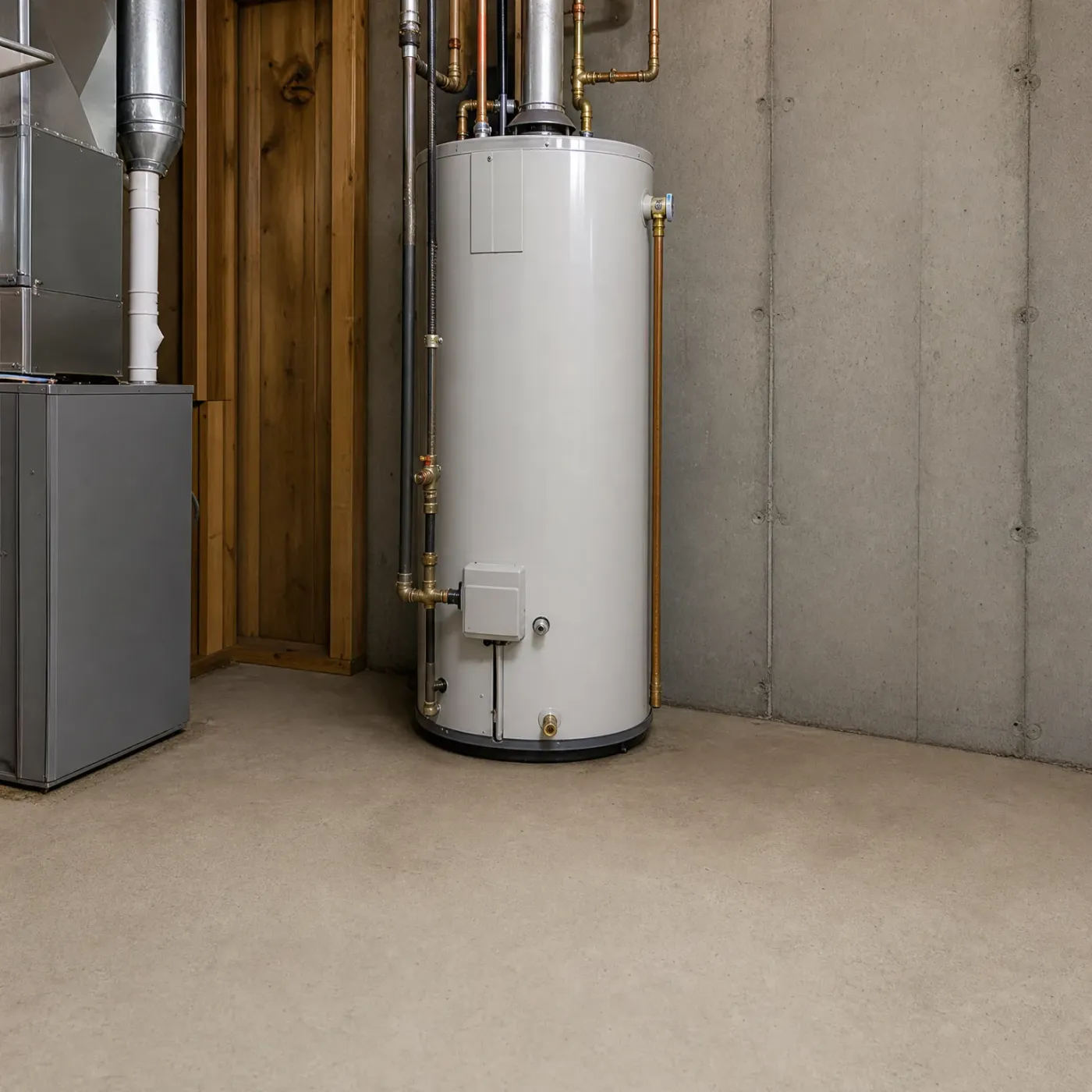
A white cylindrical gas water heater with copper and steel pipes stands against a concrete basement wall beside a gray furnace and wood-paneled wall.

Working as it should

This is a normal setup, gas water heater, copper lines, a furnace alongside it. No rust on the tank, no stains on the floor beneath it. Some popping as sediment builds is common even in a tank like this, and it doesn't mean the tank is failing yet.

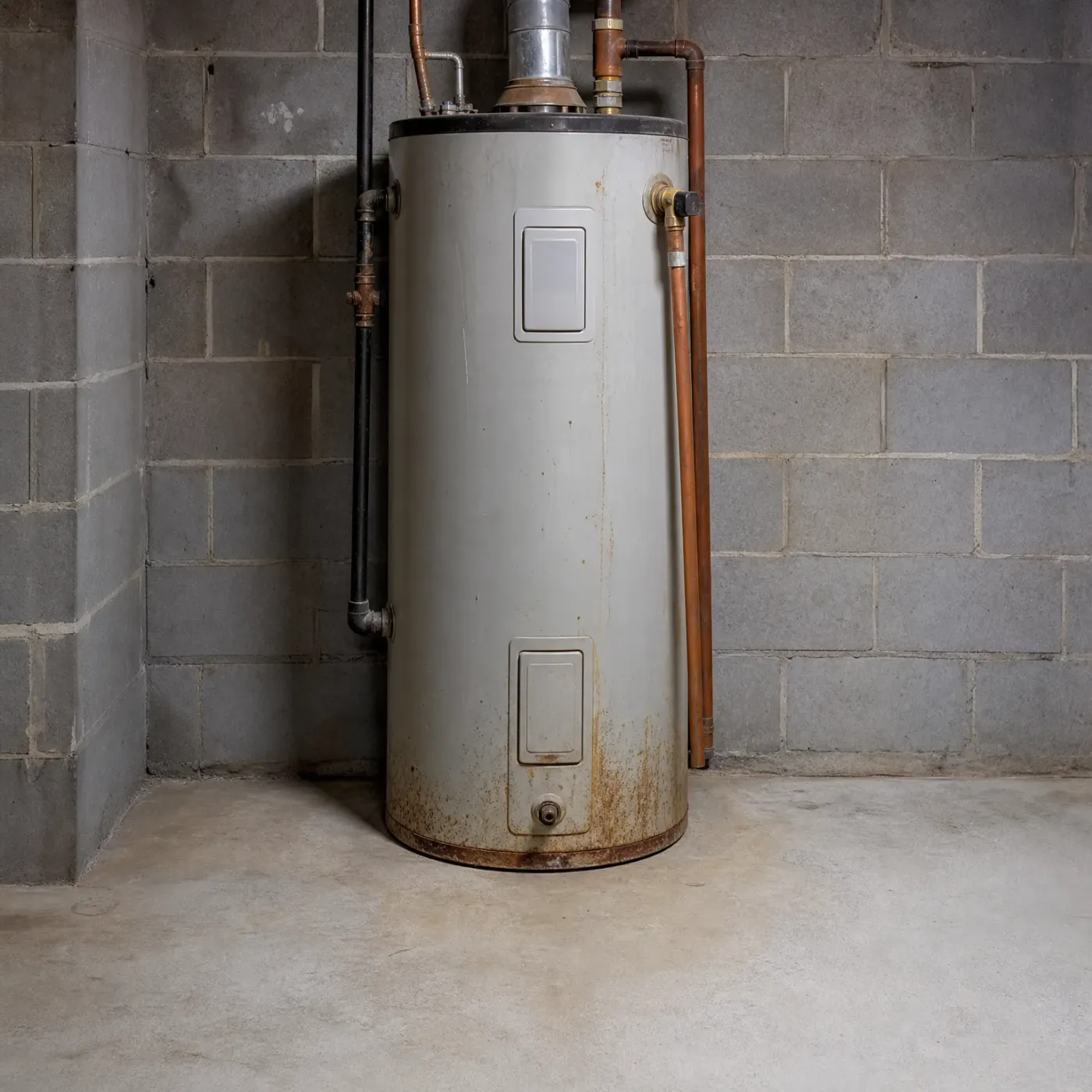
A rust-streaked cylindrical water heater with copper and black metal pipes stands in a concrete-block basement corner on a bare concrete floor.

Years of wear showing

Rust along the base and seams like this usually means years of sediment holding moisture against the metal. Once rust reaches this point, the popping is a symptom, not the real problem. A tank in this shape is closer to needing replacement than repair.

The popping is sediment on the bottom of the tank, and it only gets louder from here. A tank making that sound can often be flushed and brought back to running quiet, but once rust or a crack shows up along with it, repair stops being the answer and the tank needs replacing. Either way, someone has to look at it to tell you which one you're dealing with. A plumber who works on water heaters around Colorado Springs all year has seen what this hard water does to tanks on this schedule, and knows the difference between a flush that fixes it and a tank that's past that point. You'll be matched with one licensed contractor local to the area, not a handful of companies competing for your callback, so the person who shows up is the one who's actually coming. Until then, the sound won't stop and it won't fix itself. What it costs you now is wear on a tank that's already working harder than it should.

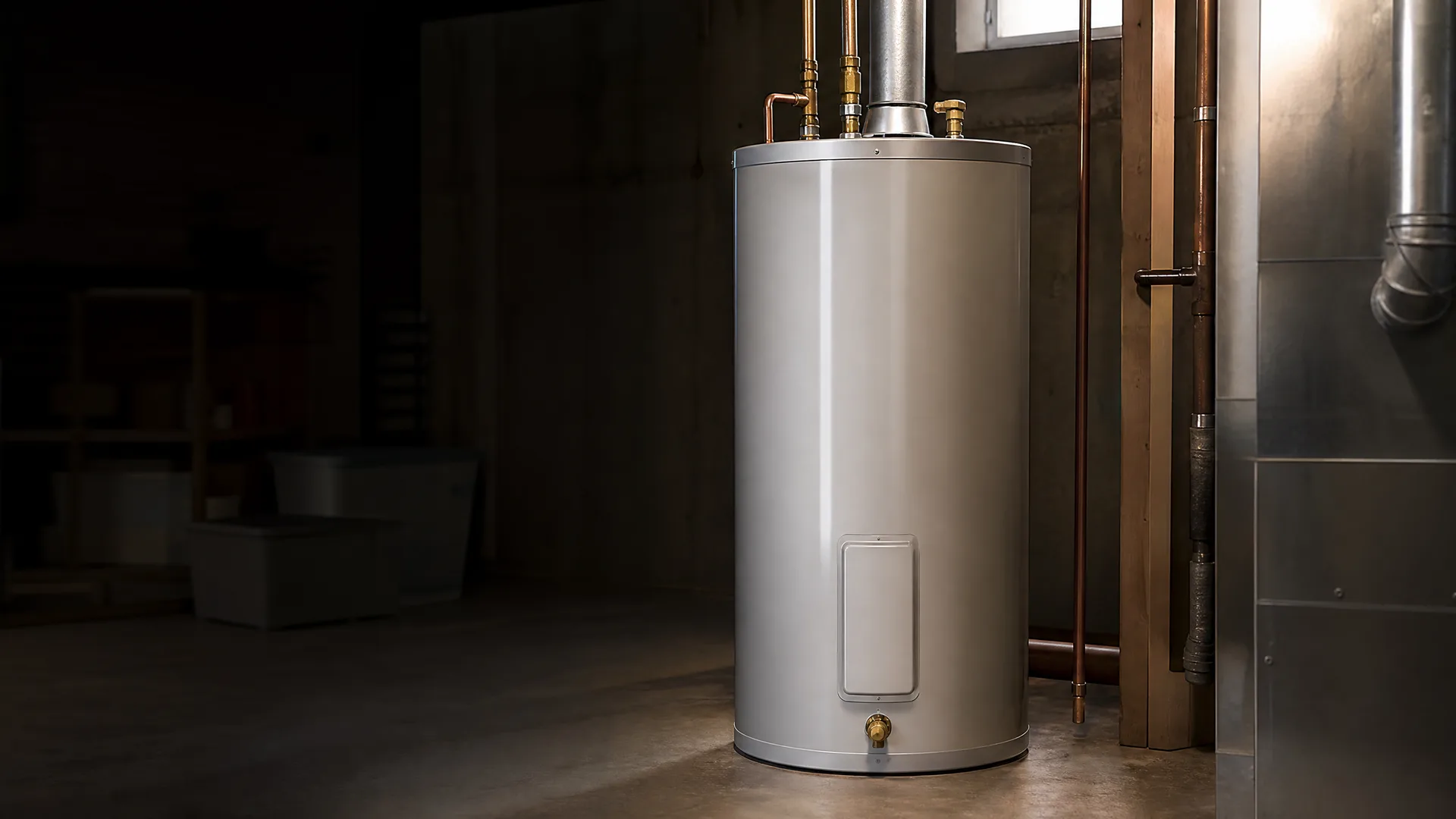
A gray cylindrical water heater with copper pipes and a flue stands on a concrete floor in a dim basement, with metal ductwork and storage bins nearby.

Hand off the water heater problem

Step 1 of 3: Equipment