Tell a local repair pro what your water heater is doing.
Water on the floor around your water heater usually means something failed, not something you did wrong. Before you mop it up, it helps to know whether it's the tank itself, a fitting, or the pressure relief valve, because that changes what happens next and whether the unit can be fixed at all.
Most homes in Colorado run gas water heaters, and a leak on a gas unit isn't something to leave sitting. Water near gas lines and burner assemblies is a safety question as much as a repair one. The dry air here doesn't cause tank leaks, but it also means a slow drip can go unnoticed longer than it would somewhere humid, since there's no damp smell to tip you off early.
Once you know there's a leak, the next problem is finding someone who can look at it soon. That usually means searching through listings, calling two or three places, explaining the same thing each time, water pooling under the tank, the age of the unit, whether it's still dripping, and then waiting on quotes that are hard to compare because no two contractors look at the same job the same way.
This page skips that part. Tell it what's going on with your water heater and your location in Colorado, and it matches you with a contractor who takes repair calls like this one. That contractor reaches out to you directly, no more calling around, no repeating the story to a third or fourth person.
What they find once they're looking at your tank, whether it's a fitting that needs tightening or a tank that's reached the end of its life, is their call to make. What this page does is get you to that conversation faster, with someone suited to the job instead of whoever picks up first.
Why is my water heater leaking?
A puddle under the water heater usually means one of a handful of things, and most of them show up the same way on the floor. You want to know which one you're dealing with before you decide whether to shut off the water, call someone tonight, or just keep an eye on it. The spot it's coming from narrows it down fast.
It's almost always the tank, a loose fitting, or the pressure relief valve
A tank leaks from the bottom when the steel inside has rusted through, and once that happens the tank itself needs to be replaced, not patched. A fitting leaks from the top, where the water lines connect, and that's often just a loose connection or worn washer. The pressure relief valve drips from a pipe on the side or bottom when it's venting pressure it shouldn't have to, which can mean the valve itself is bad or the water is getting hotter than it should. With gas heat common across Colorado, that valve and the lines near it are worth checking first.
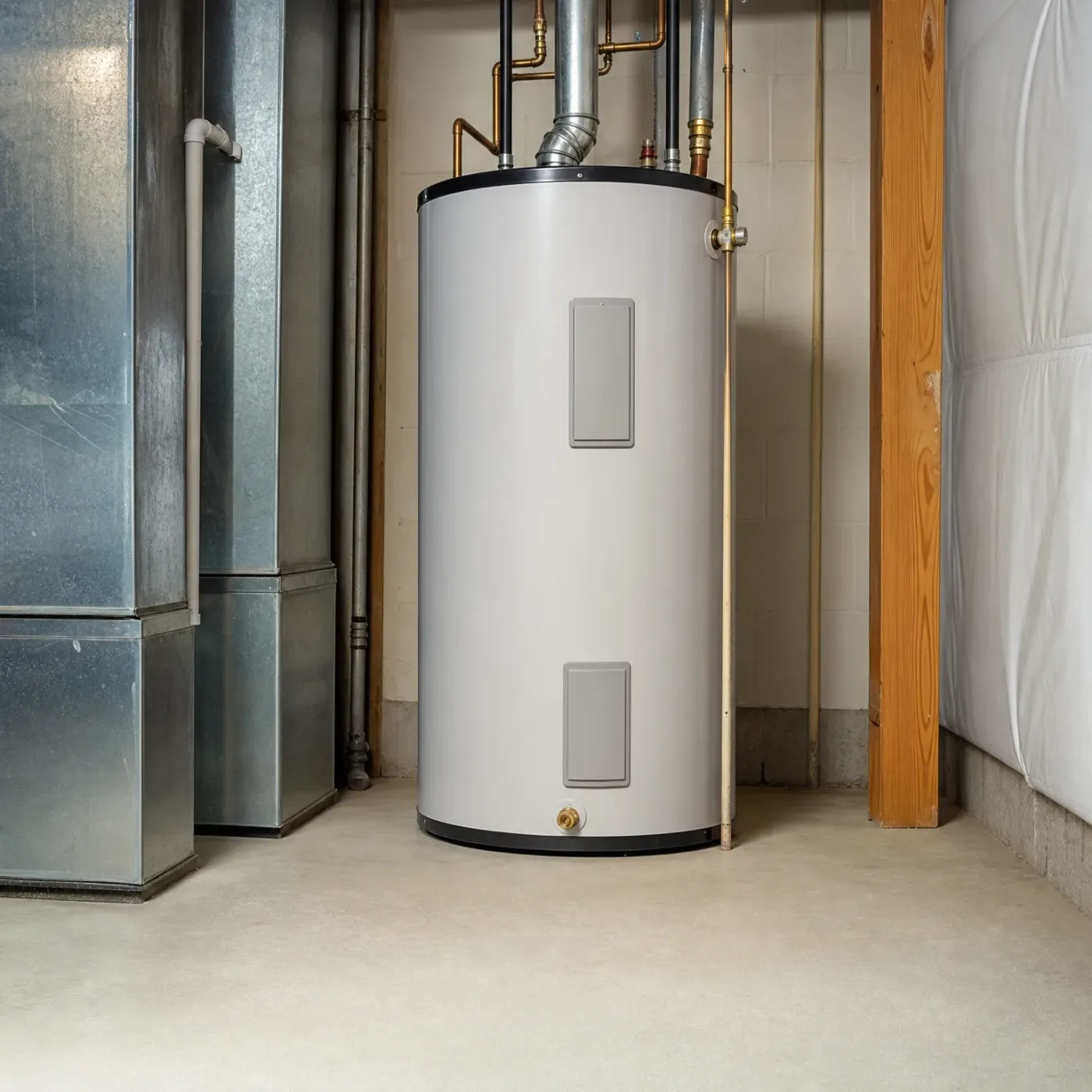
What a sound tank looks like
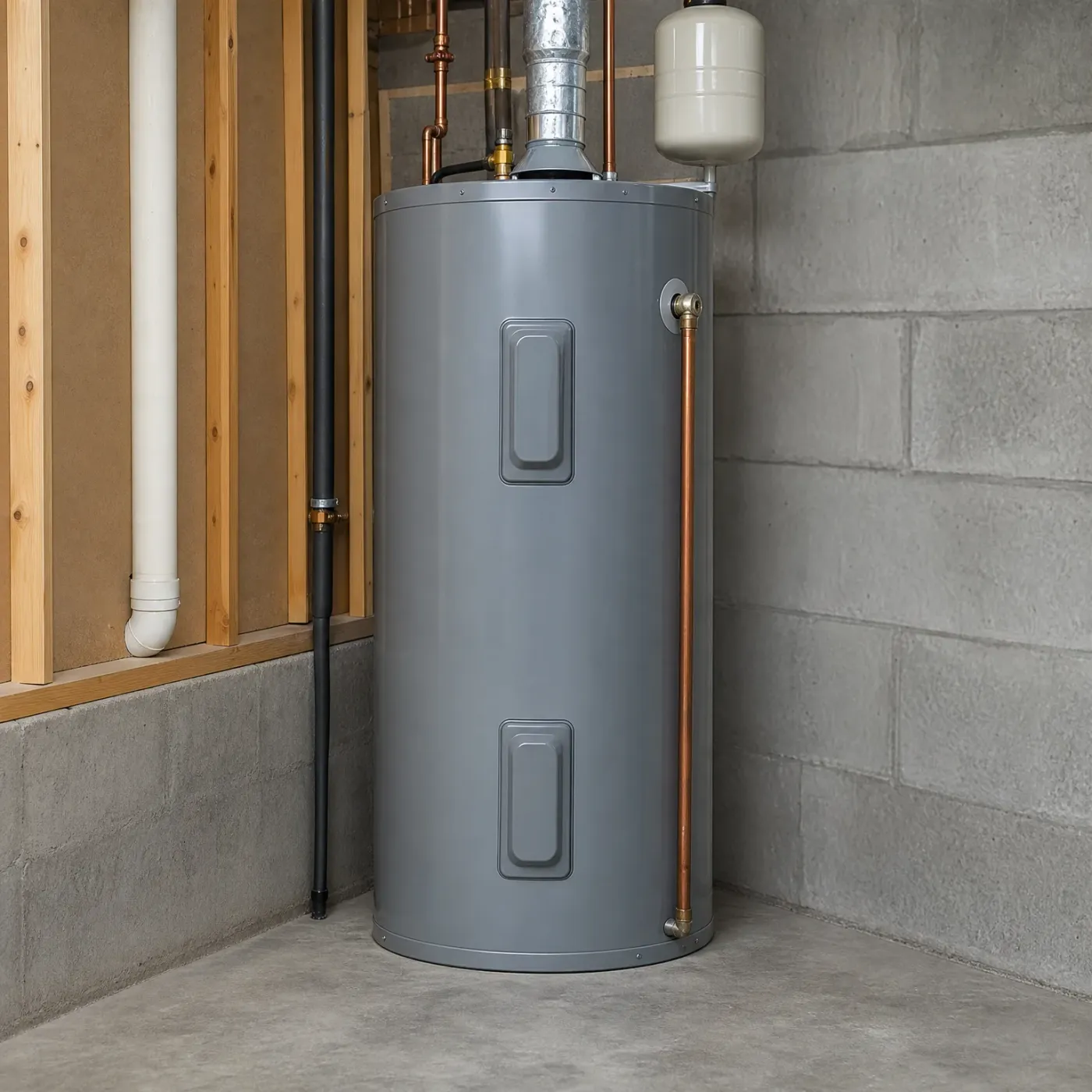
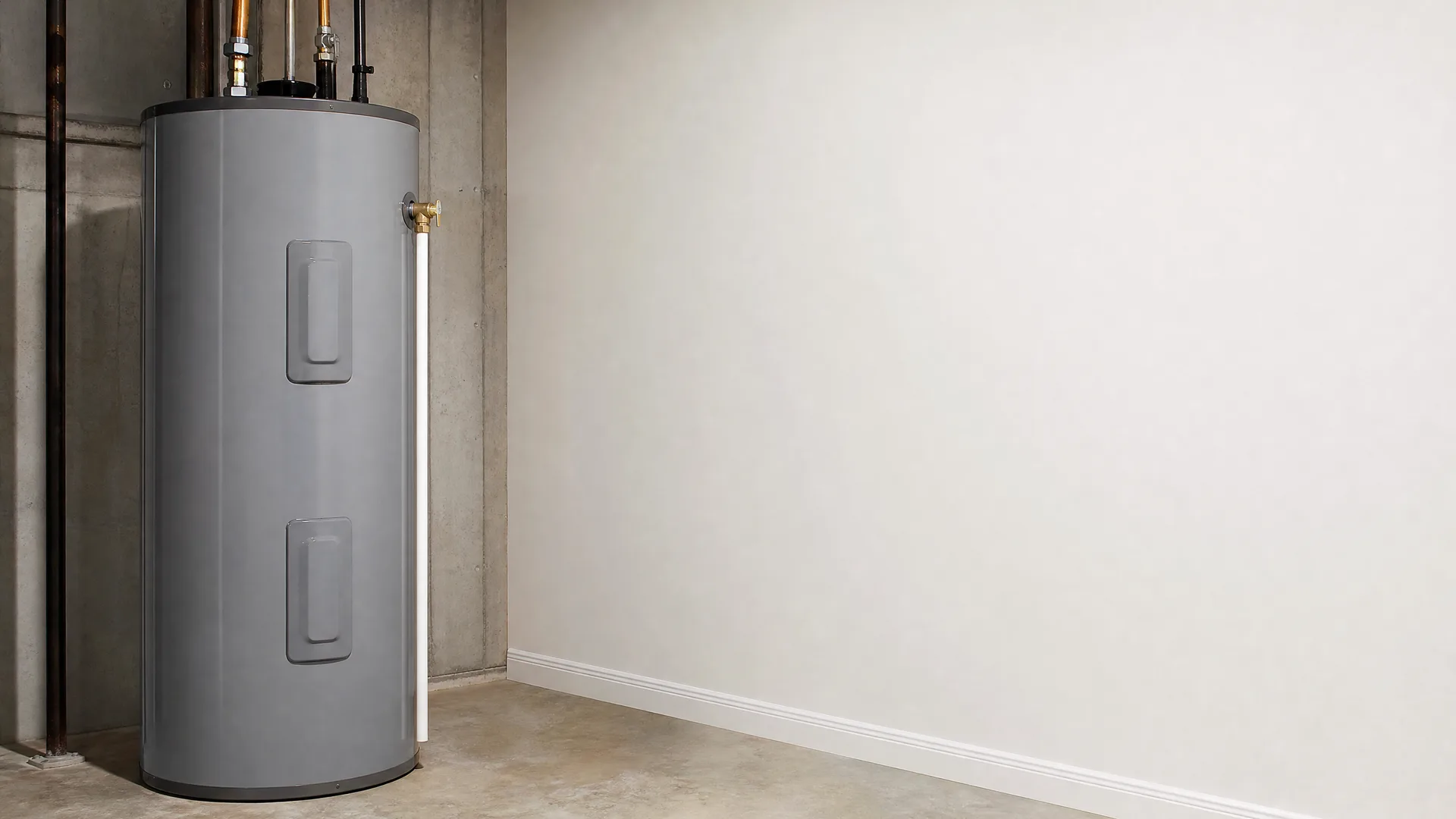
A water heater in good shape sits dry on the floor. The fittings are tight where the copper pipes meet the tank, the drain pipe runs clean to the floor, and the exhaust duct draws straight up. No rust streaks, no puddle, no corrosion on the tank itself.
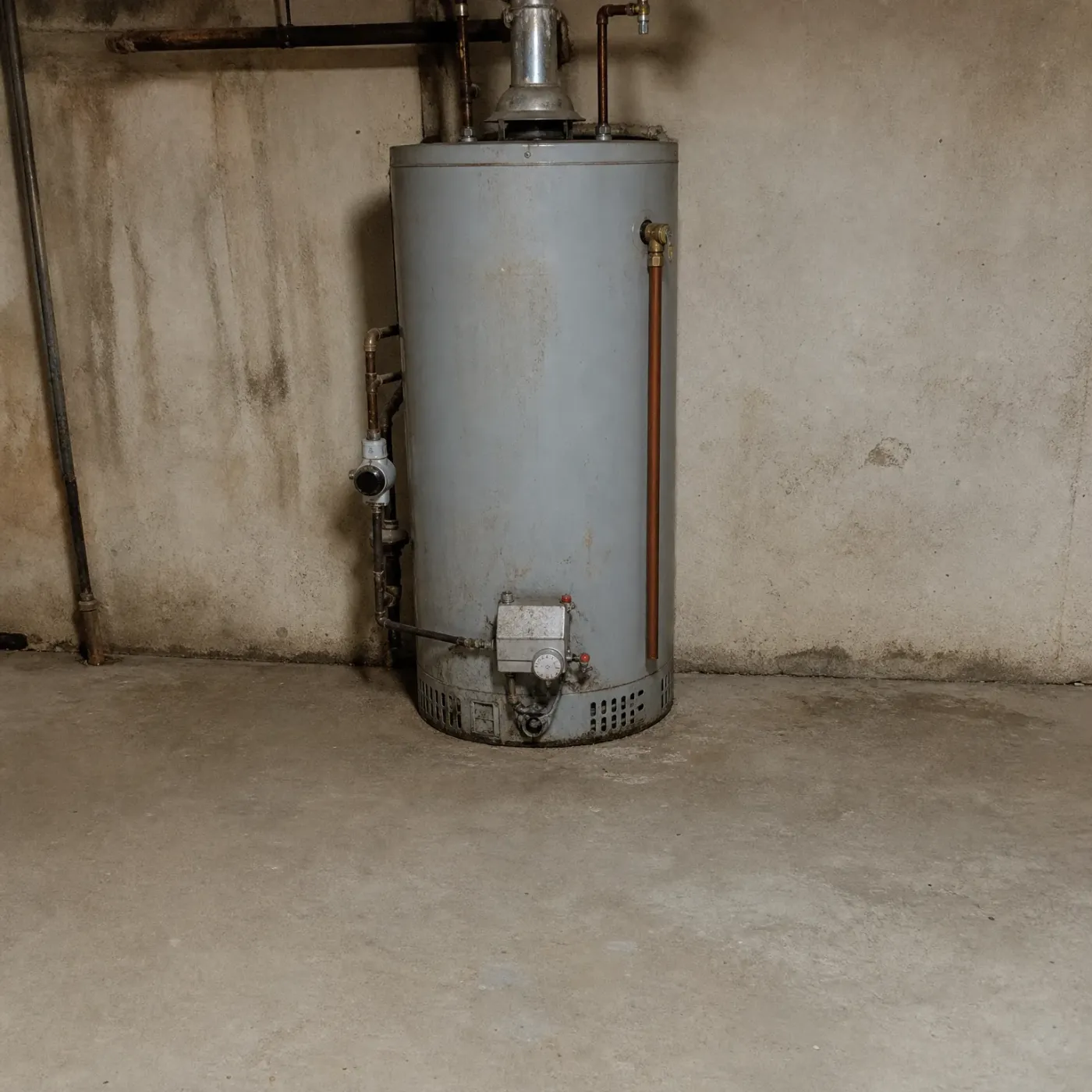
What a failing tank looks like
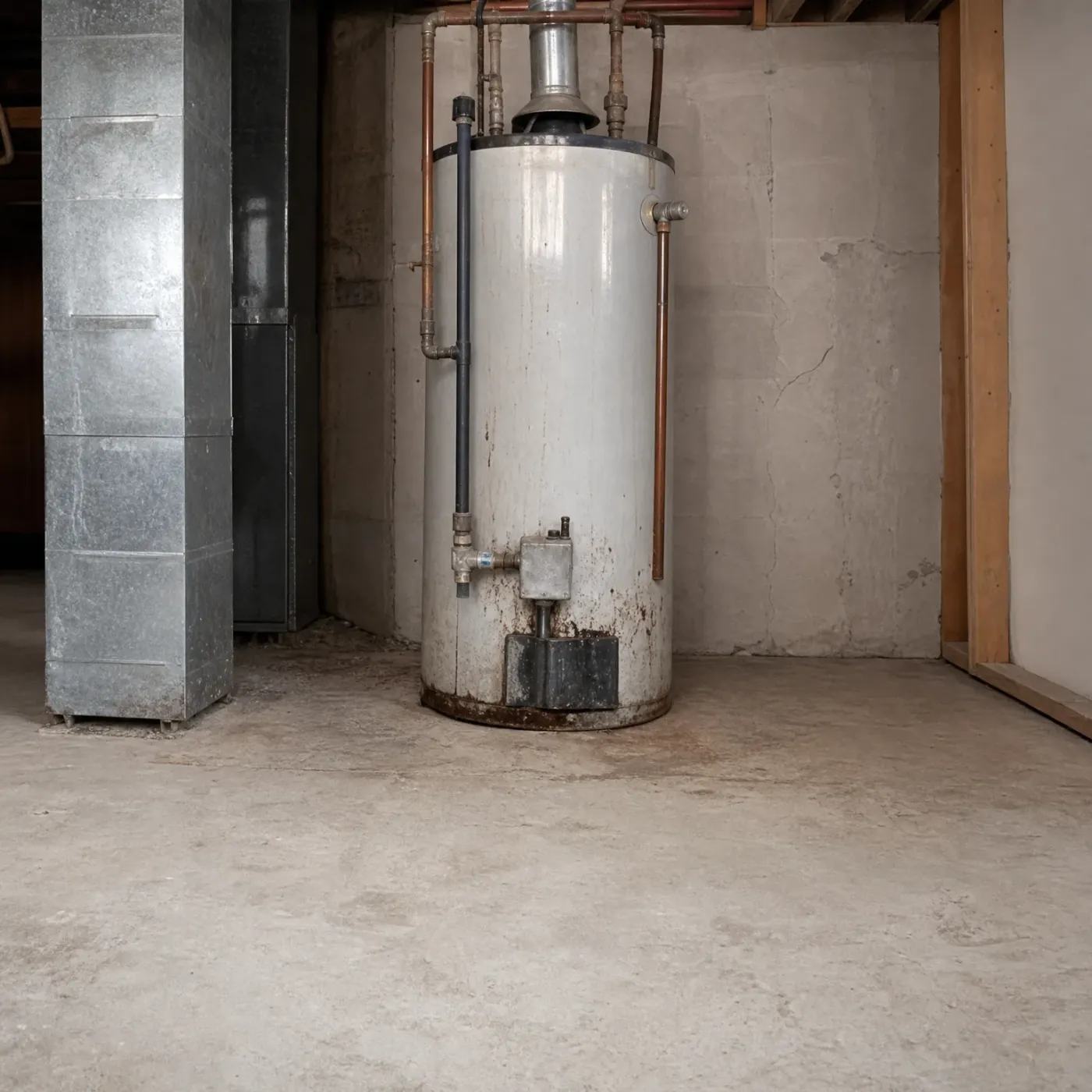
Rust spreads across the steel and mineral deposits crust around the fittings. Once a gas tank corrodes like this, the leak is coming from inside the tank wall, not a loose connection. That water heater needs replacing, not a repair.
Is this puddle going to turn into a bigger problem?
Walk past the water heater and check for a damp spot on the floor, a drip from the bottom seam, or a wet patch on the wall behind it. Look at the fittings where the copper pipes meet the tank. If they're crusted white or green, that's mineral buildup from a slow drip that's been going on for a while. A hissing or dripping sound from the pressure relief valve means it's doing its job releasing pressure, but it shouldn't be doing that often. Left alone, a small leak works into the subfloor, and if the tank itself is rusted through at the bottom, it won't slow down. It'll keep leaking until the tank is replaced.
1
Sediment builds up on the tank bottom and holds water against steel.
2
Steel corrodes through from the inside out, starting a pinhole leak.
3
Water seeps out through the breach and pools under the tank.
4
Pressure or temperature rises too high and trips the relief valve.
One form replaces the calls you'd make to find a water heater pro.
It costs nothing to send, and you don't have to hire anyone.
Colorado water is hard on tanks
Most tanks here run on gas, and the burner sits under the steel floor of the tank. Sediment settles there first, and the burner keeps heating through it, which is what wears a pinhole open faster than people expect. A tank that's never been flushed builds up a layer that insulates the bottom from the water above it, so the steel underneath takes the heat instead.
The valve is doing its job
If water is coming from a small copper or plastic pipe on the side of the tank, that's the pressure relief valve discharge pipe, and it only drips when the valve inside has opened. That valve exists to let water out before the tank builds up enough pressure to do real damage. A valve that opens once in a while and reseats is still working. One that won't stop running needs attention.
Repair the Leak or Replace the Tank
Repair
A leak at a fitting or the drain valve is usually a tightening or a part swap, not a new tank.
A failed pressure relief valve can be replaced on its own if the tank itself is still sound.
A licensed plumber can tell you in minutes whether the leak is the tank or something attached to it.
If the tank is only a few years old, repairing the failed part makes more sense than starting over.
Fixing the specific problem means you keep the water heater you already have, vented and sized for your home.
A repair now still means watching the tank, since whatever let it corrode once is still there.
Replace
A pinhole leak in the steel tank itself cannot be patched or sealed from inside.
Once the tank is rusting through, sediment and corrosion keep working even after you mop up the floor.
A new tank comes with a fresh warranty, instead of a repair on equipment already past the point of failing.
Replacing it means not troubleshooting the same leak again in a few months when another spot gives out.
If the tank is old enough that parts are hard to source, replacement avoids a second repair call soon after.
A straight swap to a new gas tank means the venting and gas line are already sized right for it.
Fittings tight, drain pipe running clean, no rust on the floor or the wall behind it.
A flue vent, a gas control, and a relief valve all sitting on steel that's been corroding from the inside for years.
66.4% of homes statewide heat with gas
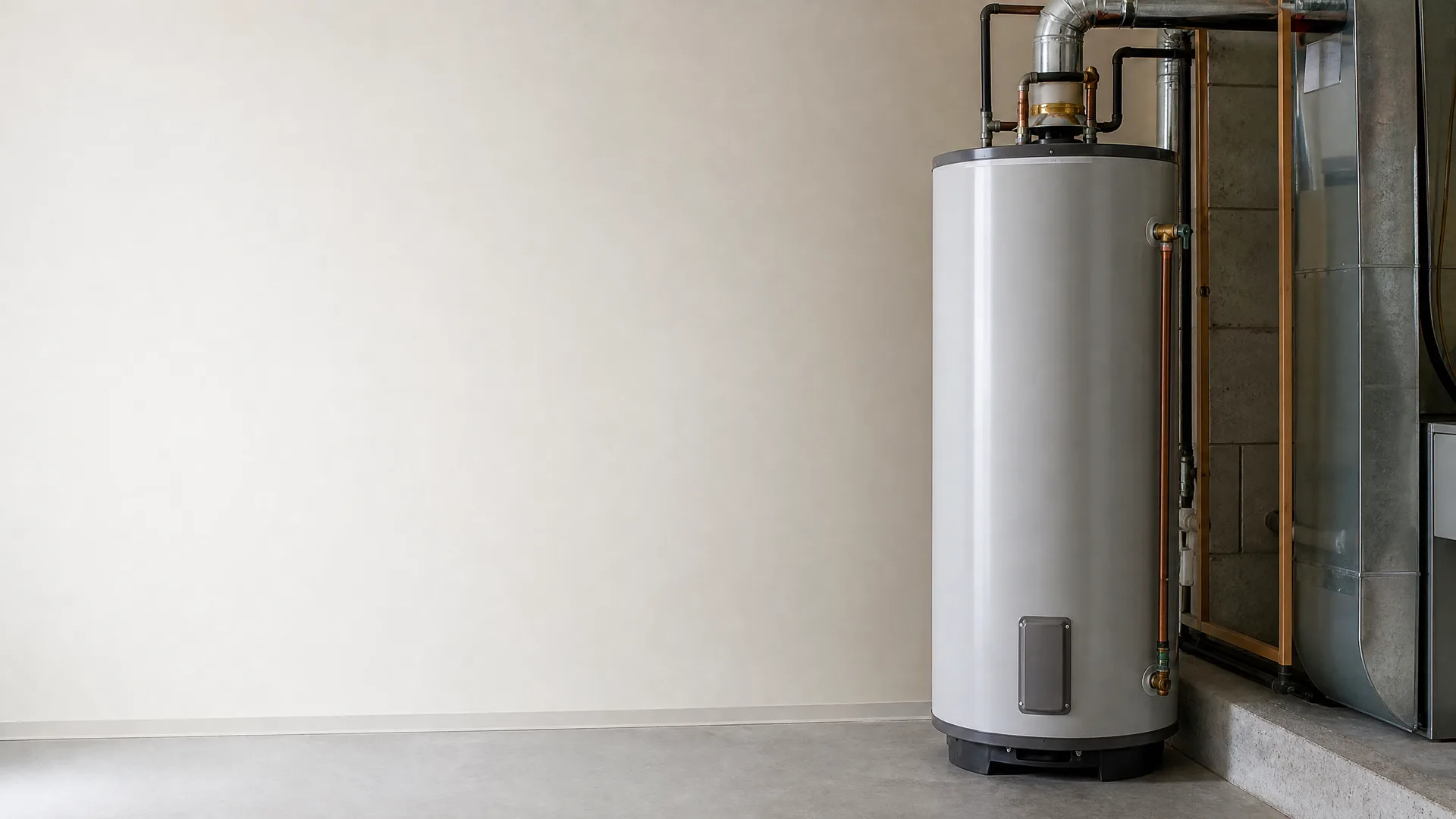
Most houses in Colorado heat water with gas, same as two out of three homes statewide. That means a burner under the tank, and sediment collects right above it. A tank with a pinhole leak is usually one that's been corroding over that burner for years.
ACS 2020-2024 5-year B25040
A puddle under your water heater is either a loose fitting worth tightening, a relief valve that needs swapping, or a tank that's rusted through from the inside. The first two get fixed. The third means a new tank, because steel that's corroded open doesn't get repaired. Either way, you don't have to work out which one it is on your own, and you don't have to find out by calling plumber after plumber to describe the puddle, the rust, the smell of gas or standing water, and wait on quotes to compare. A licensed plumber who works on tanks like yours can look at the fittings, the floor, and the valve and tell you in minutes which situation you're in. That's the part worth handing off. The leak itself is already telling you something. What's left is getting someone qualified to look at it before a slow drip turns into a flooded closet or a tank that lets go overnight.
A local pro for your water heater repair
Describe what your water heater is doing once, in one form.