





Get Hot Water Colorado
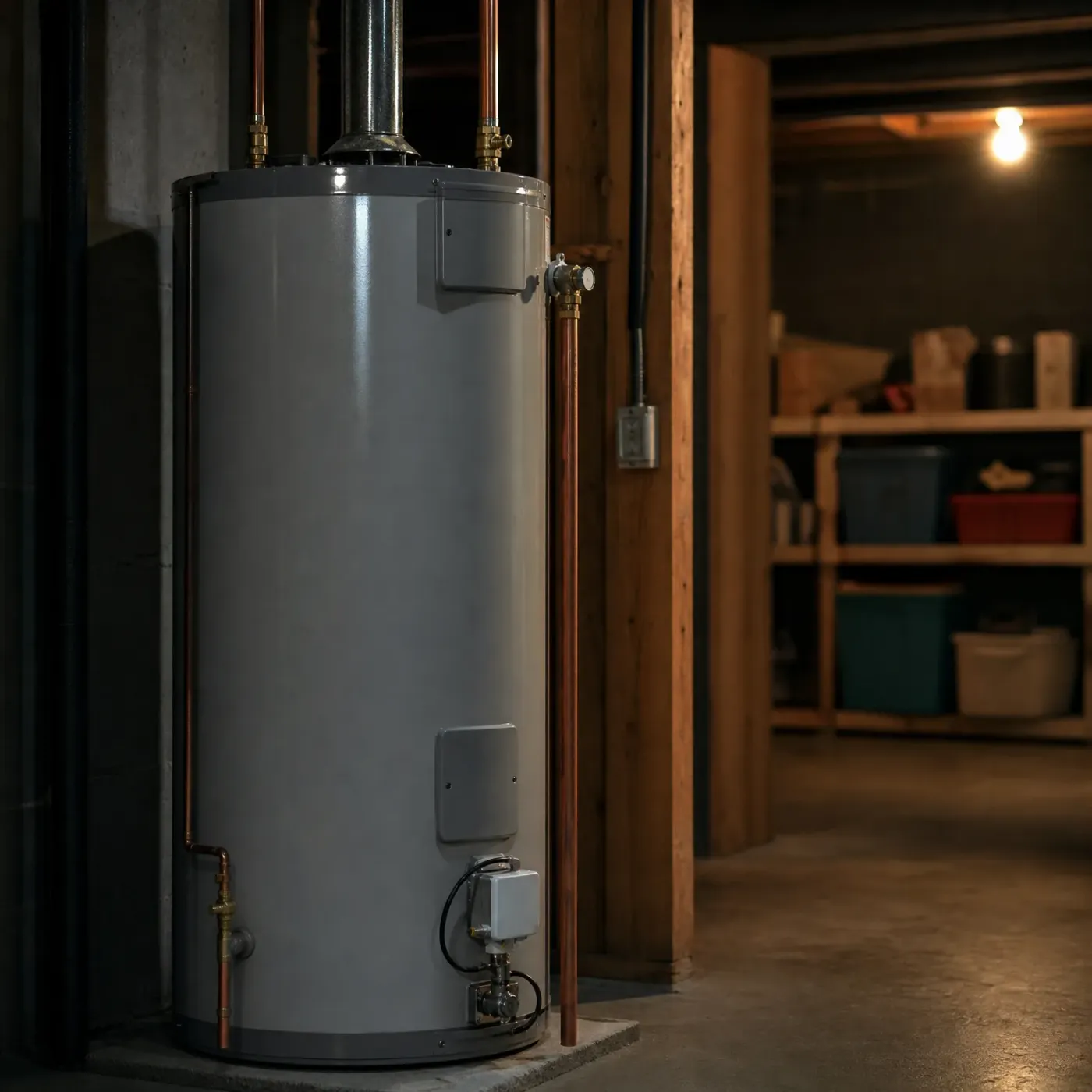
A large gray cylindrical water heater with copper pipes and a metal flue stands on a concrete pad in a dim basement, with wood framing and shelves of storage bins lit by a bare bulb behind it.

A pro who works on water heaters

Why your water heater makes popping noises in Colorado

Popping or rumbling from the tank usually means sediment has built up on the bottom, and Colorado's hard water makes that happen faster in a lot of homes. This page gets into why that noise shows up, what it means for a gas water heater, and when it's a sign to get a contractor who works on these tanks regularly to take a look.

Match me with a pro

That popping sound is water trapped under a layer of sediment at the bottom of the tank. As the burner heats the tank, pockets of water boil underneath that sediment layer and the steam bubbles push up through it, which is what you're hearing. Colorado's water runs hard almost everywhere in the state, and the minerals in it settle out as scale over time, faster than they would in a place with softer water. The longer a tank runs with sediment on the bottom, the thicker that layer gets, and the harder the burner has to work to heat the water above it. That extra work shows up as higher gas use, and over time it can scorch the bottom of the tank itself. The noise alone won't damage anything, but it's telling you the tank needs to be flushed. Left alone long enough, the same buildup is what leads to a cracked tank or a water heater that fails outright.

  1. Minerals in the water settle and build a layer on the tank bottom

  2. The burner fires underneath that layer to heat the tank

  3. Water trapped under the sediment turns to steam pockets

  4. Steam bubbles force their way up through the sediment layer

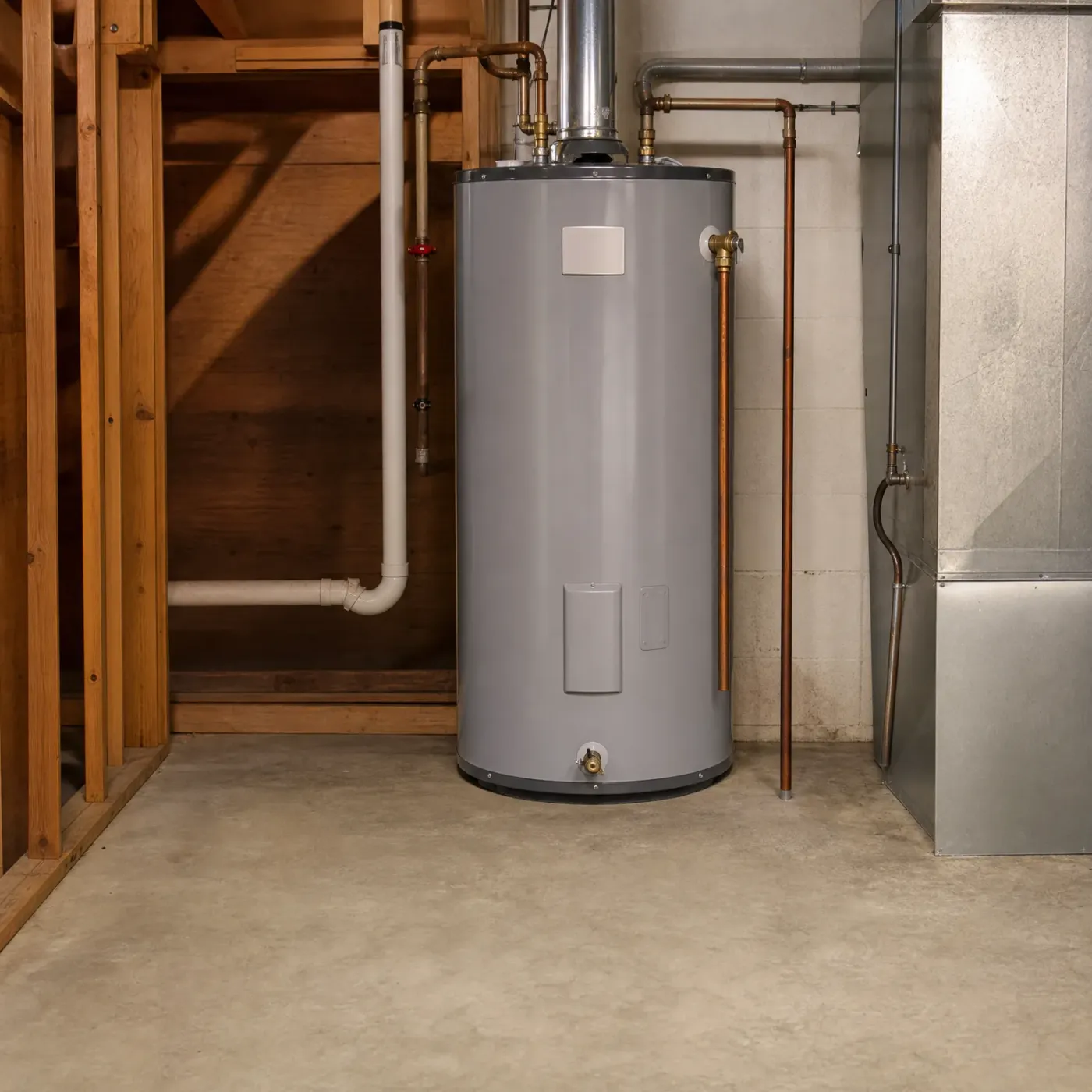
A gray cylindrical water heater stands on a concrete basement floor between an unfinished wood stud wall and a metal furnace duct, with copper and PVC pipes running along the concrete block wall.
A tank like this is still flushing clean when you drain it, so the sediment never gets the chance to settle into a thick layer.
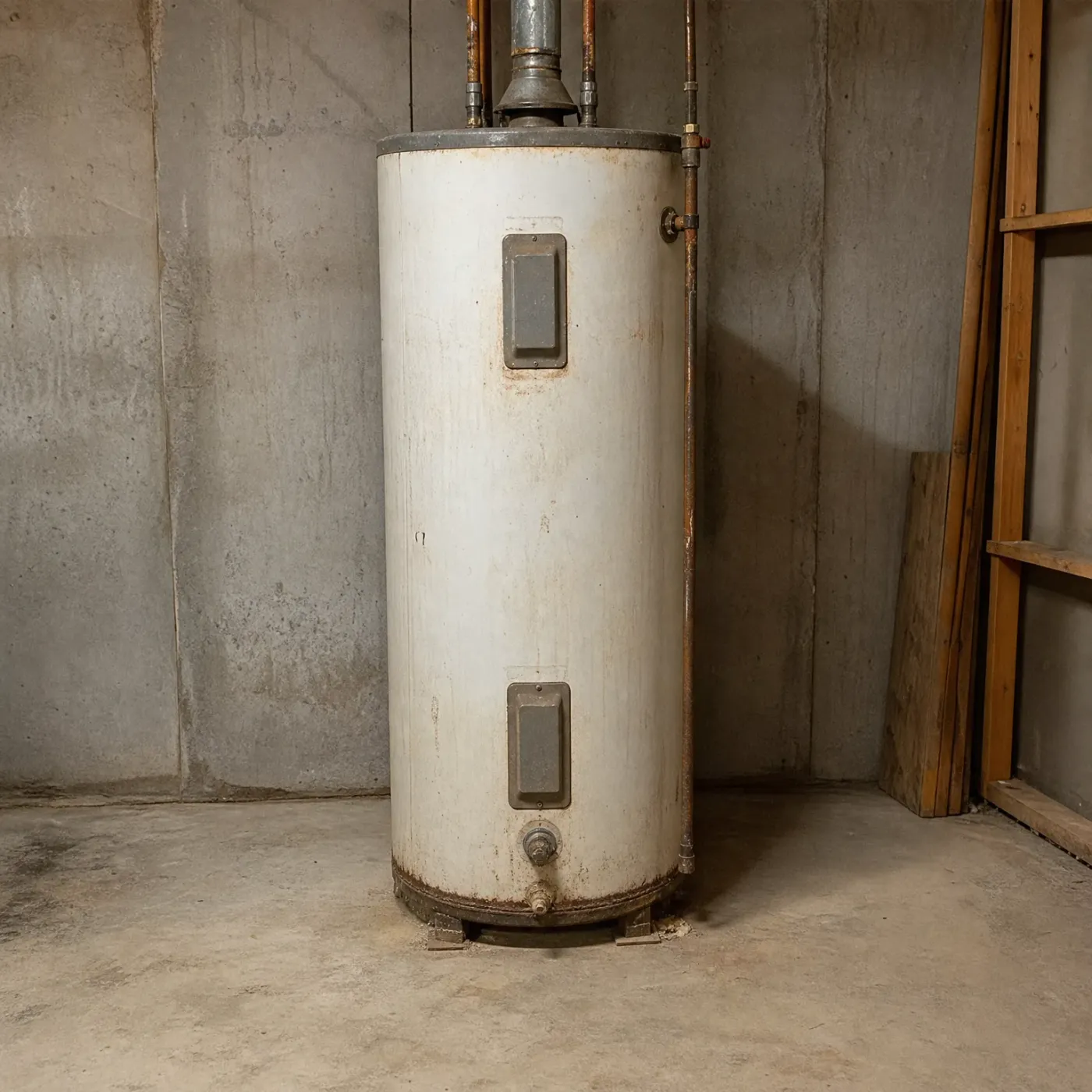
A rusted white cylindrical water heater with two access panels stands in a concrete-walled basement corner, with pipes rising from its top and wooden boards leaning against the wall at right.
Rust like this on the tank and fittings usually means sediment has been sitting long enough to eat into the metal underneath it.
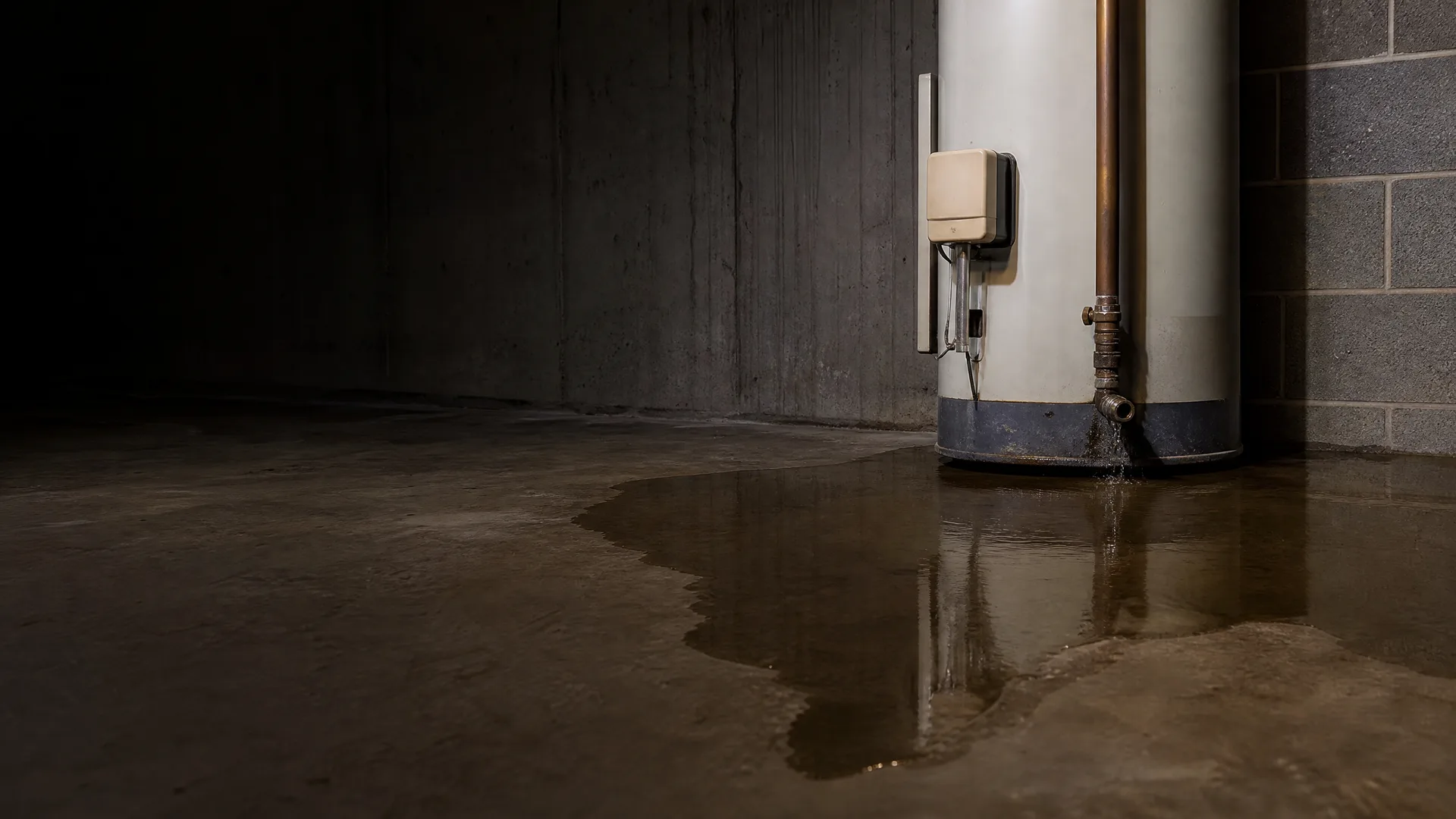
A water heater tank with copper piping and a drain valve stands against a concrete and block wall in a dim basement, with a large puddle of water spreading across the floor.

It's a Saturday morning in late July, and you're down in the basement looking for a fuse box when you notice the floor is wet. Water has spread out in a thin pool around the base of the tank, out past the drain pan, soaking into the concrete. The tank itself is quiet now, but you remember hearing it pop and rumble through the floor vents the last few evenings while the AC ran. You crouch down and touch the metal near the bottom seam. It's damp there too, not just underneath. The furnace next to it is dry. Nobody's run water down here all day.

Why does it get louder the longer I wait to flush it?

You've noticed the popping has gotten worse over the months, not better, and you're wondering if that's just how it goes or if it means the problem underneath is getting bigger. It's a fair thing to wonder before you decide whether this is worth dealing with now or something that can wait.

Sediment builds a thicker layer every month you don't flush it

Each time the burner fires, a little more mineral settles out of the water and adds to the layer already sitting on the tank bottom. A thin layer traps small pockets of water, so the popping is quiet. A thick layer traps more water under more insulation, so the pockets get bigger and the steam has to push through more material to get out. That's the louder, sharper popping you're hearing now compared to a few months ago. With Colorado's water, that layer can build up faster than it would somewhere with softer water, which is part of why this tends to show up sooner here than people expect.

A woman in a gray turtleneck sweater stands by a window looking outside at snowy ground, with a dimly lit living room containing a sofa, shelves, lamp and a lit candle behind her.
A woman in a cream cable-knit turtleneck sweater stands in a warmly lit living room with a fireplace and shelves behind her, looking out a window toward snow-covered trees and a railed deck.
A woman in a cream knit turtleneck sweater stands by a window looking out at snow, with a lit fireplace, sofa and lamp in the room behind her.
A woman in a gray knit sweater sits by a window looking out at falling snow, with a dimly lit living room containing a sectional sofa, pillows, a lamp and houseplants behind her.

Get your water heater to the right pro

Your request goes to one pro, not a list of companies.

There's no charge for the request.

What the burner has to work against

A layer of sediment on the tank bottom sits between the burner and the water above it. The burner still puts out the same heat, but now that heat has to pass through sediment before it reaches the water. That takes longer and uses more gas to get the same tank of hot water. It also means the metal at the bottom of the tank is absorbing more heat directly, since the water that would normally carry that heat away is blocked by the layer sitting on top of it.
What a flush actually clears out

Flushing the tank means draining it fully through the valve at the bottom until the water runs clear instead of cloudy or gritty. The sediment that's built up gets pushed out with the water as it drains, rather than settling back down once the tank refills. A tank that's flushed on a regular schedule stays ahead of the buildup instead of catching up to it, since whatever a flush doesn't carry out just keeps adding to the layer that's already there.

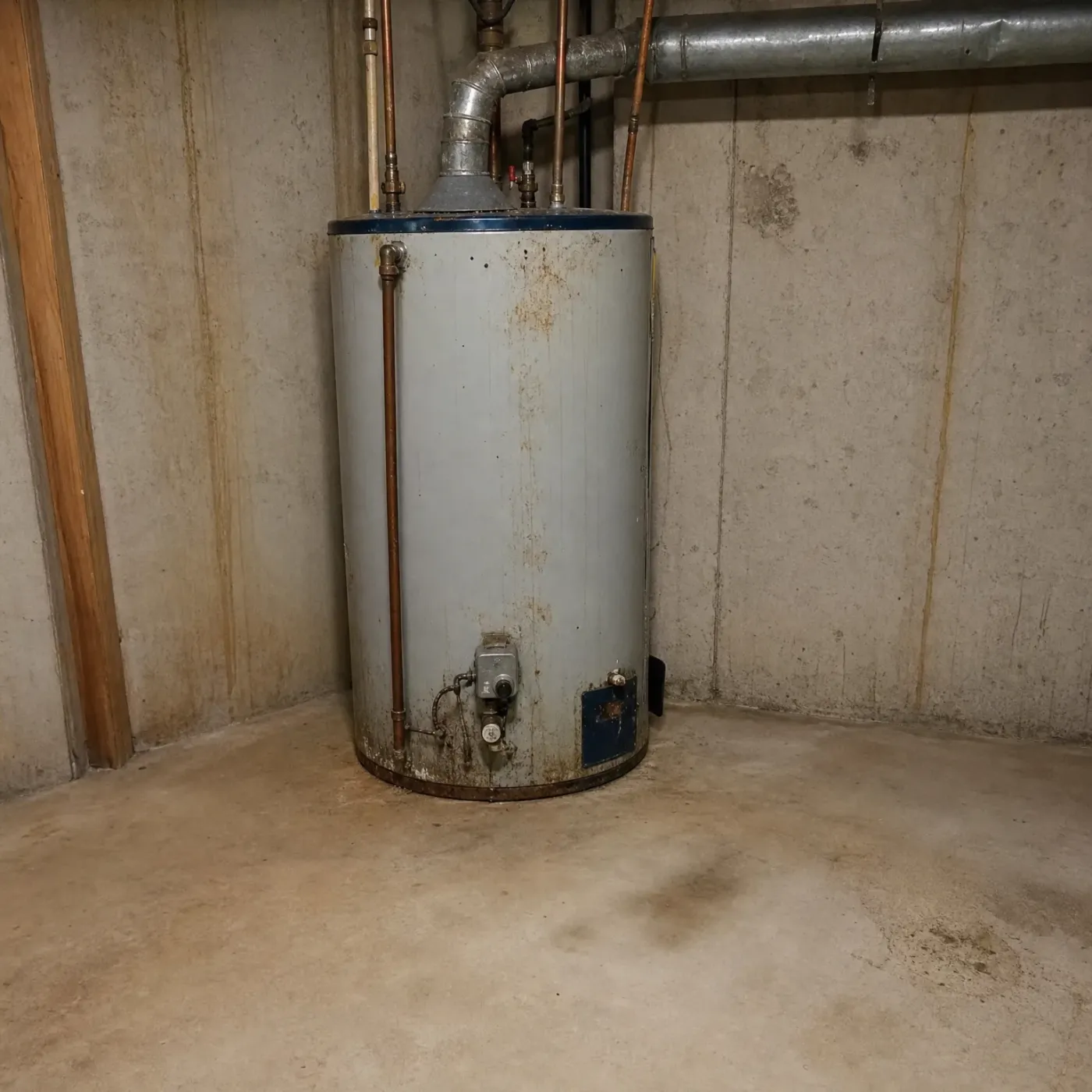
An aging gas water heater with rust streaks stands in the corner of a concrete-walled basement, with copper pipes and a metal flue duct running overhead.
Before you get your water heater repair
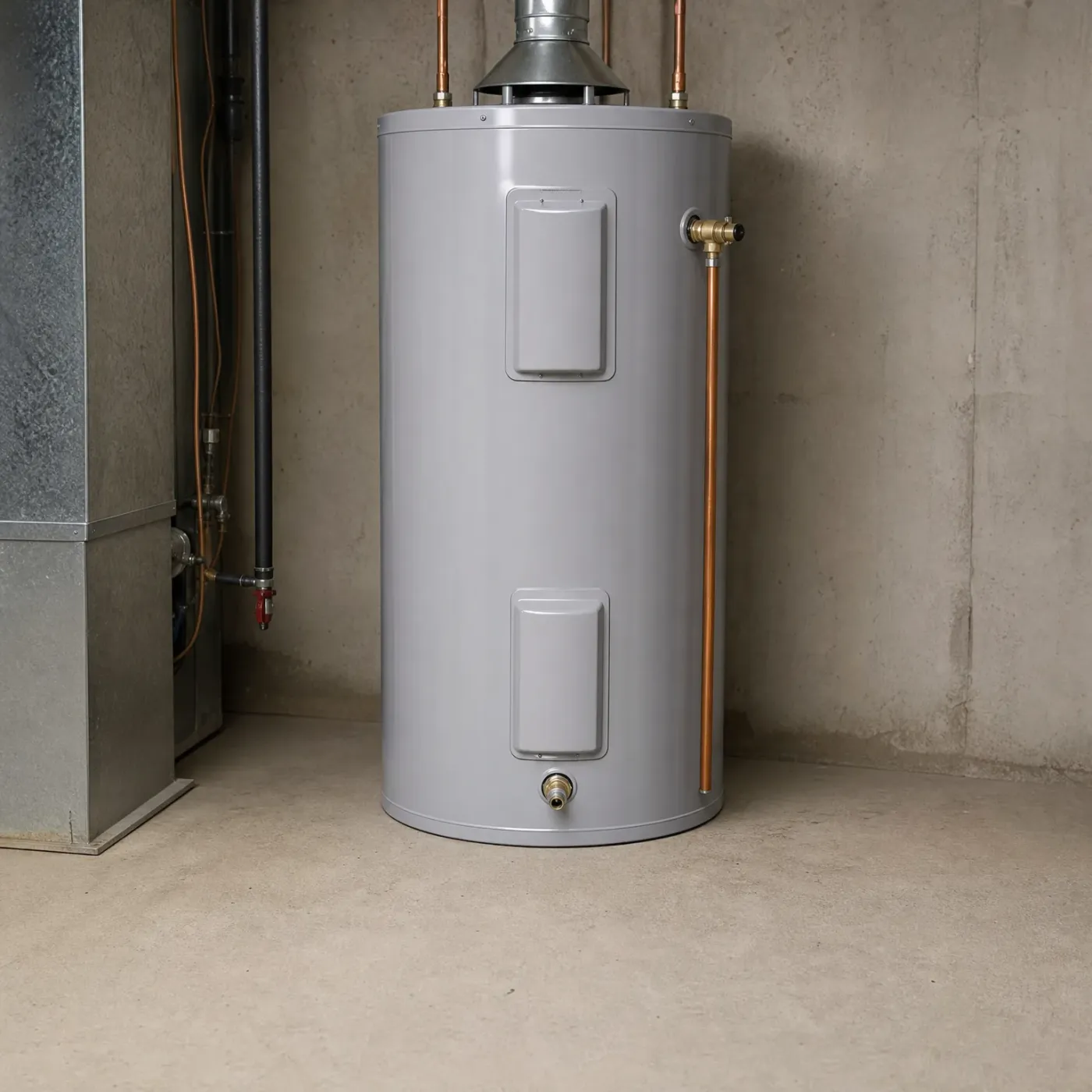
A gray cylindrical water heater with copper piping and a flue stands on a concrete floor in a basement corner beside ductwork and metal equipment.
After you get your water heater repair

Flush it yourself

You can drain a few gallons from the tank through the drain valve. It helps if the sediment is still loose, but it won't clear a layer that's packed down and hardened.

Find a local pro

Have it looked at

A local contractor who works on gas water heaters all year can tell you how much sediment has built up and whether a flush will still do the job or the tank is past that.

Find a local pro

Flush the Tank or Let It Go

Leave it alone

  • The popping will likely keep getting louder as more sediment settles and traps more water underneath it.
  • A gas burner working through a thick sediment layer runs longer to get the same water hot, and that shows up on your gas bill.
  • Sediment sitting against the tank bottom long enough can eat into the steel underneath it, which is how small leaks start.
  • Waiting doesn't fix anything underneath the noise, it just gives the sediment more time to pack down and harden.
  • You still have hot water and the tank still works, so it's easy to put off looking at it another few months.

Have it checked

  • A contractor can flush the tank properly, which clears sediment that a quick drain through the valve at home usually can't touch.
  • They can tell you whether the noise is still just sediment or whether it's gone far enough to affect the tank itself.
  • A local contractor who services gas water heaters every summer here knows how fast Colorado's hard water builds this layer up.
  • You get matched with one contractor, not several, so you're not fielding calls from a handful of companies about the same job.
  • Catching it now means dealing with a flush, not a tank that's already started leaking from the inside.
A bearded man in a plaid flannel shirt stands in a kitchen looking out a window toward snow-covered shrubs, with a steaming mug on the windowsill and potted plants on a shelf behind him.
A smiling man with dark curly hair in a navy t-shirt sits on a gray couch indoors, with a large-leafed plant and a window in the background.

66.4% of homes statewide heat with gas

Most houses in Colorado run a gas water heater, same as yours probably does. Gas models heat the tank with a burner sitting right under it, so that sediment layer has nothing between it and the flame. That's the setup where popping shows up first.

ACS 2020-2024 5-year B25040

A woman in a cream cardigan and jeans stands with one hand raised facing an open front door of a gray horizontal-siding house, with a black lantern wall light, a potted shrub with yellow flowers, and a stone-faced porch column.

The popping is sediment, and it doesn't fix itself

The noise is steam pushing up through a layer of sediment that's settled on the tank bottom, and that layer only gets thicker from here. The burner under your tank is already working harder to heat water through it, and that layer sits between the flame and the metal either way, whether you flush it or ignore it.

A contractor who services gas water heaters in Colorado sees this same buildup often, since the hard water here feeds it faster than it does in a lot of other places. Getting matched with one means someone local looks at your actual tank, not a general case, and you're only hearing from the one contractor who takes on your request, not several at once.

A living room corner with a beige upholstered armchair holding navy and striped cushions, a small round wooden side table with a carved bowl and a potted green plant, a framed landscape picture on a pale wall, built-in shelving, and a curtained window.
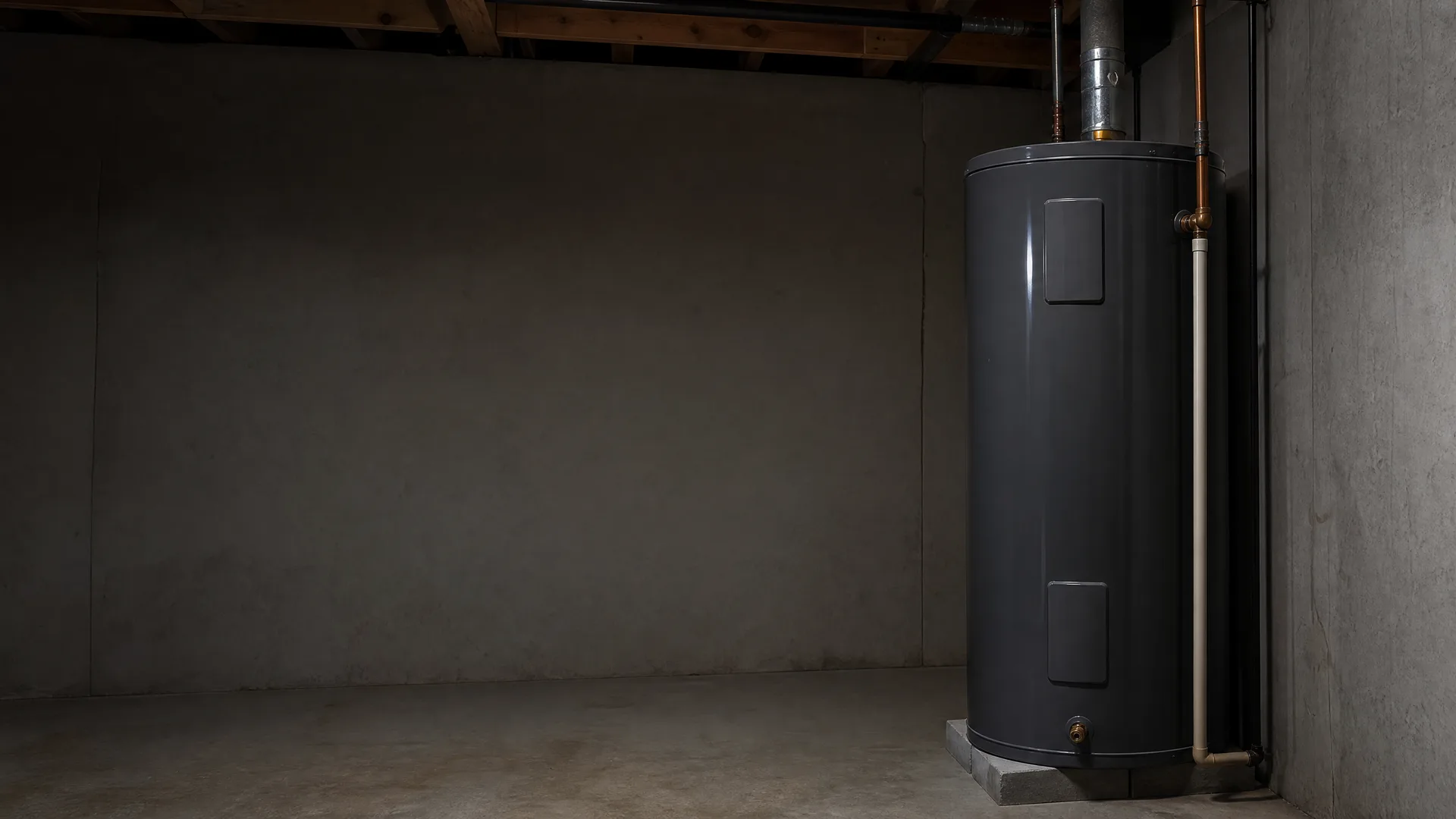
A dark gray cylindrical water heater with copper and metal pipes stands on a concrete pad in the corner of a dim basement with bare concrete walls and exposed floor joists overhead.

Matched to your water heater job

Only one pro gets your request, so you hear from one company.

Step 1 of 3: Equipment